Listen to New Voices on Studs Terkel our partnership with 826CHI-here! Read the Story


Showing 191 - 200 of 777 results
-

Marc Pachter discusses his book "Abroad in America"
Jul. 21, 1976 Europeans' opinions about their visits to America - this is the premise of Marc Pachter's book, "Abroad in America: Visitors to the New Nation, 1776-1914." According to Pachter, some people thought America was a moral society but that our manners were dreadful. Charles Dickens liked Boston but thought there were no rules in American society. He also despised the adulation that he received when he first visited.*Please note: some sections have been edited out from the original recording due to copyright considerations
-
Interviewing Yehuda Lev
Jan. 17, 1963 Journalist and columnist Yehuda Lev reported on the trial of Holocaust perpetrator Adolph Eichmann for WFMT. Here, he joins Studs to discuss the aftermath of the trial and the importance of covering such issues.*Please note: some sections have been edited out from the original recording due to copyright considerations
-
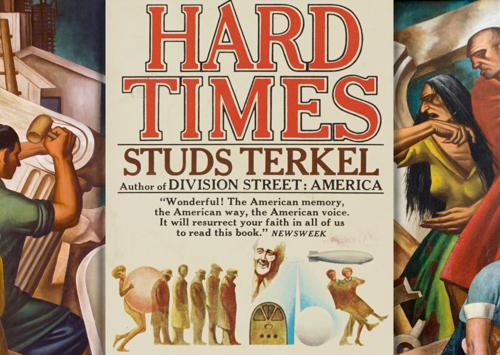
Chapter 2 of 13 of "Hard Times: Voices of the Great Depression" [includes introduction by Studs]
1971 Terkel comments and presents Hard Times: an oral history of the great depression
-
Father John McKenzie and Dr. Howard Schomer discuss personal responsibility, morality and hate, as it pertains to the Vietnam War ; part 2
1965 The interview continues with Father John McKenzie and Dr. Howard Schomer talking about fear and dissent. Schomer says Christians have the duty to dissent when they believe their beliefs are being contradicted by policy. He also talks about not understanding a dampening down of the human mind when it comes to human issues. Father McKenzie adds that society is made up of the best educated ignoramuses that ever existed.
-
Father John McKenzie and Dr. Howard Schomer discuss personal responsibility, morality and hate, as it pertains to the Vietnam War ; part 1
1965 Whether in the United States or Vietnam, Dr. Schomer asks what are our personal responsibilities for the atrocities? Father John McKenzie talks about a lowering of people's moral tone. People have put their morality in their pockets, so as to get cleared of something and not get involved, added Father McKenzie.
-
Fred Freed discusses the atom bomb
Author Fred Freed discusses the history of the atom bomb, its impact on the world, and the scientists involved in its making. He also touches on Japan during World War II and the bombings of Hiroshima and Nagasaki.
-
Walter Bernstein discusses his book "Inside Out: A Memoir of the Blacklist"
Dec. 10, 1996 American screenwriter, Walter Bernstein, discusses his book "Inside Out: A Memoir of the Blacklist", a memoir about his life during and following his blacklisted status due to his alleged communist views. Bernstein uses the case of John Henry Faulk versus Laurence A. Johnson to serve as an example of how the entertainment industry was being diminished during this time.
-
Jonathan Raban discusses his book "Bad Land"
Dec. 6, 1996 Living in Montana in the early 20th century had many hardships, as covered in Jonathan Raban's book, "Bad Land: An American Romance". Raban said people were looking for new lives in the west but they encountered prairie fires, hail storms and grasshopper plagues.
-
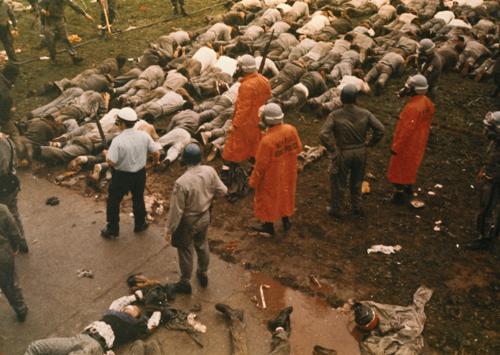
Herman Badillo discusses "A Bill of No Rights: Attica and the American Prison System"
Jun. 26, 1972 Congressman Herman Badillo discusses the prisoner uprising at Attica Correctional Facility in upstate New York, and how race played a role in the unwarranted killing of inmates and the subsequent government and administrative cover up of the incident. Badillo reads excerpts from his book, "A Bill of No Rights: Attica and the American Prison System," and discusses prisoner rights, rehabilitation, and the endemic injustice and racism in the American prison system.
-
Sidney Blumenthal discusses his book "The Permanent Campaign: Inside the World of Elite Political Operatives"
Jun. 25, 1980 Author Sidney Blumenthal discusses his book "The Permanent Campaign," touching on topics including political consultants, modern campaigning, and the election process.