Listen to New Voices on Studs Terkel our partnership with 826CHI-here! Read the Story


Showing 1 - 10 of 20 results
-

Dr. Leo Seren discusses atomic fission and nuclear experiments
Feb. 21, 1978 Nuclear physicist, Dr. Leo Seren, discusses atomic fission and nuclear experiments.
-
-
-
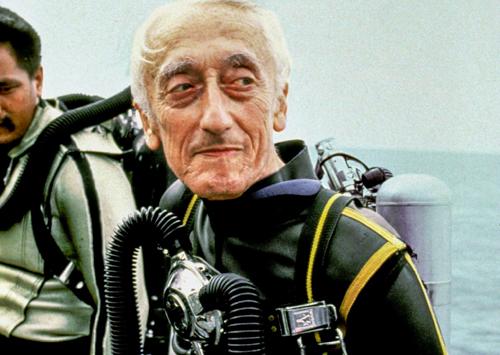
Jacques Cousteau discusses his book "The Cousteau Almanac: An Inventory of Life on Our Water Planet"
Sep. 16, 1981 Captain Cousteau talks about his book and the environmental movement in the United States and elsewhere.
-
Dr. Helen Caldicott discusses the ill-effects of a nuclear bomb going off
Apr. 7, 1981 The world spends 600 billon dollars on the arms race, which is rather puzzling to Dr. Helen Caldicott when 2/3 of the world's children are starving. Caldicott explained if a bomb went off in Chicago, there'd be a crater a half a mile wide and 300 feet deep. In addition, 90% of the people will be dead, some from being vaporized.
-
Dr. Charles Clements discusses his book "Witness to War"
Apr. 29, 1985 After having flown 50 missions in Vietnam, Charles Clements went to medical school and became a physician and a human rights activist. Dr. Clements talks about his observations in the poorest sections of Nicaragua. Because medicine for the poor people was considered contraband, Clements had to resort to putting rusty nails into a cup of water and having his patients drink the water for iron supplements. Clements reminds the audience if we don't know our history, we are bound to repeat it.
-
Interview with Dr. Charles Clements and Asa Baber
May. 20, 1986 Interviewing Vietnam veterans and peace activists Dr. Charles Clements and Asa Baber.
-
Interview with Dr. Helen Caldicott
Mar. 8, 1984 Discussing the book "Missile Envy: The Arms Race and Nuclear War," (published by Murrow) with the author, humanist and physician Dr. Helen Caldicott. Program also includes the opening of Studs' inaugural address.
-
Professors Adolph Baker, Jurgen Hinze, Richard Lewenton and Father William Wallace discuss science and the younger generation; part 2
Jan. 12, 1971 Professors Adolph Baker, Jurgen Hinze, Richard Lewenton and Father William Wallace discuss science and why the younger generation is not choosing to enter the science field. The four professors debate on how to change the world an whether science is the answer to that problem. Discussions about the future of mankind also occur.
-
Professor Adolph Baker, Jurgen Hinze, Professor Richard Lewenton and Father William Wallace discuss science and politics; part 1
Jan. 12, 1971 Professors Adolph Baker, Jurgen Hinze, Richard Lewenton, and Father William Wallace discuss science and politics. The four professors explore question such as whether scientists be involved in political decisions. World War II and Vietnam War are used as examples by the scientists. An earlier interview with scientists Edward Teller and Albert Szent-Gyorgy is played.