Listen to New Voices on Studs Terkel our partnership with 826CHI-here! Read the Story


Showing 41 - 50 of 72 results
-

-
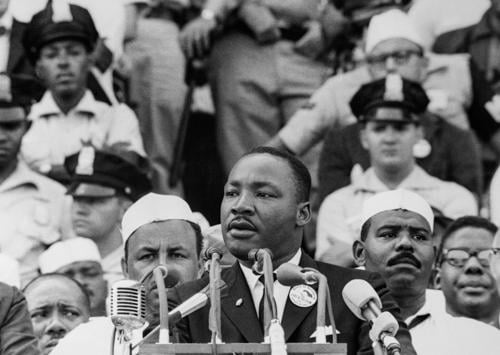
Dr. Martin Luther King Jr. discusses civil rights in regards to his "I Have a Dream" speech
Oct. 22, 1964 Studs Terkel interviews Dr. Martin Luther King Jr. at the home of gospel singer Mahalia Jackson. They discuss King's "I Have a Dream" speech that he made in 1963, at the foot of the Lincoln Memorial. At the end of the program there are various gospel music selections featuring Jackson and others.
-
Frye Gaillard in conversation with Studs Terkel
1980 Discussing the book "Lessons From the Big House: One Family's Passage through the History of the South: a Memoir," (published by Down Home Press) with author Frye Gaillard.
-
-
Dick Gregory discusses American politics
Dec. 17, 1964 This interview begins with a clip of one of Dick Gregory’s performances, where he talks about nonviolence and Native Americans. Studs Terkel introduces his guest as an observer, explaining that comedians are the best observers in society. Gregory offers extended analogies to communicate his views on a variety of topics, including the Vietnam War, race relations, segregation, human rights, and urban renewal. [The date is unclear, but it has to be after 1970, since the Kent State Shootings were mentioned]
-
Allan Chase discusses "The Legacy of Malthus"
Apr. 25, 1977 Discussing the book "The legacy of Malthus" with the author Allen Chase.
-
Anne Guerrero discussing event in her life ; part 2
1968 Anne Guerrero discusses the impact her divorce has had on her younger children. She also discusses her own career and her future plans as well as her connection to the Roman Catholic Church. This recording ends abruptly and is part 2 of 3.
-
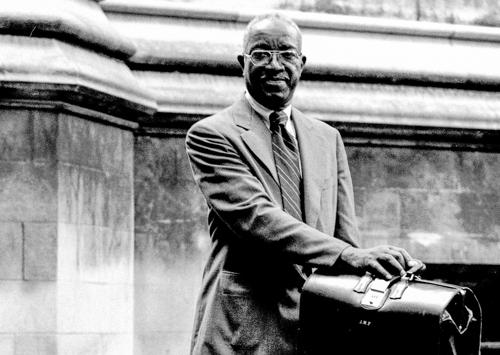
Dr. John Hope Franklin discusses the history of Civil War Reconstruction; part 1
1966 Dr. John Hope Franklin, professor of history at University of Chicago, outlines the history of reconstruction during the American Civil War and briefly his experience at the March to Montgomery; part 1.
-
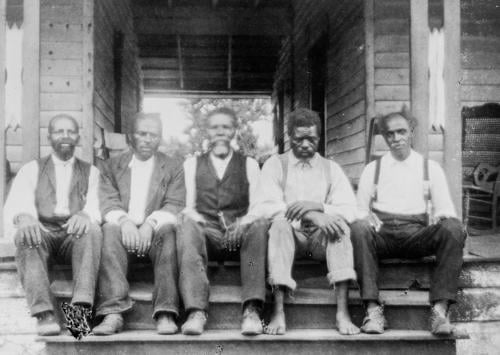
Dr. John Hope Franklin discusses reconstruction after the American Civil War; part 2
1966 Dr. John Hope Franklin, professor of history at University of Chicago, discusses the political history of reconstruction after the Civil War, along with which political decisions led to a power imbalance and the rise of the Ku Klux Klan in the southern states; part 2.
-
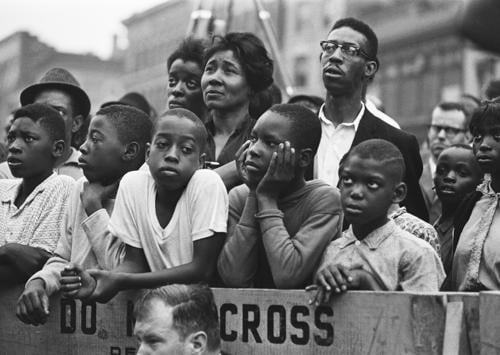
Studs Terkel interviews Professor Charles V. Hamilton on his book written with Stokely Carmichael entitled "Black Power: Politics of Liberation in America" ; part 1
Nov. 21, 1967 Using the backdrop of James Baldwin's "Nobody Knows My Name" and Baldwin's feelings that Blacks were ashamed of where they came from, Terkel interviews Professor and Chairman of the Political Science Department of Roosevelt University on his book coauthored with Stokely Carmichael entitled" Black Power: Politics of Liberation in America". Hamilton states that Blacks were taught to hate themselves and leave school believing that. Institutional racism and the deliberate oppression it creates, holds blacks back. Blacks are left out of crucial decision making processes that concern them.