Listen to New Voices on Studs Terkel our partnership with 826CHI-here! Read the Story


Showing 251 - 260 of 271 results
-
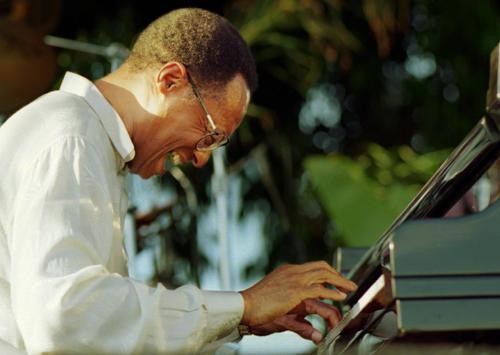
Ramsey Lewis discusses his career
Dec. 22, 1980 Starting at a young age, Ramsey Lewis really loved music and as he got older, he'd practice five or six hours a day. Lewis says he knew nothing about jazz until he met Wallace Burton at the age of 15. Burton hired Lewis on the spot to play in his band. Church music, Spanish music, Duke Ellington and the Beatles, says Lewis, were all great influences to him.
-

-
Ella Jenkins discusses her music and her influences
Dec. 7, 1963 Using a Trobriand drum and harmonica, Ella Jenkins plays examples of call and response music with Studs. A few of her popular songs play between their discussion. Ella explains how her music came to be from the Chicago neighborhood streets with influences from her Uncle and other blues and folk musicians. Songs played include "Tahboo," "Miss Mary Mack," "You'll Sing a Song and I'll Sing a Song," "Come Dance By the Ocean," and "Dulce." Songs have been removed due to copyright restrictions.
-
Ella Jenkins discusses call and response music
Jul. 17, 1993 Using past recordings, Ella discusses how she works with children to help them find their rhythms using call and response music and percussion. She explains the West African and Latin music influences within her own music. Music played includes Jenkins' own music such as "Miss Mary Mack," "Tahboo," and "Where Has My Little Dog Gone?" She also plays song written by Carl Orff and performed by the Chorus of the Children's Opera Group, such s "Pat-a-Cake," and "Name-Calling." Untitled West African music is also played. Music has been removed due to copyright restrictions.
-
Dr. Samuel Floyd, Jr. discusses his book "The Power of Black Music: Interpreting Its History from Africa to the United States"
Feb. 21, 1996 Author Dr. Samuel Floyd discusses his projects in relation to black music and elements from his book "The Power of Black Music: Interpreting Its History from Africa to the United States." Includes an interview with Langston Hughes.
-
Dr. Samuel Floyd, Jr. discusses Black music, history, and culture
Oct. 11, 1990 Interviewing Dr. Samuel Floyd, author and scholar of Black music. He discusses prominent Black musicians and composers who shaped their perspective genres.
-
Allan Evans and Henry Jordan discuss "The Foundation Years" ; part 1
1970 Allan Evans and Henry Jordan, two young man who grew up in Chicago and attended Dartmouth, discuss their childhoods and adolescent dealing with crime. The two also talk about their gang, The Vice Lords, and the police brutality they experienced. Next, the group talks about the The Foundation Years, a project from Dartmouth.
-
Allan Evans and Henry Jordan discuss The Foundation Years ; part 2
1970 Allan Evans and Henry Jordan, two young man who grew up in Chicago and attended Dartmouth, discuss The Foundation Years project. They talk about trying to recruit friends to Dartmouth, their campus experiences, and their coursework. They also talk about their experiences going through the public school system in Chicago, where they point out many of the inequalities for black students.
-
Roger Kahn talks about his book "Boys of Summer"
1970 Content Warning: This conversation includes racially and/or culturally derogatory language and/or negative depictions of Black and Indigenous people of color, women, and LGBTQI+ individuals. Rather than remove this content, we present it in the context of twentieth-century social history to acknowledge and learn from its impact and to inspire awareness and discussion. Kahn talks about Jackie Robinson and the integration of baseball. Includes an excerpt from an interview with early player Sam Crawford.
-
John Hope Franklin discusses racial inequality in America
Mar. 15, 1979 John Hope Franklin, historian, discusses his life and the racial inequality he witnessed. He also talks about John Hope and W. E. B. Du Bois. Dr. Franklin also talks about his Jefferson Lectures, Thomas Jefferson, and slavery.