Listen to New Voices on Studs Terkel our partnership with 826CHI-here! Read the Story


Showing 21 - 30 of 37 results
-

Interview with Dick Simpson, Ron Shaffman, Mary Lou Daniel and Fabian Padilla
Oct. 13, 1977 Discussing Chicago neighborhoods with Alderman Dick Simpson, Ron Shaffman, Mary Lou Daniel and Fabian Padilla.
-
-
Discussing Horizons for the Blind with Camille Vogel, the organization's director
Aug. 28, 1984 Horizons for the Blind works to improve the quality of life of visually impaired individuals by increasing accessibility to culture, education, recreation, and employment.
-
Discussing the Inspiration Cafe with Lisa Nigro
1980 The Inspiration Cafe provides meals for the homeless in a restaurant-like setting.
-
Discussing civil liberties in Chile
Sep. 1, 1978 Discussing civil liberties in Chile with Isabel Letelier and Michael Moffitt, the authors of a report for the Institute for Policy Studies: "Human Rights, Economic Aid, and Private Banks: The Case of Chile."
-
John Bernard discusses his life, politics and his work with the Farmer Labor Party
Aug. 1, 1977 Interviewing labor organizer, civil rights activist, and former Congressman John Bernard. Bernard was elected as a Farmer-Labor candidate to the U.S. House of Representatives and served from 1937-1939.
-
Barbara Kingsolver discusses her book "Holding the Line: Women in the Great Arizona Mine Strike of 1983"
Sep. 17, 1990 Since no men were allowed to picket against the Phelps Dodge Corp., Mexican American women showed up and according to Kingsolver’s book, “Holding the Line,” the picket lines were a brand new experience for the women. Some of the women had to get their husbands’ permission to picket. The group of women found their lives transformed not only with their cause but with new bonds of friendship from the other women.
-
Bill Adelman, Paul Avrich, Carolyn Ashbaugh, and Bill Neebe discuss the Haymarket Square Riot
May. 2, 1986 Commemorating the centennial of the Haymarket Square Riot, or Haymarket Affair, are authors and historians Bill Adelman, Paul Avrich, Carolyn Ashbaugh, and the grandson of Haymarket defendant Oscar Neebe, Bill Neebe. The interveiwees create a timeline of the events leading up to the Haymarket Riot including the German immigrants living situations, unions and strikes, police brutality and corruption. The group also lays out the events from May 1st to May 5th and then the following corrupt trials.
-
IBEW members discuss unions
Aug. 26, 1993 Jim Jennings, Jake Dowling and Jim Hastings, members of The International Brotherhood of Electrical Workers (IBEW) talk about unions. Union folk songs by Pete Seeger and Joe Glazer are played periodically.
-
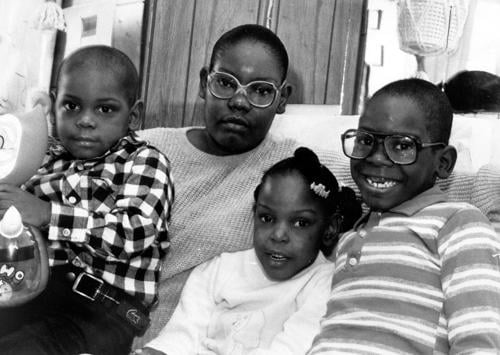
Jonathan Kozol reads from and discusses his book "Rachel and Her Children: Homeless Families in America"
Jan. 16, 1989 The people living at the Martinique feel as though they are a toxic waste substance being compressed in the density living quarters, explains Jonathan Kozol. Rachel of Kozol's book, "Rachel and Her Children: Homeless Families in America" said people don't want to see them. Refering to the song, "We are the World, " Rachel also asks how come people care so much for people they can't see? "We are the world, " says Rachel. "We live here, too".