Listen to New Voices on Studs Terkel our partnership with 826CHI-here! Read the Story


Showing 1 - 10 of 199 results
-

Father Daniel Berrigan discusses his life
Jun. 1, 1972 Fr. Daniel Berrigan speaks about his early life, and relationship with his family, on his becoming a priest, and on being an anti-Vietnam War activist.
-
Paul Schilpp talks with Studs Terkel
May. 20, 1965 Interviewing philosopher Paul Schilpp.
-
Interview with Father John O'Brien
1969 Father John O'Brien discusses Humanae Vitae. Includes an interview of a nameless Catholic mother.
-
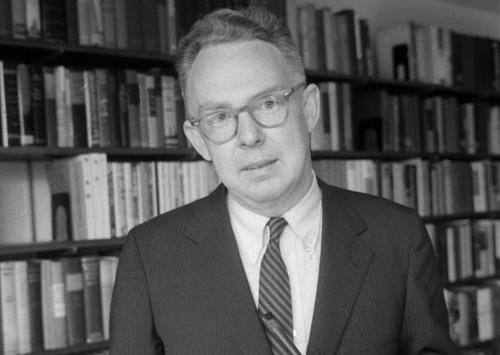
Rev. W. Alvin Pitcher and Dr. Richard Wade discuss race relations, civil rights, and socio-economic differences
Aug. 23, 1965 Reverend W. Alvin Pitcher and Dr. Richard Wade discuss how violence and civil disobedience intertwine with civil rights, economic differences, and the importance of education.
-
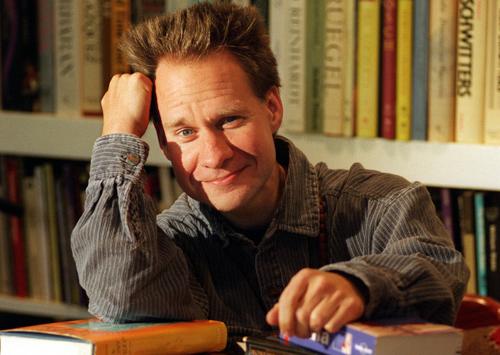
Peter Sellars discusses his production of "The Merchant of Venice"
Sep. 14, 1994 Peter Sellars talks about his production of "The Merchant of Venice." Peter Sellars also compares Los Angeles California to the world of "The Merchant of Venice". Sellars also discusses the history of the Jewish people, immigrants, the ghetto, and race relations.
-
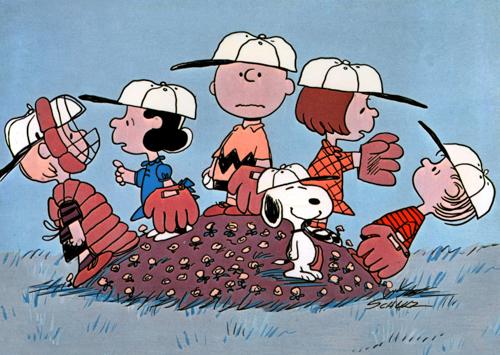
Robert Short discusses his book “The Gospel According to Peanuts”
1975 Theologian Robert Short talks with Studs Terkel about the Christian allegories and references in the comic strip “Peanuts” as well as Short’s book “The Gospel According to Peanuts.” Terkel reads a few excerpts from Short’s book. Terkel, Short, and Cathy Zmuda read a few “Peanuts” comic strips and all three assume various “Peanuts” characters during the readings.
-
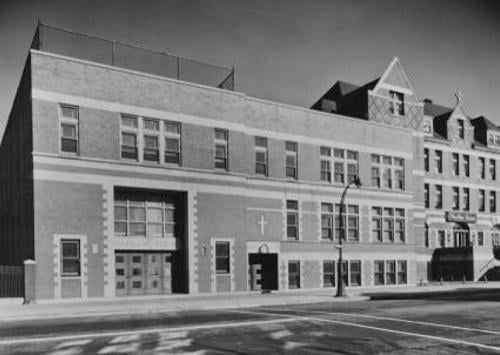
Sister Mary William discusses the importance of Marillac House
Apr. 10, 1968 Content Warning: This conversation includes racially and/or culturally derogatory language and/or negative depictions of Black and Indigenous people of color, women, and LGBTQI+ individuals. Rather than remove this content, we present it in the context of twentieth-century social history to acknowledge and learn from its impact and to inspire awareness and discussion. When she was a teenager, Sister Mary William told her parents that she wanted to become a nun. Sister Mary wanted to become a nun so that she could love and help many people.
-
Gordon Zahn discusses his book "In Solitary Witness" ; part 1
Jan. 15, 1965 One's conscience, morals and religion are all apart of Gordon Zahn's book, "In Solitary Witness: The Life and Death of Franz Jagerstatter". Zahn talks about who Jagerstatter was and what made him decide to say "No" to Hitler's army. Jagerstatter chose to lay with the community of saints rather than kill Jewish people.
-
Isaac Bashevis Singer talks with Studs Terkel
Nov. 18, 1964 Yiddish author Isaac Bashevis Singer discusses his collection of short stories, "Short Friday," as well as his writing style and spiritual influences.
-
William Stringfellow discusses his book "My People is the Enemy"
1970 White, Anglo-Saxon, Episcopalian lawyer William Stringfellow moved to a slum tenement of Harlem after his graduation from Harvard Law. Through the lens of personal experience, Stringfellow outlines the failures of the legal system and the Church to alleviate poverty and racism in his 1964 book, "My People is the Enemy."