Listen to New Voices on Studs Terkel our partnership with 826CHI-here! Read the Story


Showing 221 - 230 of 427 results
-

Abe Peck discusses his book “Uncovering the Sixties: The Life and Times of the Underground Press”
Jun. 10, 1985 Editor and writer Abe Peck discusses and reads from his book “Uncovering the Sixties: The Life and Times of the Underground Press.” Peck discusses the social and political forces, such as the lack of questioning authority forces seen during this time, that drove the alternative press to formation. This program includes audio clips of Studs interviewing attendees of a Vietnam War protest in Chicago. Studs also includes a clip of British journalist James Cameron discussing the 1968 Chicago Democratic Convention. Studs plays "The Times They Are A-Changin'" - Bob Dylan (1964).
-
-
Jill Tweedie discusses and reads from her book “In the Name of Love” with Alan Brien
British feminist and journalist Jill Tweedie discusses and reads from her book “In the Name of Love” with British journalist and humorist Alan Brien. Tweedie explores the scientific and psychological nature of what it means to “love” and how this differs from passion and romance. Studs plays "Loveless Love" - Billie Holiday (1940) and "Douce Dame Jolie" - Roland Hayes (1966).
-
James Cameron discusses journalist responsibility and expectations of political leaders with Studs in Ashburn Gardens, London ; part 2
1970 Studs Terkel interview with James Cameron, Brittish journalist. They discuss the objective truth and facts of journalism. Cameron shares his experience with a dying Winston Churchill and his views on science and human values. Politics, youth, and the atomic bomb are also topics in this interview. Studs quotes Albert Einstein and Sidney Burnstein, while Cameron quotes Oliver Cromwell. James Cameron's book, "Point of Departure" is also mentioned in the interview.
-
James Cameron and Studs Terkel discuss their experience in Lincoln Park and how the peaceful demonstration changed to violence with the use of police tear gas ; part 1
Aug. 28, 1968 Studs Terkel and James Cameron talk about their witness of the peaceful demonstration at Lincoln Park the night before. They discuss the kind and caring interaction between older adults and the young. Both reflect on how the event changed from peaceful to somewhat violent when police gathered and used tear gas on the crowd.
-
James Cameron discusses his experiences as a Brittish journalist and his book "Point of Departure" ; part 3
Jun. 4, 1973 Studs Terkel interviews James Cameron about his experiences as a journalist that includes thoughts about Cameron's book, "Point of Departure." They talk about his relationships with Winston Churchill, Lord Beaverbrook, Charlie Templeton, and Bertrand Russell. Cameron discusses his education, poverty, and the depression during his youth. They talk about Cameron's career with the "News Chronicle" and his home of Dundee, Scotland. This is part 3 of a total of 4 parts. The interview takes place at Lewis and Clark Community College.
-
A cab driver in London and James Cameron discuss housing ; part 1
1970 On his way to meet James Cameron, the taxi cab driver tells Studs Terkel about the demolition site they're passing. The cab driver explains that 30,000 more hotel rooms are needed because of the jumbo jet trade. The cab driver said the rooms are needed to advance London's tourism. James Cameron discusses the demolition that's happening at Ashburn Gardens. Cameron explains how the homes that are being torn down house students, au pairs, and people of color. Cameron also talks about how he never went to school or received an education.
-
James Cameron discusses his experiences as a Brittish Journalist and his political and social beliefs ; part 4
Jun. 4, 1973 Studs Terkel interview with James Cameron, Brittish journalist. They discuss a variety of topics with politics and young people's attitudes the majority of the interview. This interview is done in Chicago, while the other three parts were done at Lewis and Clark College.
-
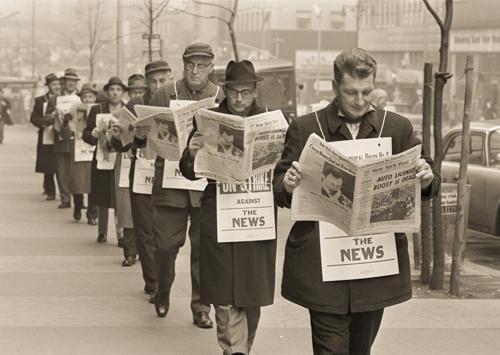
W.H. Ferry discusses his article "Masscomm as guru"
1965 W.H. Ferry discusses his article "Masscomm as guru" regarding mass communication outlets including newspapers, television, and radio, and their ethical responsibility to teach the public about social issues rather than only present them with current news.
-