Listen to New Voices on Studs Terkel our partnership with 826CHI-here! Read the Story


Showing 11 - 20 of 243 results
-

Studs, teachers and students have a conversation at a high school where there is controversy over the use of the book "Working"
1982 Discussing the controversy over the use of the book "Working" by author Studs Terkel in a senior vocational class. Interviews with Kay Nichols, teacher, and two high school classes, as well as Bob Burns and Jim Richardson. The students talk of how the "bad" language in the book is heard from their peers on a daily basis and they don't find it offensive. [recorded in Girard, Pennsylvania]
-
In this interview with Random House President and CEO Bob Bernstein and James Mitchell, Editor-in-Chief of the new Random House Encyclopedia talk with Studs Terkel
Sep. 26, 1977 In this interview with Random House President and CEO Bob Bernstein and James Mitchell, Editor-in-Chief of the new Random House Encyclopedia, the three gentlemen discuss the content and revolutionary layout of the single-volume 3,000 page tome, which was divided into 2 sections: the Colorpedia and the Alphapedia. Bernstein and Mitchell demonstrate how to use the encyclopedia and point out the explanatory diagrams throughout, which served a two-fold purpose: to catch the reader's attention, and then provide further information.
-
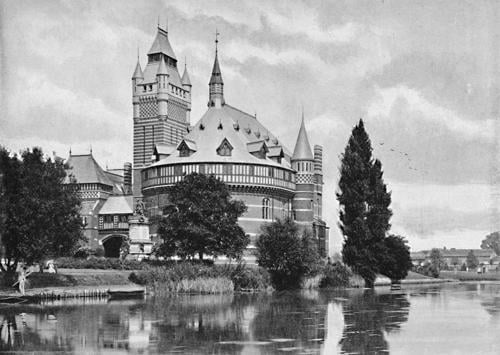
Studs Terkel discusses the changing role accents play on class distinctions in England with guests in the parlor of the Mayor in Stratford-upon-Avon ; part 2
1962 Studs Terkel gathers a cross section of opinions on accents and their changing role on class distinctions in British Society. He asks the Mayor and Mayoress of Stratford-upon-Avon, the Huxleys, their opinions on the influence of education on accents and class. Also present to offer opinions are Mr. & Mrs. Lawrence, pub owners from Lower Quinton near Stratford-on-Avon, and Mr. Morris, a London stockbroker and his wife. Bookending the conversation at the mayor's home are two conversations with Mr. and Mrs. Lawrence.
-
-

Charles E. Silberman and his wife Arlene Silberman discuss education
Sep. 15, 1970 Charles E. Silberman and his wife Arlene Silberman discuss education and Charles Silberman's book "Crisis in the Classroom". Includes a clip of Studs Terkel interviewing a student.
-
Easley Blackwood, Leonard Meyer and Ralph Shapey talk about standards of composition in contemporary music, part 1
1965 The program begins with an excerpt from BBC Radio about a hoax piece of music by Pietorzac (Hans Keller). Hans Keller and a friend went into studio and made noise and presented it as music. In this round table discussion the three gentlemen - all composers, musicians, and educators, discuss with Studs, contemporary music and the standards for defining a composition as music. In the second hour, they discuss what level of knowledge of music a critic should have in order to form a proper opinion of music. All animatedly offer their opinion to both the pro's and the cons.
-
Lois Wille discusses the many problems at Crane High School
Dec. 14, 1965 Lois Wille caused an uproar with the story she wrote for the Chicago Daily News, "Inside a Slum High School." According to Wille's investigation, a lack of money, over crowding of students, lights that don't work in the school and no books were among some of the problems that Wille found at Crane High School. Students also had a pessimistic view, explained Wille, as she found students didn't believe the teachers and counselors cared what theyd do after they got out of high school but they just wanted them to get out and leave Crane.
-
Sir Georg Solti talks with Studs Terkel
Feb. 1, 1995 Studs engages the former Chicago Symphony Orchestra conductor, Sir Georg Solti, in a wide-ranging conversation about his life and career. From his early studies in Budapest with Béla Bartók, his string of good-luck opportunities before, during, and after World War II, meeting Toscanini in Lucerne, and starting on top conducting in Frankfurt, London, and finally Chicago. He discusses his many German and European musical influences and contemporaries, and stresses the importance of education, arts funding, and hard work.
-
Physicist Leo Stodolsky and Gerald Temaner talk with Studs Terkel ; part 1
Nov. 1, 1961 Leo Stodolsky and film director Gerald Temaner discuss college students' activity — or lack thereof — and their magazine, New University Thought.
-
Harold Taylor, scholar and former president of Sarah Lawrence College, talks with Studs Terkel
Aug. 8, 1965 An interesting, half-hour interview conducted while Taylor was visiting Chicago on a lecture tour. The two discuss student discontent on campuses across the United States, intellectuals' work in military defense and cynicism among those in the professional-education hierarchy.