Listen to New Voices on Studs Terkel our partnership with 826CHI-here! Read the Story


Showing 71 - 80 of 1040 results
-

Bill Crofut discusses his career as a folk singer and his work with other musicians
Dec. 8, 1981 Studs interviews Bill Crofut about his career. They discuss Crofut’s recording label, “Cousin Jacks” and his album with Benjamin Luxon, “Simple Gifts.” Crofut shares his experiences working with various musicians and describes some of his songs. He reflects on his work with the Natalie Wood film, “Brainstorm.” Crofut sings part of the “Grandfather’s Clock” and an unnamed children’s song. The music is removed from this edited version of the original recording.
-
Carlo Curly discusses the history and future of the organ as an instrument and his career as a classical organist
Dec. 15, 1983 Studs interviews Carlo Curly, a RCA recording classical organist. Includes an interview from two years earlier with Curly giving a commentary about Virgil Fox, his greatest influence. Curly describes his family background in music. He explains in great detail the history of the organ, how it is made, and the music written for it. He explains the difference in music between pipe organs and electronic organs. Curly talks about his experience playing in Japan. He speaks of Bach and Mendelson and their influence on the organ as a classical instrument.
-
-
Ryland Davies and Margaret Price discuss opera and their performance in Mozart's "Don Giovanni"
1972 Ryland Davies and Margaret Price discuss opera, Welsh art and culture, and their musical upbringings. They discuss various characters and operas they have performed in, including "Don Giovanni" and "Lulu". Music is played throughout the original airing, but has been removed from this recording for copyright reasons.
-
Blind John Davis discusses Chicago blues
Sep. 20, 1977 Blind John Davis, Chicago blues pianist, discusses his time playing in Germany and at the Blue Note jazz club, chitlin' parties, growing up on the West side of Chicago. He also recalls meeting and working with musicians like Tampa Red and Big Bill Broonzy. Music has been removed from this recording for copyright reasons.
-
Stafford Dean and Catherine Malfitano discuss opera and "The Marriage of Figaro"
Nov. 6, 1975 Stafford Dean and Catherine Malfitano analyze their characters in "The Marriage of Figaro" and aspects of opera. They also discuss their upbringings, musical influences, and the future of opera. The original show opened with a recording of the Overture from "The Marriage of Figaro", which has been removed from this recording for copyright reasons.
-
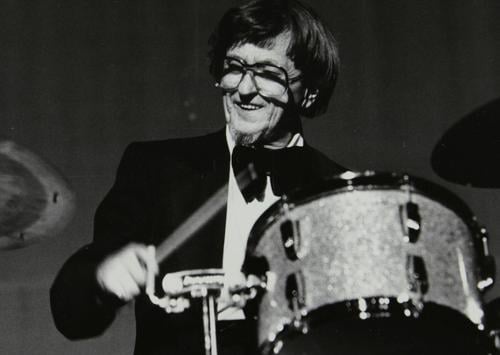
Barrett Deems discusses jazz drumming
Mar. 27, 1979 Barrett Deems discusses his upbringing where he began drumming at age 4 and recalls touring with Louis Armstrong and other musicians. He also talks about meeting drummers in Africa. Music is played throughout: "Flip"- Joe Venuti, "Shine"- Barrett Deems Hottet, "Now You Has Jazz"- Bing Crosby and Louis Armstrong (from "High Society"), "Muskrat Ramble"- Louis Armstrong, "Struttin' with Some Barbecue"- Louis Armstrong, "Slipped Disc"- Benny Goodman, "Stompin' at the Savoy"- Louis Armstrong. Music has been removed from this recording for copyright reasons.
-
Terkel comments and presents musical performance of old jazz duets with Don DeMichael
Sep. 20, 1978 Don DeMichael, editor-in-chief of DownBeat, has brought a collection of jazz duets and critiques and evaluates the songs with Studs Terkel.
-
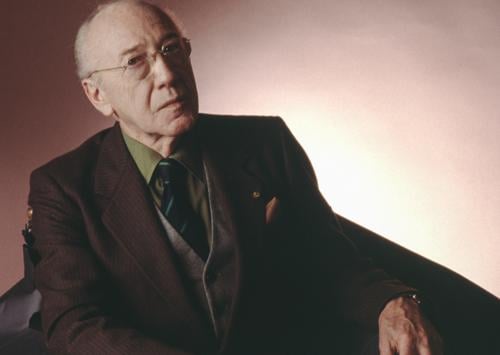
David Diamond discusses his training, influences and work as a classical composer
May. 28, 1975 Studs interviews David Diamond who is in Chicago for a concert at Thorn Hall. Diamond reflects on his family background and his exposure to diverse theater and movies of a variety of cultures that influenced his music. He explains his training and how he uses emotion and then structure to create his work. Studs and David discuss McCarthyism and its affect on performers and the personal affect it had in Diamond's life. The musical pieces are removed from this edited version of the original recording.
-
Willie Dixon and Koko Taylor discuss the blues and how you create blues music
1982 Studs interviews Willie Dixon and Koko Taylor about the blues. They discuss their song "Insane Asylum" and their work together. Dixon uses his song "Little Red Rooster" to help explain how the blues are created from life experiences. Taylor reflects on singers like Willie Dixon, Memphis Minnie, and others who influenced her desire to sing the blues. Taylor also discusses European audiences and blues influence there. The musical numbers are removed from this edited version of the original recording.