Listen to New Voices on Studs Terkel our partnership with 826CHI-here! Read the Story


Showing 161 - 170 of 1040 results
-

Red Norvo discusses recording various albums throughout his career
Oct. 21, 1976 Red Norvo remembers recording some of his albums with other performers like Mildred Bailey, Dizzy Gillespie, and Benny Goodman, as well as the revival of jazz music. Recordings are played of the following: "Lover Come Back to Me" by the Red Norvo Combo, "The Weekend of a Private Secretary" sung by Mildred Bailey, "Congo Blues" by Red Norvo And His Selected Sextet, "After You've Gone" by Red Norvo feat. Benny Goodman Sextet, "Rhee! Oh! Rhee" by Red Norvo, "The Night is Blue" by Red Norvo, and "Everything I've Got Belongs to You" by Red Norvo. Songs have been removed due to copyright.
-
Anita O'Day discusses her career
May. 21, 1975 Studs Terkel interviews jazz musician Anita O'Day.
-
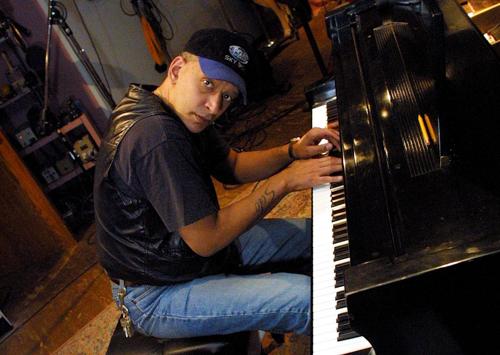
Bradley Parker-Sparrow discusses musical influences and composing jazz music
Feb. 12, 1980 Bradley Parker Sparrow discusses his musical influences and growing up as a self taught jazz musician and composer. He also discusses the rigidity of the classical music world and how he likes to improvise with that music. His songs from the album "Latin Black" are played: "Latin Black Funk", "Latin Black Agagio", "Bur-wiser", and "Looking for Duke". "Reflections in D" by Duke Ellington and "Cleopatra's Dream" by Bud Powell are also played. Songs have been removed on this file for copyright reasons.
-

Luciano Pavarotti discusses some of his traits
Dec. 9, 1976 Being a Pisces, Pavarotti says he's always looking for perfection. He admits the biggest critic of his work is himself. Pavarotti said that he loves the charm of the French language and he likes to learn new languages. He talks of recording some music in Russian. Being able to reach those high C notes, Pavarotti says, is the most athletic part of his voice.
-

Luciano Pavarotti discusses performing
Nov. 20, 1975 Instead of being called "The King of the High C's," Pavarotti would rather be known as "The King of the Bel Canto". Pavarotti said he didn't have the greatest of enthusiasm prior to performing his first concert. However, it ended up being a phenomenal experience, he said. A great singer, Pavarotti added, is very human and romantic. One needs to feel what one's singing and lastly, one must be a beautiful person inside.
-
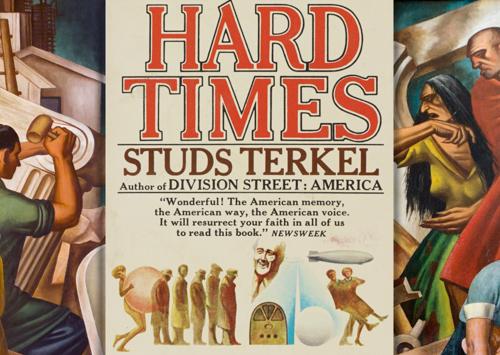
Terkel comments and presents "Hard Times: an oral history of the great depression" ; Program 5 ; part 1
1971 Presenting "Hard Times: An oral history of the great depression": "Bonnie laboring boy" with Joe Morrison, Evelyn Finn and Jose Yglesias (program V).
-
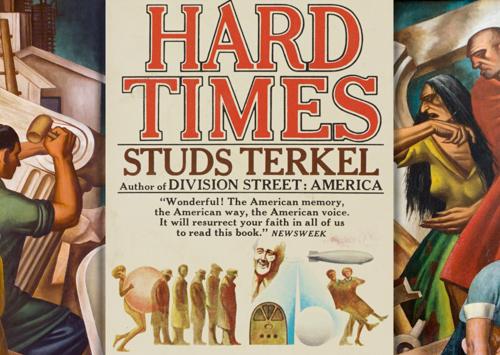
Terkel comments and presents "Hard Times: an oral history of the great depression" ; Program 15; part 1
1971 Presenting "Hard Times: an oral history of the great depression": "A gathering of survivors" with Joe Morrison, Evelyn Finn, Jose Iglesias, Bob Stinson, Oscar Heline, Eml & Ruth Loriks, Buddy Blankenship, Mary Owsley, Sally Rand, Jerome Zerbe, John Beeche (promgram XIII)
-
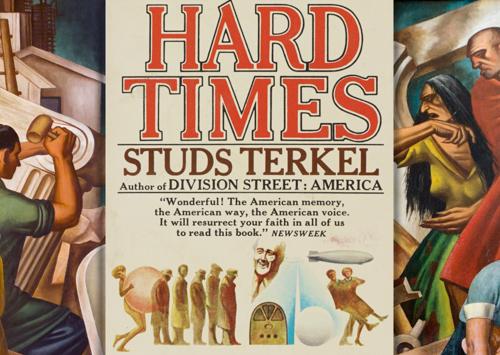
Terkel comments and presents "Hard Times: an Oral History of the Great Depression" ; Chapter 1
1971 Presenting "Hard Times: An Oral History of the Great Depression" Chapter 1: A Fairy Tale. Montage of young voices that talk about their parents' stories of surviving the Depression. The March: Jimmy Sheridan explains the origins of the Bonus March and what life was like on the rails. The Song: Edgar Yipsel (Yip) Harburg talks about writing "Brother, Can You Spare a Dime" while a version by the Weavers plays. Born Losers: Ed Paulsen discusses traveling the country to find work, march riots in San Francisco, and the relief felt as WPA projects and money began to lift burdens.
-
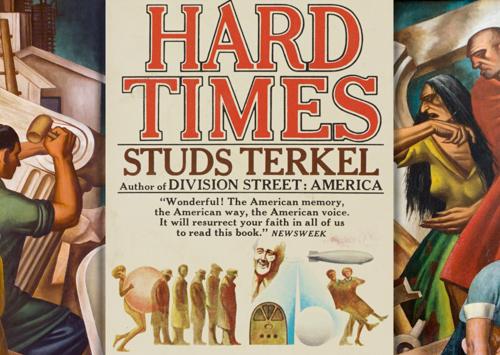
Terkel comments and presents "Hard Times: an Oral History of the Great Depression"; Chapter 3
1971 Presenting "Hard Times: An Oral History of the Great Depression" Chapter 3: Big Business & A Portrait of Two Women. William Benton credits Pepsodent's survival of the Great Depression to Amos 'n Andy. Arthur Robertson talks about the initial aftermath of the 1929 crash as a Wall Street businessman. Sidney Weinberg discusses the confusion on Wall Street after the crash and praises FDR's programs. Jimmy McPartland talks about the importance of working and the success of WPA to boost morale.
-
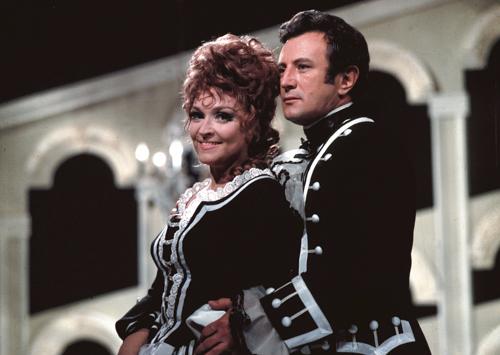
Teresa Stich-Randall discusses her career ; part 1
Nov. 3, 1961 Soprano Teresa Stich-Randall said she spent the last 12 years on tour, mostly on the European continent. Stich-Randall said her mother prayed for a baby girl could become an opera singer. Her piano teacher guided Teresa until she was 10 years old and then she entered into the conservatory of music