Listen to New Voices on Studs Terkel our partnership with 826CHI-here! Read the Story


-

John Hammond and John McDonough discuss music
1970 Music producer John Hammond and jazz critic for Down Beat magazine John McDonough discuss: Hammond's career; the artists he worked with; the artists he was the first to sign; social reform; and more. The following musical excerpts are played: "7 Come 11"; "Sauce"; "Talking Union"; "Blowing In the Wind"; "Today I Sing The Blues"; and "Live Embers".
-
E.Y. (Yip) Harburg discusses songwriting and "Rhymes for the Irreverent"; part 2
Jan. 1966 E.Y. (Yip) Harburg explains how songwriting needs to use and elevate street language to be successful, why he likes rainbows, and what creators of art and music owe the world. He also reads from his book "Rhymes for the Irreverent". Music is played from Finian's Rainbow: "When the Idle Poor Become the Idle Rich" and "How Are Things in Glocca Morra?", original Broadway cast recording. Part 2. Music has been removed from this recording for copyright reasons.
-
John Hammond and John McDonough discuss music and their careers
Sep. 11, 1975 Presenting music with music producer (impresario) John Hammond. The following topics were discussed: various recordings; his encounters with famous jazz musicians; the first time he met Billie Holiday; the song "Strange Fruit"; improvisation; racial reform; Bessie Smith's death; and uniting rural and urban artists. The following musical excerpts were played and have been removed for copyright reasons: "7 Come 11"; "This Years Kisses"; "Lady Be Good"; "Young Woman's Blues"; "What More Can Jesus Do"; and "Piney Brown Blues".
-
E.Y. (Yip) Harburg discusses songwriting and "Rhymes for the Irreverent"; part 1
Jan. 1966 E.Y. (Yip) Harburg talks about the challenges in writing songs for characters, specifically Og in "Finian's Rainbow". He also discusses the craftsmanship of lyric writing and reads from his book "Rhymes for the Irreverent". Music is heard throughout: "When I'm Not Near the Girl I Love" performed by David Wayne and "The Eagle and Me", performed by Dooley Wilson. Part 1 Music has been removed from this recording for copyright reasons.
-
E. Y. (Yip) Harburg discuss his book "At This Point in Rhyme"
Feb. 18, 1977 E.Y. (Yip) Harburg and Studs Terkel read from the book "At This Point in Rhyme". E.Y. Harburg also discusses his thoughts on humanity, how to properly write a song, and the importance of light verse and humor as a basis for everything he creates. Excerpts of "Somewhere Over the Rainbow" by Judy Garland, "Brother, Can You Spare a Dime" by the Weavers, and a Broadway recording of "How Are Things in Glocca Morra" are played in the original airing but have been removed from this version for copyright reasons.
-
Earl "Fatha" Hines and John McDonough discuss jazz music
Sep. 8, 1976 Earl "Fatha" Hines discusses various musicians he's worked with including Louis Armstrong, Charlie Parker, and Dizzy Gillespie. He remembers that bands became bigger after needing to add members to play bigger venues because people liked to dance. He also talks about how he liked to work to create shows and his approach to jazz composition. Music is played throughout: "Weather Bird" with Louis Armstrong, "My Monday Date", "Cavernism", "Boogie Woogie On St. Louis Blues", "Rosetta", and "Second Balcony Jump". Music has been removed from this file for copyright reasons.
-
Art Hodes discusses his career as a jazz and blues pianist
Jun. 17, 1981 Art Hodes discusses his history and influences on his career as a jazz and blues pianist. He tells stories of musicians he has worked with and how he keeps his performances fresh after playing for so many years. Music by Art Hodes is played throughout: "Chimes Blues", "Tennessee Waltz", "Grandpa's Spells", "Just a Closer Walk with Thee","Cakewalkin' Babies from Home", "Blues 'N Booze", and "Riverside Blues".
-
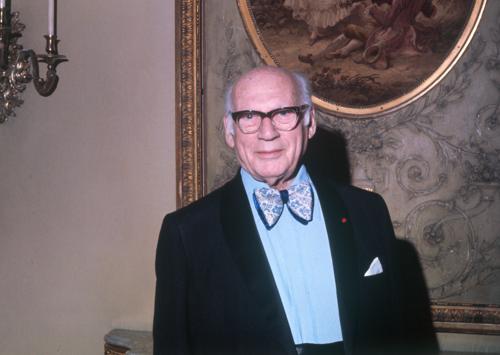
Sol Hurok discusses his career as an American impresario
May. 4, 1971 Sol Hurok discusses his work as an impresario, organizing events and bringing artists from around the world to the United States to perform. Studs Terkel plays songs by many of the artists and performers that Hurok has managed during the interview, including Feodor Chaliapin, Nellie Melba, Titta Ruffo, Luisa Tetrazzini, Sviatoslav Richter, Marian Anderson, and Arthur Rubinstein. Music has been removed from this version for copyright reasons.
-
Helen Humes discusses her career
Jun. 29, 1977 Helen Humes discusses her career and touring with Count Basie and his orchestra. John McDonough is present for the interview and contributes. Songs sung by Helen are played throughout the interview: "He May Be Your Man", "Song of the Wanderer", "If I Could Be with You for One Hour Tonight" (2 recordings- one from 1940 and one from 1977), "Unlucky Woman", "They Can't Take That Away From Me", "Today I Sing the Blues", and "They Raided the Joint". Music has been removed for copyright reasons.
-
Janis Ian discusses her career
1970 Janis Ian discusses her career, life, and her songs. The songs she talks about are "Society's Child", "Janey's Blues", "Honey D'Ya Think", "There Are Times", "Shady Acres", and "Lonely One". Janis Ian also discusses society, race relations, and responsibility. Includes Studs Terkel reading Janis Ian's poem "Poem One". Includes Janis Ian reading her poem.