Listen to New Voices on Studs Terkel our partnership with 826CHI-here! Read the Story


Showing 1 - 10 of 17 results
-

American Conservatory Theater actors talk with Studs Terkel ; part 1
1967 Terkel interviews actors from the American Conservatory Theater: Richard A. Dysart, Robin Gammell, Rene Auberjonois, Janis Young, and William Ball. This is an interview done in two parts.
-
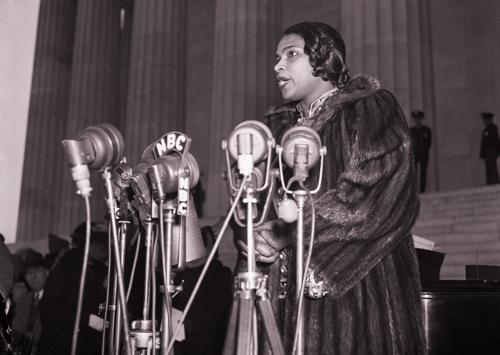
Marian Anderson and James DePreist discuss their experiences in music ; part 1
1966 Marian Anderson recalls singing on stage for the first time at the Metropolitan Opera House in 1957 and how it was the realization of a dream come true. Marion's nephew, James DePreist remembers being able to conduct a piece of music he had never conducted before because his aunt Marion had exposed him to it when he was a child. James said when his aunt Marion sung spirituals, he couldn't help but feel religious and he's an atheist.
-
-
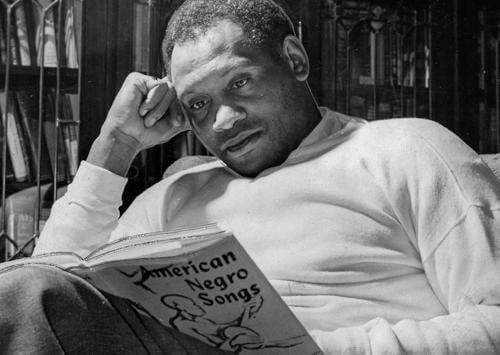
Gathering of friends discussing Paul Robeson
May. 8, 1970 Recorded live on Chicago's South Side. Robeson is ill at the time of recording. Speakers: Earl Dickerson, Etta Moten Barnett, Judge Sidney Jones, J. Mayo "Ink" Williams, Joan Brown (possibly Abena Joan Brown), Charles Hamilton, Margaret Burroughs, [John Gray's sister], [Stevens?]
-
John Hammond and John McDonough discuss music
1970 Music producer John Hammond and jazz critic for Down Beat magazine John McDonough discuss: Hammond's career; the artists he worked with; the artists he was the first to sign; social reform; and more. The following musical excerpts are played: "7 Come 11"; "Sauce"; "Talking Union"; "Blowing In the Wind"; "Today I Sing The Blues"; and "Live Embers".
-
John Hammond and John McDonough discuss music and their careers
Sep. 11, 1975 Presenting music with music producer (impresario) John Hammond. The following topics were discussed: various recordings; his encounters with famous jazz musicians; the first time he met Billie Holiday; the song "Strange Fruit"; improvisation; racial reform; Bessie Smith's death; and uniting rural and urban artists. The following musical excerpts were played and have been removed for copyright reasons: "7 Come 11"; "This Years Kisses"; "Lady Be Good"; "Young Woman's Blues"; "What More Can Jesus Do"; and "Piney Brown Blues".
-
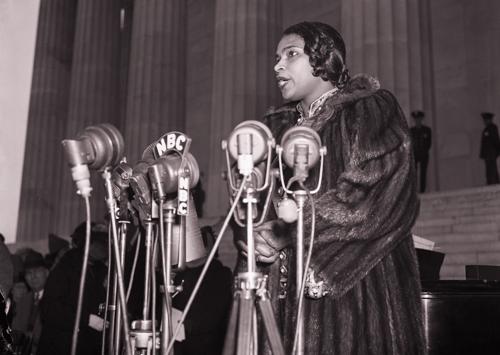
Interviewing Marian Anderson and James DePreist ; part 2
1966 Marion Anderson, soloist, and James DePreist, conductor, sit down with Studs Terkel prior to their Grand Park Weekend Concert where "Berjack Symphony No. 2 or 7" will be played with the 'Copland Preamble for Solemn Occasion" as well as a group of Negro Spirituals with "Ava Maria". Marian Anderson begins the interview by singing "Erlkonig" and concludes with "Ava Maria". She discusses the early influence of the first Negro arts singer, Roland Hayes had on her in Philadelphia and his "He Never Said a Mumberlin' Word" is played. Both Anderson and DePreist discuss how song becomes drama.
-
Presenting a performance of the Glen Ellyn Children's Chorus with music director Lucy Ding
Mar. 3, 1989 Terkel presents a musical performance of the Glen Ellyn Children's Chorus
-
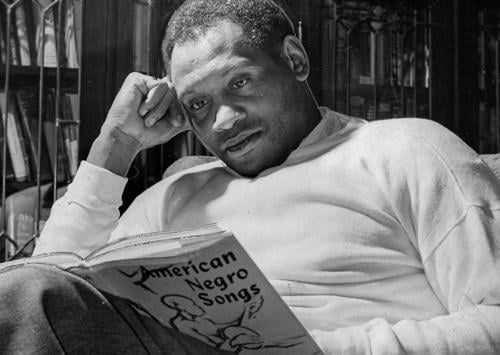
Interview with Avery Brooks
Feb. 7, 1991 Discussing Paul Robeson with actor, teacher, and musician Avery Brooks.
-