Listen to New Voices on Studs Terkel our partnership with 826CHI-here! Read the Story


Showing 41 - 50 of 163 results
-
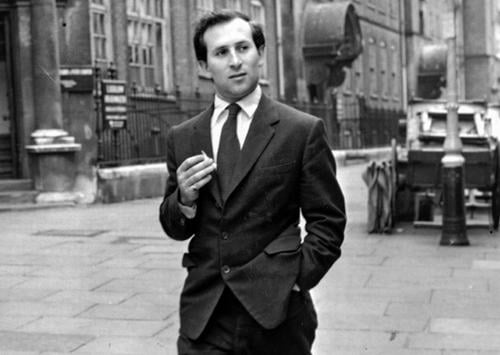
Arnold Wesker, english writer and playwright discusses his life and work.
1962 Arnold Wesker, English playwright and writer in several genres discusses scenes from the play "Roots". Mr Wesker further discusses his plays and the current cast traveling around England performing several of his plays. The interview tape ends and Studs recalls the remainder of the interview alone as a postscript.
-

Ivy Compton-Burnett discusses her life & work ; part 2 and Peter Hall discusses the theater ; part 1
1962 Ivy Compton-Burnett continues the discussion of class structure in England. Ms. Compton-Burnett states that she has never been a actor but she had always been an observer, to which Studs agrees that her writing reflect her statement accurately. He ends the interview by telling Ms. Compton-Burnett that she is a true original and that he greatly admires her individuality. Interview ends at 13:00. (part 2) Studs then begins an interview with Peter Hall at Aldwych theater office London, England. Mr.
-
Interview with Jared Brown
Aug. 25, 1989 Discussing "Zero Mostel: A Biography" (published by Atheneum) with the author Jared Brown.
-
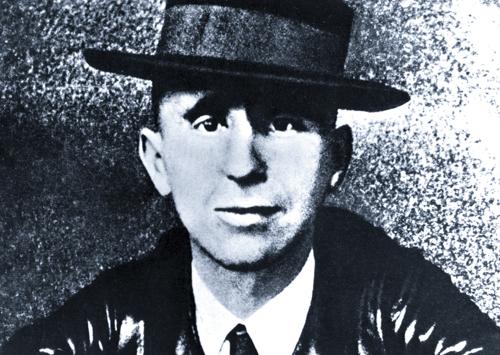
Frederick Ritter discusses Bertolt Brecht and philosophy of epic German theater with in studio performances
May. 3, 1962 Frederick Ritter discusses the life and work of playwright and poet Bertolt Brecht and preforms a few his songs. He also discusses the philosophy of epic theater and literature in Germany. Sabina Roupp joins Ritter with Brecht's music.
-
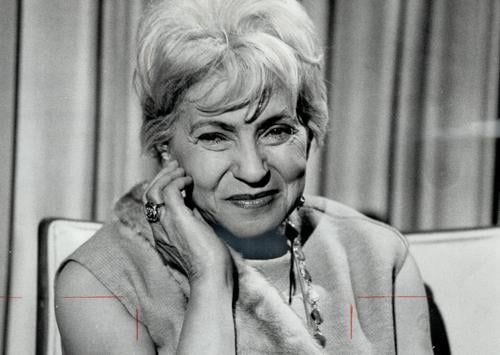
Ida Kaminska discusses her career
Apr. 13, 1966 Through an interpreter, Madame Ida Kaminska discusses her role in the film "The Shop on Main Street." Both her mother and father were actors, too. Madame Kaminska explains she comes from a family of actors from 100 years ago.
-
Playwright August Wilson, actor James Earl Jones, and director Lloyd Richards discuss their play "Fences"
Feb. 7, 1986 The Goodman Theatre cast of the play “Fences” discuss some of the major themes from the play, including the African-American experience and race relations, particularly in Major League Baseball.
-
Jules Feiffer discusses his cartoonist history and his play "Elliot Loves"
Apr. 12, 1990 Jules Feiffer and Studs read several of Feiffer's previous cartoons as they discuss his history as a cartoonist and his retrospective on display at the Walton Street Gallery in Chicago. Feiffer discusses his attempt to move away from political cartoons and instead shift focus to social commentary. Feiffer also discusses his play "Elliot Loves", a love story that captures the complications of love and the “gap” between the sexes.
-
Herbert Blau discusses the play "The Donner Party, Its Crossing"
Aug. 2, 1974 Herbert Blau’s KRAKEN experimental group performed, “The Donner Party, Its Crossing,” at the at the Body Politic Theatre. Blau shares his thoughts on the theatre and his approach to theatre. Blau believed there was always a story to be told, and that an audience would only understand the true story of people’s hardships by telling and re-telling a story over and over again. The program also includes an excerpt of a George Keithly interview at 5:40 to 7:40.
-
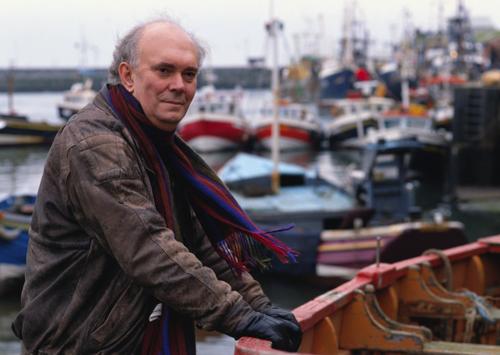
Alan Ayckbourn discusses his background and career
May. 27, 1994 His total love for the theatre began when Alan Ayckbourn worked backstage, and then worked the lights. He eventually began writing plays. To date, he has written 47 of them. Ayckbourn admits that his plays may be dark but he explained that he tries to add some humor into them, too. When writing a play, and without any notes, Ayckbourn said, he'll take four or five days to write out an entire play on a word processor.
-
Interview with Thom Bishop
Sep. 27, 1990 Interviewing singer and songwriter Thom Bishop.