Listen to New Voices on Studs Terkel our partnership with 826CHI-here! Read the Story


Showing 41 - 50 of 60 results
-
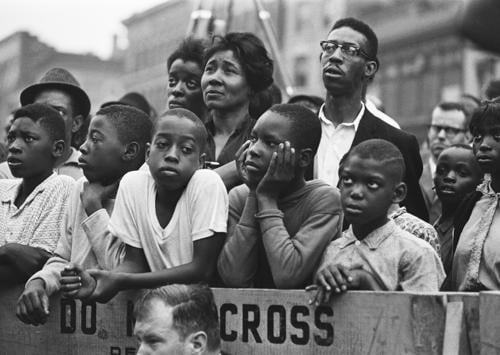
Studs Terkel interviews Professor Charles V. Hamilton on his book written with Stokely Carmichael entitled "Black Power: Politics of Liberation in America" ; part 1
Nov. 21, 1967 Using the backdrop of James Baldwin's "Nobody Knows My Name" and Baldwin's feelings that Blacks were ashamed of where they came from, Terkel interviews Professor and Chairman of the Political Science Department of Roosevelt University on his book coauthored with Stokely Carmichael entitled" Black Power: Politics of Liberation in America". Hamilton states that Blacks were taught to hate themselves and leave school believing that. Institutional racism and the deliberate oppression it creates, holds blacks back. Blacks are left out of crucial decision making processes that concern them.
-

From the Wax Museum - 009 - South African writer Alan Paton discusses life in South Africa
1963 South African writer Alan Paton likened the white South African people to the ostrich. Paton said the ostrich keeps its head in the sand, and some people do the same in South Africa, too. With their heads in the sand, they don’t see any problems existing. Paton said he can not understand his country’s government. He can’t understand why the Black people are not allowed to own homes. Because of the government, Paton also talks about having to be careful about what he writes and he says the Americans are very lucky to have their U.S. Constitution.
-
Stephen B. Oates discusses his book "Let the Trumpets Sound: A Biography of Martin Luther King"
Sep. 9, 1982 Stephen B. Oates discusses his book "Let the Trumpets Sound: A Biography of Martin Luther King;" 2 short excerpts played during the program: one of Terkel interviewing Martin Luther King and another of E.D. Nixon speaking about MLK.
-
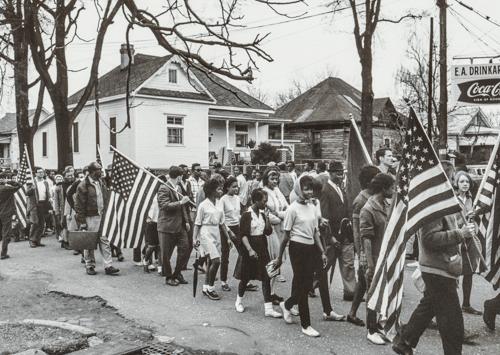
Both Kathy [no last name] and John Beecher discuss their feelings about the South ; part 4
Apr. 1, 1965 Content Warning: This conversation includes racially and/or culturally derogatory language and/or negative depictions of Black and Indigenous people of color, women, and LGBTQI+ individuals. Rather than remove this content, we present it in the context of twentieth-century social history to acknowledge and learn from its impact and to inspire awareness and discussion. After hearing Martin Luther King, Jr.
-

Nancy Milio reads from and discusses her book "9226 Kercheval"
Jun. 13, 1970 Nancy Milio's book, "9226 Kercheval: The Storefront That Did Not Burn," is about community health services offered in a ghetto on the south side of Detroit, Michigan. As a nurse, Milio knew how important it was to offer quality health services to poor and uneducated individuals. With their real names changed, Milio talks about her experiences with Mrs. Watkins, Johhnie West and others at the center.
-
Herbert Kohl discusses Myles Horton and the book "The Long Haul: An Autobiography"
Apr. 5, 1990 Progressive educator Herbert Kohl discusses educator and founder of the Highlander Folk School Myles Horton and the book about him, "The Long Haul: An Autobiography." The book was written by Herbert Kohl and his wife, Judith Kohl.
-
Lillian Smith discusses reactions to her books and writings
Lillian Smith explores the responses she received from her books that address racial prejudice and discrimination, especially in the south.
-
Doris Lessing and Arnold Wesker discuss this primitive society ; part 2
Dorris Lessing says in this society, we are all savages. According to Lessing, in 10 years, millions will die of starvation. Arnold Wesker says we live in a society of chaos and as a society, our end goal is produce something to deal with and eliminate the chaos.
-
Interviewing Roscoe Lee Browne, Gregory Mosher, and Derek Walcott
1982 The actor, director, and playwright of the Goodman Theater's Panto (AKA Pantomine) join Studs to discuss its major themes of colonialism and racial role reversal.*Please note: some sections have been edited out from the original recording due to copyright considerations
-
A conversation with Ronald Takaki
Jun. 17, 1993 The American author, historian, and ethnic studies scholar talks with Studs about his book, A Different Mirror: A History of Multicultural America.*Please note: some sections have been edited out from the original recording due to copyright considerations