Listen to New Voices on Studs Terkel our partnership with 826CHI-here! Read the Story


Showing 51 - 60 of 98 results
-
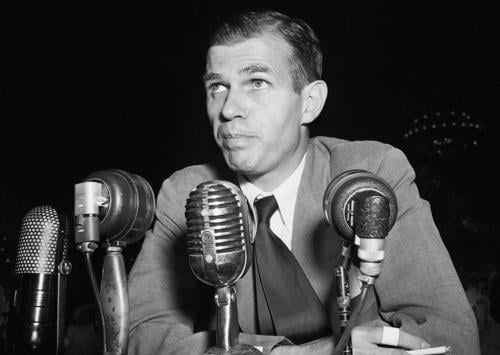
Tony Hiss discusses his book "Laughing Last"
Mar. 14, 1977 Content Warning: This conversation includes racially and/or culturally derogatory language and/or negative depictions of Black and Indigenous people of color, women, and LGBTQI+ individuals. Rather than remove this content, we present it in the context of twentieth-century social history to acknowledge and learn from its impact and to inspire awareness and discussion. The book, "Laughing Last: Alger Hiss" is the biography of Tony Hiss' father. Although Alger Hiss was convicted of perjury and did time in prison, Tony Hiss said his father, Al, was doing all right.
-

-
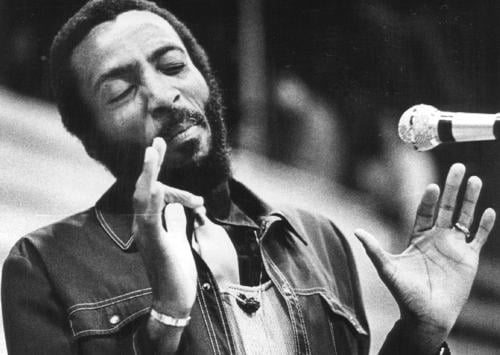
Panel at University of Chicago Law School discuss ending capital punishment, part 3
Feb. 19, 1965 Dick Gregory satirizes capital punishment in the United States, calls for the churches to take action, and talks about potential actions from "demonstrators." Other panel members answer audience questions (Father James Jones, Norval Morris, Hans W. Mattick, and Arthur Wineberg). Hosted by the University of Chicago. (Part 3 of 3)
-
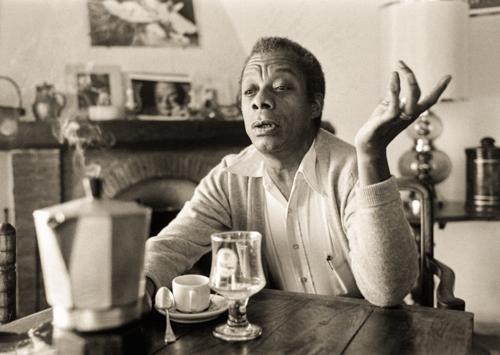
James Baldwin discusses his book "The Evidence of Things Not Seen"
Nov. 22, 1985 John Baldwin talks about his book "The Evidence of Things Not Seen" in which discusses the Wayne Williams Atlanta child murders of 1979-1981. This record is part of the Studs Terkel Almanac.
-
Derrick Bell discusses his book "Confronting Authority"
Dec. 2, 1994 Civil rights activist, lawyer, and professor Derrick Bell discusses his latest work and protest against Harvard University due to their lack of diverse hiring in academics. Bell is known for his work on the concept of critical race theory and his relentless pursuit of fair treatment for his colleagues.
-
-
Interviewing ex-convict turned probation officer, writer and lecturer Albert Race Sample
Dec. 4, 1984 Discussing the book "Race hoss: big Emma's boy" with the author Albert Race Sample. Includes Sample reading a section of the book.
-
Patrick Murphy discusses the book, "Our Kindly Parent--The State".
Aug. 23, 1974 Studs Terkel discusses the book, "Our Kindly Parent--The State," and interviews the author Patrick Murphy. They discuss the inadequate juvenile justice and reform system extensively. Includes an excerpt from the interview with Lisa Richette, author of "Throw away children."
-
Dr. Carlo Levi discusses his exile and humanity in southern Italy after WW2; part 1
1962 Dr. Carlo Levi talks about his book "Christ Stopped at Eboli", the human condition, and compassion for those suffering during and after World War 2.
-
Dr. Carlo Levi discusses Italian literature; Julio & Phillipo sing nursery rhymes, Maria Caniglia discusses opera; part 2
1962 Dr. Carlo Levi talks about the differences in Italian and American literature in the first part. In the second part, children Julio and Phillipo sing Italian nursery rhymes. In the last part, Maria Caniglia and husband Pino Donati discuss opera; part 2.