Listen to New Voices on Studs Terkel our partnership with 826CHI-here! Read the Story


Showing 191 - 200 of 326 results
-

William Least Heat-Moon discusses his book "PrairyErth: (A Deep Map)"
Nov. 5, 1992 Discussing the book "Blue highways: a journey into America" with William Least Heat Moon.
-
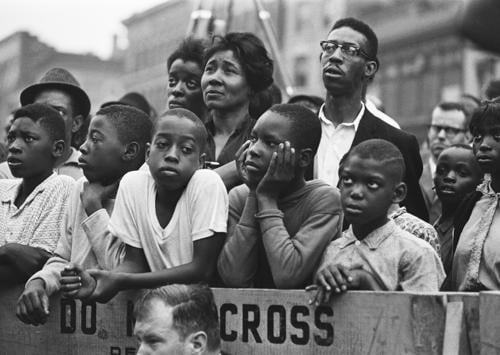
Studs Terkel interviews Professor Charles V. Hamilton on his book written with Stokely Carmichael entitled "Black Power: Politics of Liberation in America" ; part 1
Nov. 21, 1967 Using the backdrop of James Baldwin's "Nobody Knows My Name" and Baldwin's feelings that Blacks were ashamed of where they came from, Terkel interviews Professor and Chairman of the Political Science Department of Roosevelt University on his book coauthored with Stokely Carmichael entitled" Black Power: Politics of Liberation in America". Hamilton states that Blacks were taught to hate themselves and leave school believing that. Institutional racism and the deliberate oppression it creates, holds blacks back. Blacks are left out of crucial decision making processes that concern them.
-
-
Barbara Kingsolver discusses her book "Holding the Line: Women in the Great Arizona Mine Strike of 1983"
Sep. 17, 1990 Since no men were allowed to picket against the Phelps Dodge Corp., Mexican American women showed up and according to Kingsolver’s book, “Holding the Line,” the picket lines were a brand new experience for the women. Some of the women had to get their husbands’ permission to picket. The group of women found their lives transformed not only with their cause but with new bonds of friendship from the other women.
-
Bill Adelman, Paul Avrich, Carolyn Ashbaugh, and Bill Neebe discuss the Haymarket Square Riot
May. 2, 1986 Commemorating the centennial of the Haymarket Square Riot, or Haymarket Affair, are authors and historians Bill Adelman, Paul Avrich, Carolyn Ashbaugh, and the grandson of Haymarket defendant Oscar Neebe, Bill Neebe. The interveiwees create a timeline of the events leading up to the Haymarket Riot including the German immigrants living situations, unions and strikes, police brutality and corruption. The group also lays out the events from May 1st to May 5th and then the following corrupt trials.
-
James McPherson discusses his book "Battle Cry of Freedom: The Civil War Era" ; part 1
Jun. 6, 1989 Historian James McPherson discusses the his book, "Battle Cry of Freedom: The Civil War Era." McPerson explores the American Civil War and talks about some Civil War music. He also discusses the reasoning behind the Civil War and some of the key figures during that time and how many songs came to be written about the battles and leaders.
-
James McPherson discusses his book "Battle Cry of Freedom: The Civil War Era" ; part 2
Jun. 6, 1989 Historian James McPherson discusses the his book, "Battle Cry of Freedom: The Civil War Era." McPerson explores the American Civil War and introduces some Civil War music. He talks about black soldiers, photography, and reconstruction. Content Warning: This conversation has the presence of outdated, biased, offensive language. Rather than remove this content, we present it in the context of twentieth-century social history to acknowledge and learn from its impact and to inspire awareness and discussion.
-
David Halberstam discusses his book, "The Fifties"
Jun. 11, 1993 David Halberstam, writer and historian, talks about his book, "The Fifties." The conversation includes Brown v. Board of Education, atomic weapons, the Cold War, the Korean and Vietnam Wars, consumerism, birth control, suburbs, television and the start of the counterculture. Halberstam reads several passages from his book.
-
-