Listen to New Voices on Studs Terkel our partnership with 826CHI-here! Read the Story


Showing 1 - 10 of 16 results
-

Thomas Keneally discusses the book "Schindler's List"
Nov. 12, 1982 Thomas Keneally discusses the book "Schindler's List," detailing the actions of Oskar Schindler saving Jews during WWII.
-
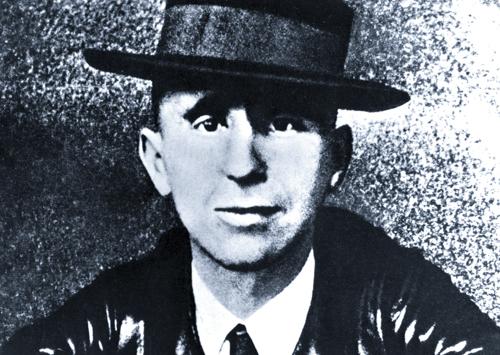
Frederick Ritter discusses Bertolt Brecht; part 1
Jun. 24, 1959 Frederick Ritter, professor at Illinois Institute of Technology, discusses the life and work of playwright Bertolt Brecht, the genre of epic theater, and more.
-
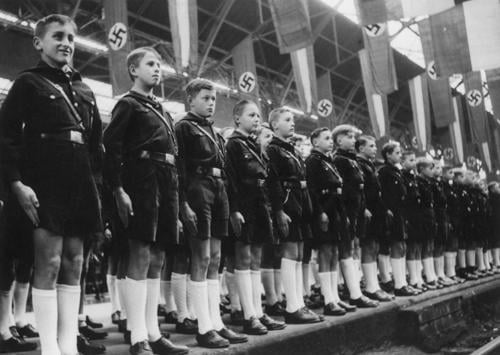
Werner Burkhardt German jazz critic and translator speaks with Studs in Hamburg, Germany.
Mar. 1, 1967 Werner Burkhardt, German music journalist, critic, and translator, discusses his life and work with Studs. Mr Burkhardt speaks about his life during the time of Adolph Hitler, the Hitler Youth, and World War II. They end the interview talking about Jazz in Munich, a recording of "My Man" by Billie Holiday closes the interview.
-
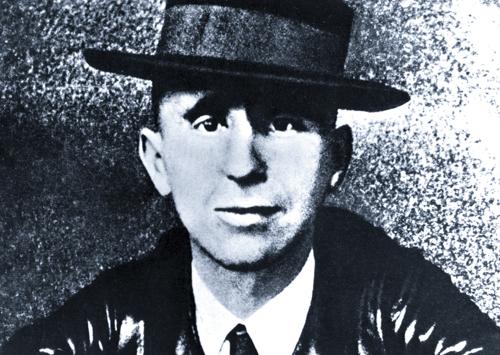
Frederick Ritter discusses Bertolt Brecht and philosophy of epic German theater with in studio performances
May. 3, 1962 Frederick Ritter discusses the life and work of playwright and poet Bertolt Brecht and preforms a few his songs. He also discusses the philosophy of epic theater and literature in Germany. Sabina Roupp joins Ritter with Brecht's music.
-
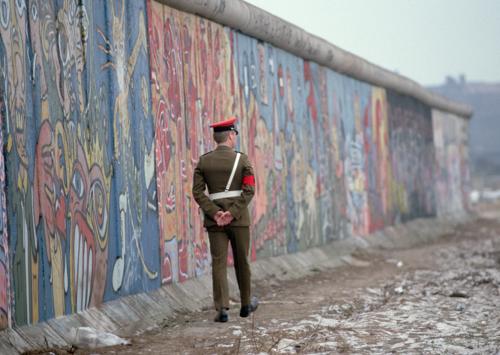
Ursula Bender leads a tour to the Berlin Wall
1986 Content Warning: This conversation has the presence of outdated, biased, offensive language. Rather than remove this content, we present it in the context of twentieth-century social history to acknowledge and learn from its impact and to inspire awareness and discussion. While heading to the Berlin Wall, Ursula Bender points out different landmarks. In addition, once at the Berlin Wall, she reads and translates some of the graffiti left on the wall. Parts of the interview are in German as Bender talks to some German people.
-
-
-
-
Ursula Bender leads a tour to the Berlin Wall
1980 Content Warning: This conversation has the presence of outdated, biased, offensive language. Rather than remove this content, we present it in the context of twentieth-century social history to acknowledge and learn from its impact and to inspire awareness and discussion. While heading to the Berlin Wall, Ursula Bender points out different landmarks. In addition, once at the Berlin Wall, she reads and translates some of the graffiti left on the wall. Parts of the interview are in German as Bender talks to some people.
-
Studs Terkel interviews Friedrich Luft in the home of Dr Erich Heller of Northwestern University
1968 Friedrich Luft, Chief Drama Critic for Die Welt discusses German theater and Bertolt Brecht as well as new playwrights such as Peter Weiss. Unlike American theaters, Germany has over 200 theaters that are subsidized and each town of 50,000 has a theater. Just like the days of The People's Stage (which still exists) the grocer and cobbler of Germany enjoy the theater. They are as devoted to the theater as going to a museum or church. They are treated to 12 to 16 new or old plays from Sophocles to Sartre or Pinter.