Listen to New Voices on Studs Terkel our partnership with 826CHI-here! Read the Story


Showing 31 - 40 of 205 results
-
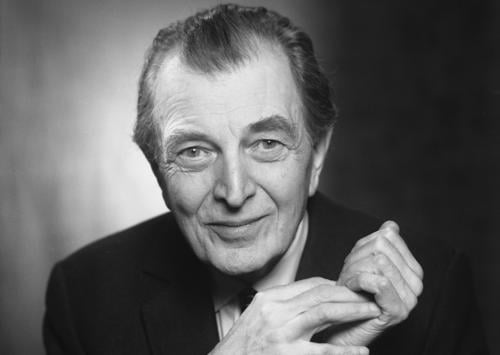
Alexander Tcherepnin discusses his childhood and career as a composer
Mar. 8, 1977 Studs interview with Alexander Tcherepnin about his compositions for opera and a variety of instrumentals. Tcherepnin shares his childhood in Saint Petersburg born into a family with a rich musical background. He also shares his opinion about how Hitler affected the opera in Europe. This edited version does not include the musical recordings played in the original version.
-

Virgil Thomson discusses his career as a music composer for opera and film
Jul. 24, 1973 Studs interview with Virgil Thomson about his career as a music composer. Thomson shares his work with Gertrude Stein in operas "Mother of Us All" and "Four Saints In Three Acts." He discusses his preference for black artists. Thomson describes his work in documentary films such as "Plow That Broke the Plains." He also shares information about the cajun music "Squeeze Box" in the film "Louisiana Story." This edited version does not include the music pieces.
-
Maurice Weddington talks his music career as a renowned composer in Europe
Mar. 24, 1983 Self-taught composer Maurice Weddington talks about his music career from his early years when he was raised on the West Side of Chicago to his performances around Western Europe.
-
Thomas Wikman discusses Music of the Baroque
Apr. 22, 1976 Thomas Wikman discusses Music of the Baroque with Studs Terkel. They also discuss composers, musical talent in Chicago, musical instruments, opera, and the history of Baroque music.
-
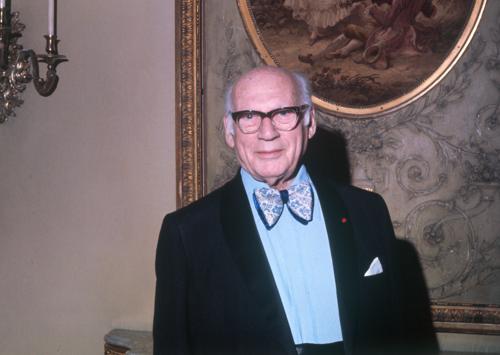
Sol Hurok discusses his career as an American impresario
May. 4, 1971 Sol Hurok discusses his work as an impresario, organizing events and bringing artists from around the world to the United States to perform. Studs Terkel plays songs by many of the artists and performers that Hurok has managed during the interview, including Feodor Chaliapin, Nellie Melba, Titta Ruffo, Luisa Tetrazzini, Sviatoslav Richter, Marian Anderson, and Arthur Rubinstein. Music has been removed from this version for copyright reasons.
-
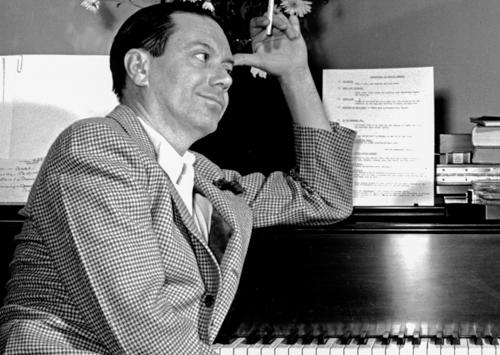
Discussing Cole Porter's work and the book "Cole" and interviewing its author Robert Kimball
1970 Cole Porter biographer Robert Kimball talks with Studs about his book "Cole" and his subject's life and work as they listen to classic performances of some of his most beloved songs. They marvel at how Porter perfectly captured the zeitgeist of the times in his lyrics, his lyrical influences, his unique method of outside-in composing lyrics and music simultaneously, Bobby Short's masterful interpretations, controversies over some of his works, and how well his material holds up.
-
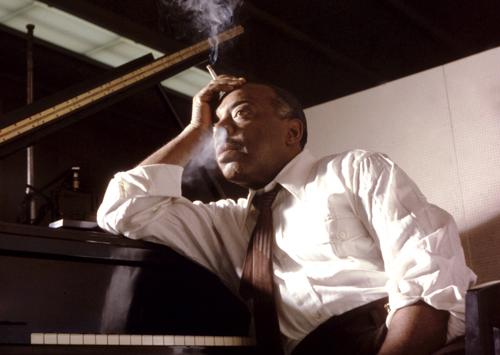
Studs Terkel and William (Bill) Leonard discuss their favorite memories of Frank Holzfeind and the Blue Note Jazz Club in Chicago
Jan. 9, 1975 Studs Terkel and William (Bill) Leonard share memories of the Blue Note Jazz Club as a tribute to Frank Holzfeind. Music is played throughout the episode: "After You've Gone" by the Benny Goodman Sextet, "The Flat Feet Floogie" by Slim and Slam, "How High the Moon" by Sarah Vaughan, "Destination K.C." by Count Basie, "West End Blues" by Louis Armstrong, "Lil' Augie Is A Natural One Man" by Chet Roble, and "Rock Skippin' at the Blue Note", Duke Ellington. Songs have been removed for copyright reasons.
-
Edith Mason discusses her career in opera ; part 2
1966 They talk about other performers Madam Mason worked with. Edith shares her view on the difference between opera in her day and the current opera. Parts of this version appears to be a duplicate of another, but there are a few parts that are not duplicates. The musical pieces are removed from this edited version of the original recording.
-
Edith Mason discusses her childhood and career in the opera
1966 Studs replays his interview with Edith Mason 21 years ago. Madam Mason discusses her childhood as it pertains to her career. She shares her training and study in Paris. Mason recalls the many composers and conductors she has worked with and the various opera companies she worked for. The musical numbers are removed from this edited version of the original recording.
-
Ivan Moravec discusses his career and classical pianists
Nov. 12, 1969 Ivan Moravec discusses his career, classical pianists, and composers. He also discusses his colleagues or contemporary pianists.