Listen to New Voices on Studs Terkel our partnership with 826CHI-here! Read the Story


Showing 101 - 110 of 390 results
-

Interviewing ex-convict turned probation officer, writer and lecturer Albert Race Sample
Dec. 4, 1984 Discussing the book "Race Hoss: Big Emma's Boy" with the author Albert Race Sample. Includes Sample reading a section of the book.Content Warning: This conversation has the presence of outdated, biased, or offensive language. Rather than remove this content, we present it in the context of twentieth-century social history to acknowledge and learn from its impact and to inspire awareness and discussion.*Please note: some sections have been edited out from the original recording due to copyright considerations
-
Barbara Blaine, Ruth Graff, and Nina Polcyn-Moore discuss the Catholic Worker Movement
1986 Interviewing Catholic workers Barbara Blaine, Ruth Graff, and Nina Polcyn-Moore. They discuss their lives, Catholic worker houses, and poverty. Includes an interview with Dorothy Day. Content Warning: This conversation has the presence of outdated, biased, offensive language. Rather than remove this content, we present it in the context of twentieth-century social history to acknowledge and learn from its impact and to inspire awareness and discussion.
-
John Tateishi talks about his book "And Justice for All"
Jun. 22, 1984 Tateishi discusses his collection of oral histories by Japanese-Americans who were interned in 1942. Includes excerpts from Minoru Yasui, Yoriko Hohri (featured in "The Good War"), Peter Ota and a friend of Studs' who was ordered to terrorize Japanese-Americans as part of his military duty.
-
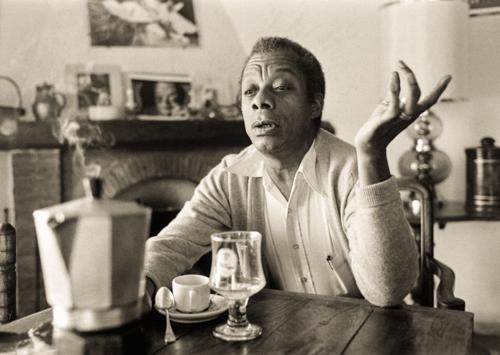
James Baldwin discusses his book "Another Country" and his travels through Africa
Sep. 29, 1962 James Baldwin discusses his book "Another Country" and his trip to Africa. Mr.Baldwin and Studs speak about his place in social reform and his fight for civil rights for all.
-
Father Roy Bourgeois discusses why the School of the Americas must be closed down
Mar. 24, 1994 Father Roy Bourgeois travels the country, talking to groups of people who aren't aware that their tax dollars go to fund the School of the Americas. Bourgeois discovered that money provided was for military weapons & for the training of soldiers to torture and to kill people of Latin American countries.
-
Anne Braden discusses her experiences during the Civil Rights Movement
Apr. 30, 1979 Journalist and author of “The Wall Between,” Anne Braden, shares moments from her life as a civil rights worker in Louisville, KY.
-
Vine Deloria discusses his book "American Indians, American Justice"
Nov. 17, 1983 Buffalo, land, barbed wire, treaties and legal cases are all topics of Vine Deloria's book, "American Indians, American Justice". A lawyer and a Sioux Indian himself, Deloria points out a tricky question for the courts -- What constitutes Indian country?
-
-
Daniel Ellsberg discusses nuclear warfare and its worldwide impact
Feb. 14, 1994 Interviewing former government official, Vietnam War opponent, and political activist Daniel Ellsberg. Program includes an excerpt of a 1980 interview with Ellsberg. Includes a test tone lasting about 20 seconds. Content Warning: This conversation has the presence of outdated, biased, offensive language. Rather than remove this content, we present it in the context of twentieth-century social history to acknowledge and learn from its impact and to inspire awareness and discussion.
-
P. David Finks discusses his book "The Radical Vision of Saul Alinsky"
Sep. 7, 1984 Before he became an author, P. David Finks was a priest and he met Saul Alinsky in Rochester in 1964. Finks' book, "The Radical Vision of Saul Alinsky," covers Alinsky's plans of reorganizing community groups and being an outsider agitator. Alinsky, explained Finks, knew the importance of getting people involved. Two excerpts of interviews with Saul Alinsky are included.