Listen to New Voices on Studs Terkel our partnership with 826CHI-here! Read the Story


Showing 31 - 40 of 50 results
-

-
-

Dr. Martin Luther King Jr. discusses civil rights in regards to his "I Have a Dream" speech
Oct. 22, 1964 Studs Terkel interviews Dr. Martin Luther King Jr. at the home of gospel singer Mahalia Jackson. They discuss King's "I Have a Dream" speech that he made in 1963, at the foot of the Lincoln Memorial. At the end of the program there are various gospel music selections featuring Jackson and others.
-
-
Derrick Bell discusses his book "Confronting Authority"
Dec. 2, 1994 Civil rights activist, lawyer, and professor Derrick Bell discusses his latest work and protest against Harvard University due to their lack of diverse hiring in academics. Bell is known for his work on the concept of critical race theory and his relentless pursuit of fair treatment for his colleagues.
-
Interviewing ex-convict turned probation officer, writer and lecturer Albert Race Sample
Dec. 4, 1984 Discussing the book "Race hoss: big Emma's boy" with the author Albert Race Sample. Includes Sample reading a section of the book.
-

Studs Terkel interviews Professor Charles V. Hamilton on his book written with Stokely Carmichael entitled "Black Power: Politics of Liberation in America" ; part 1
Nov. 21, 1967 Using the backdrop of James Baldwin's "Nobody Knows My Name" and Baldwin's feelings that Blacks were ashamed of where they came from, Terkel interviews Professor and Chairman of the Political Science Department of Roosevelt University on his book coauthored with Stokely Carmichael entitled" Black Power: Politics of Liberation in America". Hamilton states that Blacks were taught to hate themselves and leave school believing that. Institutional racism and the deliberate oppression it creates, holds blacks back. Blacks are left out of crucial decision making processes that concern them.
-
From the Wax Museum - 009 - South African writer Alan Paton discusses life in South Africa
1963 South African writer Alan Paton likened the white South African people to the ostrich. Paton said the ostrich keeps its head in the sand, and some people do the same in South Africa, too. With their heads in the sand, they don’t see any problems existing. Paton said he can not understand his country’s government. He can’t understand why the Black people are not allowed to own homes. Because of the government, Paton also talks about having to be careful about what he writes and he says the Americans are very lucky to have their U.S. Constitution.
-
Ellen Afterman, Clinton Sanders, and Spellman Young discuss the drug epidemic
1980 Ellen Afterman and Clinton Sanders (authors of "Drugs and Your Life") and Spellman Young discuss drug use through the lenses of race, sex, and socioeconomic status.
-
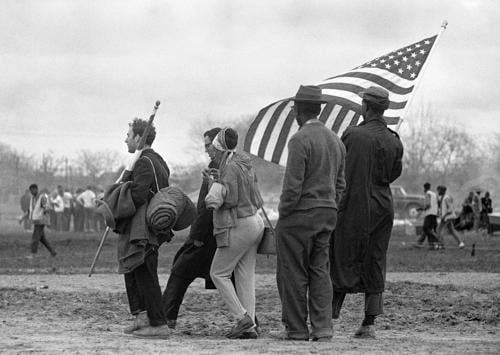
Robin Moran discusses preparing for the Selma, Alabama civil rights with Studs Terkelmarch
Apr. 9, 1965 Interviewing in Montgomery, Alabama, with Robin Moran [part 7, tape 1 of 2]. Robin described the feelings and activities before the march.