Listen to New Voices on Studs Terkel our partnership with 826CHI-here! Read the Story


Showing 21 - 30 of 40 results
-
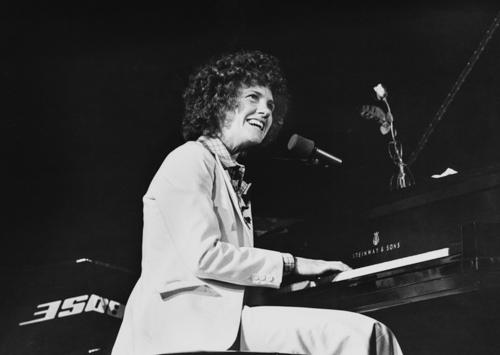
Margie Adam discusses her music and career
May. 20, 1993 Margie Adam, musician, activist, and composer, discusses how events such as the women's movement and the lesbian-feminist movement inspired her to create music for her new album, Another Place. The album reflects on Adams's life and on topics such as her sexuality.
-
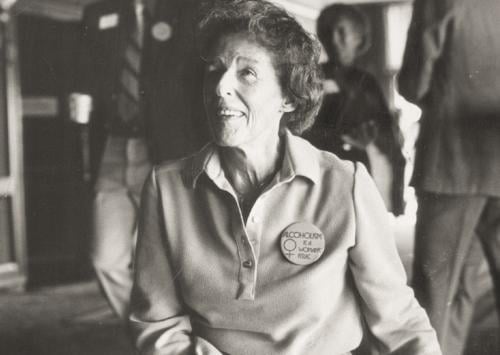
Susan Brownell Anthony discusses her book "The Ghost in My Life"
Oct. 29, 1971 Ms. Anthony, the grand-niece of Susan B. Anthony, comments on the women's liberation movement, her personal political life and her view of Christian life.
-

June Terpstra and two women, Ann and Donna, discuss battered women
Oct. 28, 1983 Discussing battered women with the director of the Evanston Shelter for Battered Women, June Terpstra. Two women, Ann and Donna, talk about their experiences of abuse with their husbands.
-
Barbara Kingsolver discusses her book "Holding the Line: Women in the Great Arizona Mine Strike of 1983"
Sep. 17, 1990 Since no men were allowed to picket against the Phelps Dodge Corp., Mexican American women showed up and according to Kingsolver’s book, “Holding the Line,” the picket lines were a brand new experience for the women. Some of the women had to get their husbands’ permission to picket. The group of women found their lives transformed not only with their cause but with new bonds of friendship from the other women.
-
Andrea Medea and Kathleen Thompson discuss "Against Rape"
Oct. 9, 1974 Andrea Medea and Kathleen Thompson discuss their book "Against Rape", rape culture in media, and attitudes towards rape in society.
-
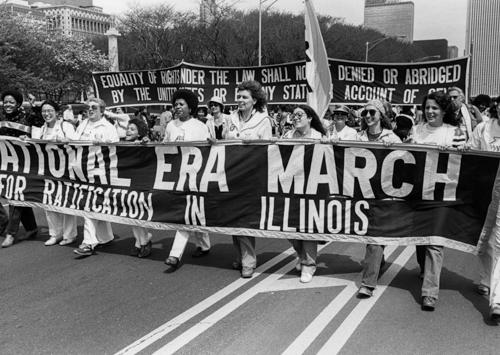
Marianne Bell, Shirley Wallace and Illinois Rep. Susan Catania discuss the Equal Rights Amendment
Jun. 2, 1982 Interviewing Equal Rights Amendment activists, Marianne Bell and Shirley Wallace, who were fasting as a political statement, and Illinois state representative and outspoken advocate of ERA, Susan Cantania.
-
Jane Kennedy talks with Studs Terkel
Oct. 14, 1971 Jane Kennedy talks about her political views and her view of society as a whole. She also discusses her experience in an all women's prison and how the prison system dehumanizes the inmates.
-
Juliet Mitchell discusses women, family, and oppression
Apr. 25, 1971 An interview with teacher and lecturer, Juliet Mitchell, who is a Marxist. She shares her support for the women's movement and talks about issues that affect women especially gender inequality. Juliet also refers to some comparisons between British and American women's movement.
-
Nicola Geiger discusses her background and her time spent in the far east
Oct. 21, 1974 Born in Hamburg, Nicola Geiger, recalls her upbringing and her life under Nazi Germany. She lost two children in World War II. Later in life, she worked in both Japan and Korea. Geiger knew that she alone could not change the world but that she worked tirelessly to get other people to work on peace, too.
-
Jo Freeman, Mary Jean Collins-Robson, and Naomi Weisstein discuss women's rights and liberation ; part 2
Mar. 25, 1970 Jo Freeman, Mary Jean Collins-Robson, and Naomi Weisstein discuss women's rights and the struggle for equal rights and liberation, resistance through art, and the fight for free childcare. Discussion continues with criticism on the male gaze and females as sexual objects.