Listen to New Voices on Studs Terkel our partnership with 826CHI-here! Read the Story


Showing 1 - 10 of 36 results
-
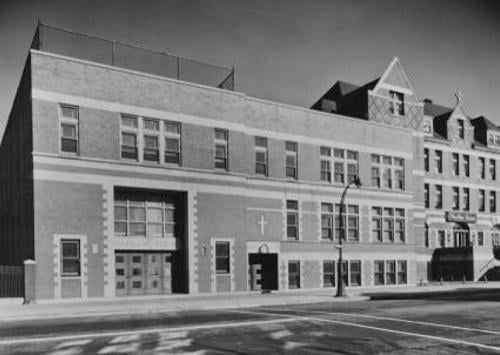
Sister Mary William discusses the importance of Marillac House
Apr. 10, 1968 Content Warning: This conversation includes racially and/or culturally derogatory language and/or negative depictions of Black and Indigenous people of color, women, and LGBTQI+ individuals. Rather than remove this content, we present it in the context of twentieth-century social history to acknowledge and learn from its impact and to inspire awareness and discussion. When she was a teenager, Sister Mary William told her parents that she wanted to become a nun. Sister Mary wanted to become a nun so that she could love and help many people.
-
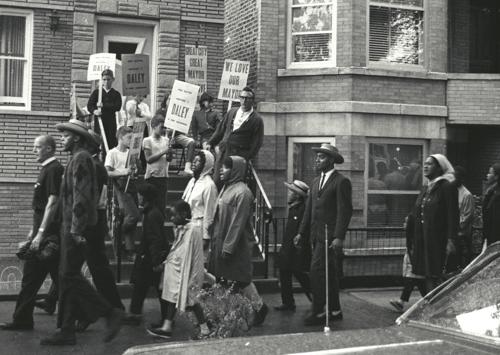
Studs Terkel discusses race relations and economic disparity with four Chicago area women ; part 1
Jan. 27, 1965 Studs discusses race relations and economic disparity with four Chicago area women in a program entitled "Each of us can act". This recording was the last of a 6-part series, "Rearing the Child of Good Will", broadcast under the auspices of the National Conference of Christians and Jews. The series focused on prejudice, race, religion, and community. Interviewees are: Madeline Bonsigniore of Chicago's south suburbs, Naomi Brodky of the Marynook neighborhood of Chicago, Lynn Williams of Winnetka, and Harriet White of the NCCJ.
-
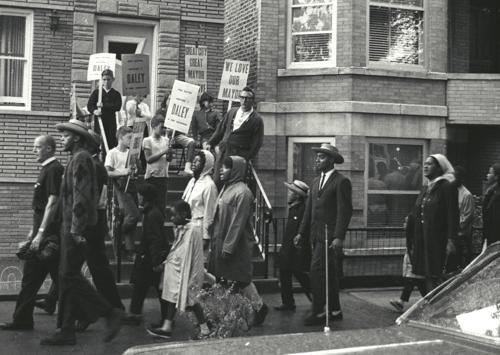
Studs Terkel discusses race relations and economic disparity with four Chicago area women ; part 2
Jan. 27, 1965 Studs discusses race relations and economic disparity with four Chicago area women in a program entitled "Each of us can act". This recording was the last of a 6-part series, "Rearing the Child of Good Will", broadcast under the auspices of the National Conference of Christians and Jews.
-

-
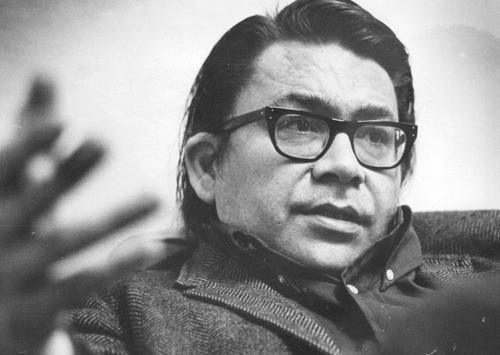
Vine Deloria discusses his book "The Metaphysics of Modern Existence"
Oct. 12, 1979 Vine Deloria discusses his book "The Metaphysics of Modern Existence", religion, ethics, Native Americans, Native American culture, and Native American history. Includes a previous interview with Vine Deloria at O'Hare Airport.
-
-
-
Barbara Blaine, Ruth Graff, and Nina Polcyn-Moore discuss the Catholic Worker Movement
1986 Interviewing Catholic workers Barbara Blaine, Ruth Graff, and Nina Polcyn-Moore. They discuss their lives, Catholic worker houses, and poverty. Includes an interview with Dorothy Day. Content Warning: This conversation has the presence of outdated, biased, offensive language. Rather than remove this content, we present it in the context of twentieth-century social history to acknowledge and learn from its impact and to inspire awareness and discussion.
-
Father Roy Bourgeois discusses why the School of the Americas must be closed down
Mar. 24, 1994 Father Roy Bourgeois travels the country, talking to groups of people who aren't aware that their tax dollars go to fund the School of the Americas. Bourgeois discovered that money provided was for military weapons & for the training of soldiers to torture and to kill people of Latin American countries.
-
Sister Betty Campbell and Father Peter Hind discuss El Salvador
Sep. 3, 1981 Sister Betty Campbell and Father Peter Hind discuss their missionary trips to Latin America. They talk about their time in Peru, Brazil, and El Salvador and working against difficult governments to help struggling people. They also recall some of violence they witnessed or heard about during the El Salvador Civil War, including the execution of four American missionary women.