Listen to New Voices on Studs Terkel our partnership with 826CHI-here! Read the Story


Showing 51 - 60 of 88 results
-

-
Interview with Paul Loeb, discussing book "A Generation at the Crossroads: Apathy and Action on the American Campus"
Dec. 31, 1993 Program includes an excerpt from an interview with antinuclear activist Jean Gump.
-
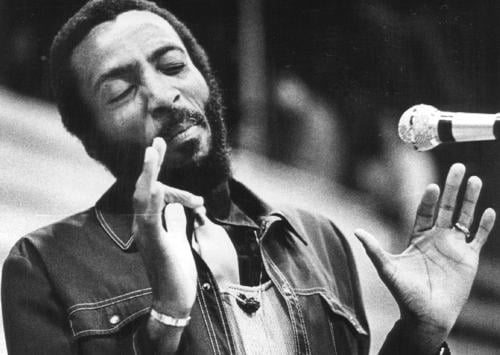
Panel at University of Chicago Law School discuss ending capital punishment, part 3
Feb. 19, 1965 Dick Gregory satirizes capital punishment in the United States, calls for the churches to take action, and talks about potential actions from "demonstrators." Other panel members answer audience questions (Father James Jones, Norval Morris, Hans W. Mattick, and Arthur Wineberg). Hosted by the University of Chicago. (Part 3 of 3)
-
Derrick Bell discusses his book "Confronting Authority"
Dec. 2, 1994 Civil rights activist, lawyer, and professor Derrick Bell discusses his latest work and protest against Harvard University due to their lack of diverse hiring in academics. Bell is known for his work on the concept of critical race theory and his relentless pursuit of fair treatment for his colleagues.
-
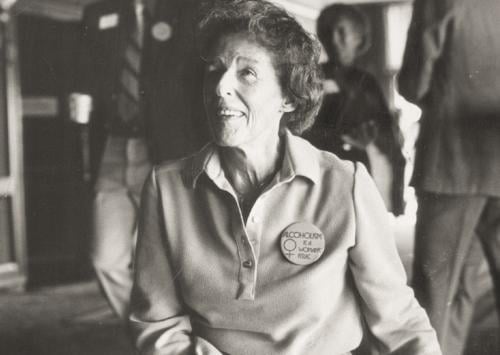
Susan Brownell Anthony discusses her book "The Ghost in My Life"
Oct. 29, 1971 Ms. Anthony, the grand-niece of Susan B. Anthony, comments on the women's liberation movement, her personal political life and her view of Christian life.
-
Interviewing ex-convict turned probation officer, writer and lecturer Albert Race Sample
Dec. 4, 1984 Discussing the book "Race hoss: big Emma's boy" with the author Albert Race Sample. Includes Sample reading a section of the book.
-
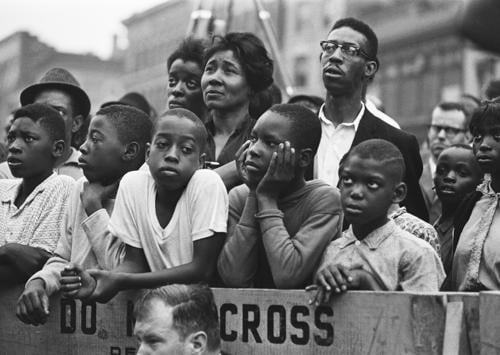
Studs Terkel interviews Professor Charles V. Hamilton on his book written with Stokely Carmichael entitled "Black Power: Politics of Liberation in America" ; part 1
Nov. 21, 1967 Using the backdrop of James Baldwin's "Nobody Knows My Name" and Baldwin's feelings that Blacks were ashamed of where they came from, Terkel interviews Professor and Chairman of the Political Science Department of Roosevelt University on his book coauthored with Stokely Carmichael entitled" Black Power: Politics of Liberation in America". Hamilton states that Blacks were taught to hate themselves and leave school believing that. Institutional racism and the deliberate oppression it creates, holds blacks back. Blacks are left out of crucial decision making processes that concern them.
-
-
Barbara Kingsolver discusses her book "Holding the Line: Women in the Great Arizona Mine Strike of 1983"
Sep. 17, 1990 Since no men were allowed to picket against the Phelps Dodge Corp., Mexican American women showed up and according to Kingsolver’s book, “Holding the Line,” the picket lines were a brand new experience for the women. Some of the women had to get their husbands’ permission to picket. The group of women found their lives transformed not only with their cause but with new bonds of friendship from the other women.
-
From the Wax Museum - 009 - South African writer Alan Paton discusses life in South Africa
1963 South African writer Alan Paton likened the white South African people to the ostrich. Paton said the ostrich keeps its head in the sand, and some people do the same in South Africa, too. With their heads in the sand, they don’t see any problems existing. Paton said he can not understand his country’s government. He can’t understand why the Black people are not allowed to own homes. Because of the government, Paton also talks about having to be careful about what he writes and he says the Americans are very lucky to have their U.S. Constitution.