Listen to New Voices on Studs Terkel our partnership with 826CHI-here! Read the Story


Showing 11 - 20 of 20 results
-

Reverend Grant Gallup discusses his time spent in Nicaragua
Jan. 13, 1992 Even though unemployment is at 60% in Nicaraqua, and the people are very poor, Father Grant Gallup would rather live in Manaqua, Nicaraqua than in the United States. Gallup explained there are 600,000 shacks in Nicaraqua. In the US, police tear down shacks that the homeless build. According to Gallup, the press is freer in Nicaraqua as opposed to self-serving in the United States.
-
-
-
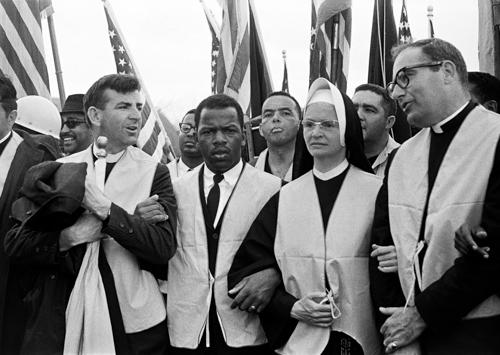
John A. McDermott and Sister Mary Peter discuss Catholic Church's Participation in Civil Rights Movement
Sep. 15, 1965 John A. McDermott and Sister Mary Peters discuss Catholic Church's Participation in Civil Rights Movement. Includes interview with unknown Catholic man opposed to nuns' and priests' involvement. Includes song "It Isn't Nice" by Judy Collins.
-
Rev. George Morey and Jim Lee Osborne discuss life in the Appalachas compared to life in Chicago; part 1
Jul. 29, 1966 Interview with Rev. George Morey and Jim Lee Osborne. They discuss southern country living and compare it to urban life and stereotypes. Studs reads a short excerpt from an article written by Mike Royko, columnist from the Chicago Tribune, who also interviewed Jim Lee Osborne. Also includes a short excerpt from an interview with Billy Jo Gatewood, another Appalachian transplant to Chicago.
-
Lily (Rose Rigsby) Lowell and two men from St. Timothy's talk with Studs Terkel
1966 Discussion of Division Street: America [Continuation of interview at the end of 1925659-3-1]
-
John (Fire) Lame Deer and Richard Erdoes dicusss their book "Lame Deer, Seeker of Visions"
Sep. 15, 1972 *Please note: some sections have been edited out from the original recording due to copyright considerations
-
Howard Schomer, Elsie Schomer and Rabbi Jacob Weinstein discuss their experiences in Vietnam
Jul. 26, 1965 Church leaders Howard Schomer, Elsie Schomer and Rabbi Jacob Weinstein talk about their experiences with the Vietnamese people they encountered. The group determined no matter who they came in contact with, two things were true, they were never told that they should leave Vietnam and that all the Vietnamese people longed for peace.
-
William Sloane Coffin and Jim Bowman discuss religion during the Vietnam War
William Sloane Coffin and Jim Bowman discuss history, religion, and the impact of the Vietnam War. Content Warning: This conversation includes racially and/or culturally derogatory language and/or negative depictions of Black and Indigenous people of color, women, and LGBTQI+ individuals. Rather than remove this content, we present it in the context of twentieth-century social history to acknowledge and learn from its impact and to inspire awareness and discussion.
-
Irwin St. John Tucker and Carolyn Ashbaugh discuss labor history and Lucy Parsons
Apr. 4, 1977 Friar Tuck, as he was also known, was very active in socialist causes in Chicago. In the sweatshops, working fourteen or fifteen hours was the norm. Carolyn Ashbaugh's book "Lucy Parsons" goes over Parsons' movement for the 8-hour work day.