Listen to New Voices on Studs Terkel our partnership with 826CHI-here! Read the Story


Showing 21 - 30 of 86 results
-
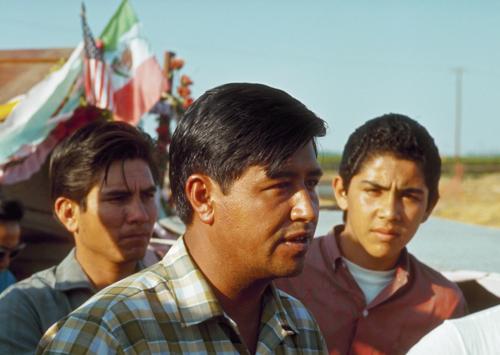
Cesar Chavez discusses farm labor rights
1967 Cesar Chavez discusses the United Farm Workers effort to gain rights for farm laborers and his childhood that led him to become a labor rights activist.
-
Terkel comments and presents "Hard Times: an Oral History of the Great Depression"; chapter 6
1971 Presenting "Hard Times: An Oral History of the Great Depression" Chapter 6: Three Strikes. Bob Stinson discusses working at General Motors and how the sit-down strike began. Justin McCarthy discusses his job conditions at Ford Assembly Plant prior to the unions implementation. Mike Widman remembers heading up union negotiations and the strike at the Ford Plant in 1940-41. Dr. Lewis Andreas talks about being at the 1937 Memorial Day massacre and providing medical care during the Depression.
-
Terkel comments and presents "Hard Times: an Oral History of the Great Depression" ; Chapter 7
1971 Presenting "Hard Times: an Oral History of the Great Depression" High Life, Sixteen Ton: Chapter 7. Sally Rand talks about the creation of her signature fan dance and predictions for future depressions. Doc Graham discusses his upbringing, Chicago mobs, and Count Victor Lustig. Tony Soma talks about prohibition before and after the 1929 crash. Jerome Zerbe talks about inventing paparazzi photography, spending two weeks working in a coal mine, and the New Deal. Buddy Blankenship recalls working 16 hour days in West Virginia coal mines. Mary Owsley remembers life as a coal miner's wife.
-
Terkel comments and presents "Hard Times: an Oral History of the Great Depression"; Chapter 8
1971 Presenting "Hard Times: an Oral History of the Great Depression" The Farmer is the Man: Chapter 8. Harry Terrell remembers the Farm Holiday Movement. Oscar Heline explains deficit financing and farmer's actions in response to farm foreclosures. Frank and Rome Hentges recall the threatening of a judge in Le Mars, IA by farmers protesting foreclosures. Orin Kelley was mistakenly arrested in connection with the judge assault and discusses his time in jail. Emil Loriks gives his perspective of the Farmer's Holiday Association. Ruth Loriks talks about grasshopper swarms.
-

-
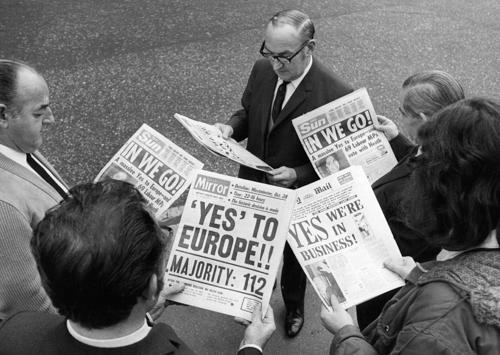
London newspaper vendor, George Curry, discusses politics and art, while Studs Terkel was in London, England
Sep. 1975 While in London, England, Studs Terkel interviews George Curry, a newspaper vendor with a storefront in a hotel. The two discussed Curry’s hometown of Dundee, Scotland and its politics, in addition to London’s current political atmosphere. They also talk about Curry’s political leanings; he is a socialist, and he criticizes England’s immigration policies. Curry comments on his interest in the arts and speaks on stereotypes surrounding the working class. The interview is interrupted intermittently by customers buying their morning paper.
-
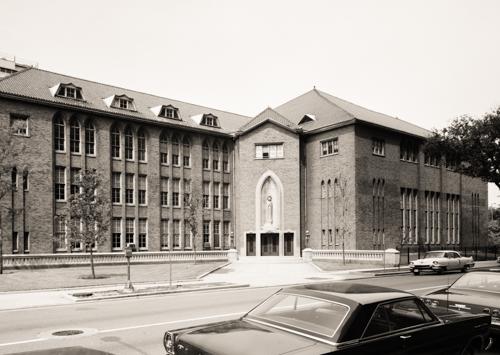
King Solomon discusses his life and Barry Byrne discusses Frank Lloyd Wright
1968 Both interviews incomplete. King Solomon as Kid Pharaoh, hot dog shop owner in Chicago, and former prize fighter. Mr. Solomon talks about his business and how he has earned his place. He talks about being a gambler, and speaks of being "rough" and receiving his money in an unorthodox manner, "protection" so to speak. The Interview ends abruptly at 13:42. At 13:43 interview begins with Barry Byrne architect and student of the "Prairie Style" talks about his education with Frank Lloyd Wright. He speaks fondly of "father"(Frank Lloyd Wright) and his time studying under him.
-
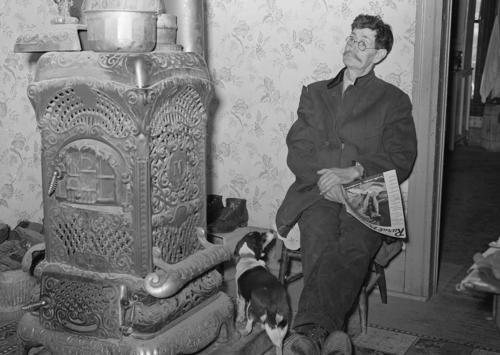
Nick Cherniavsky and Barbara (Bobbe) Herndon discuss capturing the oral history of the Progressive Mine Workers
Jul. 20, 1976 Nick Cherniavsky and Barbara (Bobbe) Herndon share their work of collecting oral histories of the coal miners of Southern Illinois who were members of the Progressive Mine Workers of America during the 1930s. The following oral history segments are played: Frank Bertetti, Joe Ozanic, Jack Battuello, James (Jim) Hopley, and Irene Allard.
-
-