Listen to New Voices on Studs Terkel our partnership with 826CHI-here! Read the Story


Showing 1 - 10 of 20 results
-

John D. Weaver discusses his book "The Brownsville Raid"
Apr. 6, 1971 Events not recorded in history books is what prompted John D. Weaver to write "The Brownsville Raid: The Story of America's Black Dreyfus Affair". Weaver had heard the story of Black Army soldiers causing a raucous, when they were actually set up. Without even being granted a trial, President Theodore Roosevelt, dismissed those soldiers from the United States Army, Weaver explained.
-
Donald Bogle discusses his book "Toms, Coons, Mulattoes, Mammies and Bucks"
Aug. 6, 1973 "Toms, Coons, Mulattoes, Mammies and Bucks: An Interpretive History of Blacks in American Films is Donald Bogle's study of Black actors and the roles they played in movies. Bogle believed it was important for Black people to see Black heroes in movies. Bogle concluded there were too few roles available for Black actors and too many roles were of stereotypes.
-
Henry Louis Gates, Jr. discusses race and the magazine "Critical Inquiry"
Jan. 24, 1986 As the guest editor of “Critical Inquiry,” Henry Louis Gates, Jr. covered the importance of Black writers and their contributions. Because there is no color blindness is the western world, explained Gates, pointing out that one is a Black writer or a Black doctor is important to society. Gates also covers the issue of race not being solely about Black and white people but rather it has to do with multi-ethnic and multi-cultural people.
-
-
-
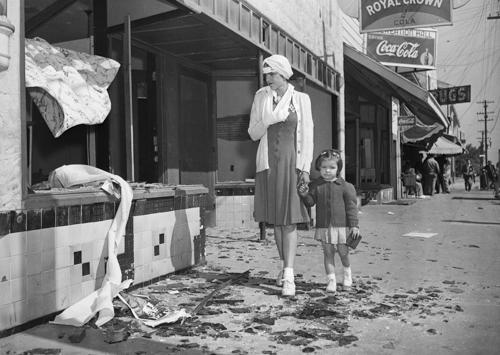
Robert Allen discusses his book "The Port Chicago Mutiny"
May. 12, 1989 On July 17, 1944, there was a huge explosion at Port Chicago in California. Of the 320 men on duty at the pier that died, 202 of them were Black. Robert Allen's book, "The Port Chicago Mutiny: The Story of the Largest Mass Mutiny Trial in U.S. Naval History," covers the story of poor working conditions, the explosion, work stoppage, the trial and the outcome. There is an excerpt of Joe Small, recalling what happened, when he was a sailor present there.
-
-
James McPherson discusses his book "Battle Cry of Freedom: The Civil War Era" ; part 1
Jun. 6, 1989 Historian James McPherson discusses the his book, "Battle Cry of Freedom: The Civil War Era." McPerson explores the American Civil War and talks about some Civil War music. He also discusses the reasoning behind the Civil War and some of the key figures during that time and how many songs came to be written about the battles and leaders.
-
James McPherson discusses his book "Battle Cry of Freedom: The Civil War Era" ; part 2
Jun. 6, 1989 Historian James McPherson discusses the his book, "Battle Cry of Freedom: The Civil War Era." McPerson explores the American Civil War and introduces some Civil War music. He talks about black soldiers, photography, and reconstruction. Content Warning: This conversation has the presence of outdated, biased, offensive language. Rather than remove this content, we present it in the context of twentieth-century social history to acknowledge and learn from its impact and to inspire awareness and discussion.
-
Interviewing radio and television historian J. Fred MacDonald, and Clarice Durham, widow of Richard Durham, an African American radio scriptwriter
Dec. 16, 1991 Durham created and broadcast radio plays in Chicago from 1948-1950, and his work was chronicled in "Richard Durham's Destination Freedom: Scripts From Radio's Black Legacy, 1948-50."