Listen to New Voices on Studs Terkel our partnership with 826CHI-here! Read the Story


Showing 181 - 190 of 281 results
-

-
Students, teachers, and a parent from St. Mary's Center for Learning talk to Studs Terkel
Dec. 11, 1968 Interviewing at the Saint Mary's Center for Learning, an alternative school on the West Side of Chicago, with students Theresa Gonzales, Joan Perry, Cheryl Petrats and teachers Janice Eritch, Rozelle Nesbit, Sister Elaine Shuster and a parent, Mrs. Lori Waslewski.
-
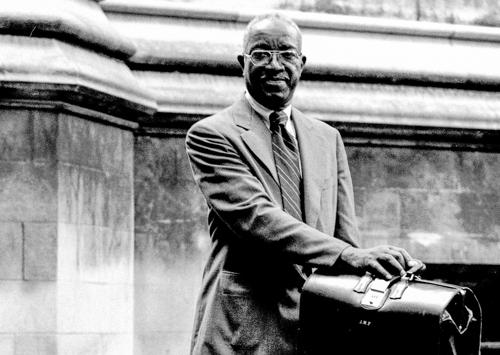
Dr. John Hope Franklin discusses the history of Civil War Reconstruction; part 1
1966 Dr. John Hope Franklin, professor of history at University of Chicago, outlines the history of reconstruction during the American Civil War and briefly his experience at the March to Montgomery; part 1.
-
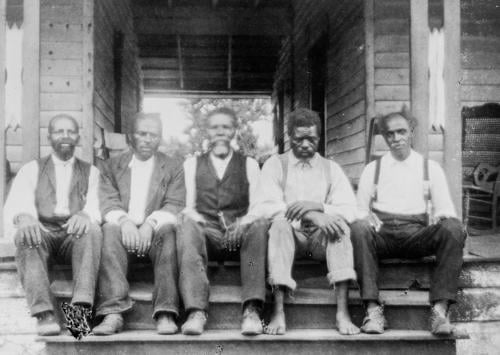
Dr. John Hope Franklin discusses reconstruction after the American Civil War; part 2
1966 Dr. John Hope Franklin, professor of history at University of Chicago, discusses the political history of reconstruction after the Civil War, along with which political decisions led to a power imbalance and the rise of the Ku Klux Klan in the southern states; part 2.
-
Dr. Edward Twitchell Hall discusses urban life
Jan. 23, 1970 High rise buildings being built because of growing populations are detrimental to our environment, explains Dr. Edward Twitchell Hall. Problems include the lack of oxygen and the lack of greenery said Hall. The number of automobiles on the road and the large size of the cars is also problematic,
-
Studs Terkel talks with artist Gene Hall and Dr. Paul Mundy about the painting "The Black Christ Not Worthy of Its Cross" ; part 1
Sep. 21, 1965 Studs Terkel interviews the artist Gene Hall who created "The Black Christ Not Worthy Of Its Cross" and the head of the Loyola University Sociology Department, Dr. Paul Mundy, who used the title and painting reproduction to spark classroom discussions. Hall describes the creation of his 6 ft tall by 2 1/2 feet wide painting and how seeing the color of Christ diminishes Christ. You don't see Christ when you see color. Hall uses barbed wire instead of thorns in the painting to signify there is no time in painting, it is up to date.
-
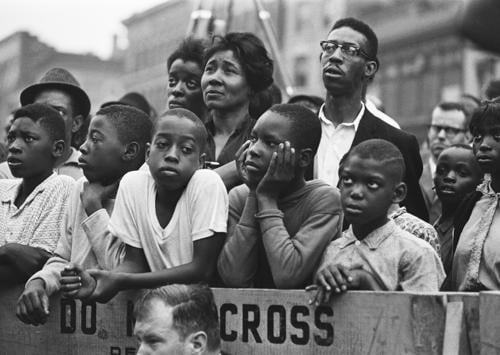
Studs Terkel interviews Professor Charles V. Hamilton on his book written with Stokely Carmichael entitled "Black Power: Politics of Liberation in America" ; part 1
Nov. 21, 1967 Using the backdrop of James Baldwin's "Nobody Knows My Name" and Baldwin's feelings that Blacks were ashamed of where they came from, Terkel interviews Professor and Chairman of the Political Science Department of Roosevelt University on his book coauthored with Stokely Carmichael entitled" Black Power: Politics of Liberation in America". Hamilton states that Blacks were taught to hate themselves and leave school believing that. Institutional racism and the deliberate oppression it creates, holds blacks back. Blacks are left out of crucial decision making processes that concern them.
-
Abram Chayes discusses the mining of the Nicaraguan Harbor by U.S. Naval forces
May. 16, 1985 Abram Chayes, Professor of International Law at Harvard University, discusses the United States’ foreign relations with Nicaragua and the International Court of Justice, also known as the World Court.
-
Spiet Himmelsturb discusses the little school movement
1968 Spiet Himmelsturb, a school teacher, talks about the little school where he works. Parents, teachers and students all have a say in how the school is run. Eighty percent of a teacher's salary is paid by the Danish government. Himmelsturb explains that no grades are given in the school. A walking tour of the school transpires seeing the children knit and weave and play jazz instruments. [part 2 is missing].
-