Listen to New Voices on Studs Terkel our partnership with 826CHI-here! Read the Story


Showing 11 - 20 of 31 results
-
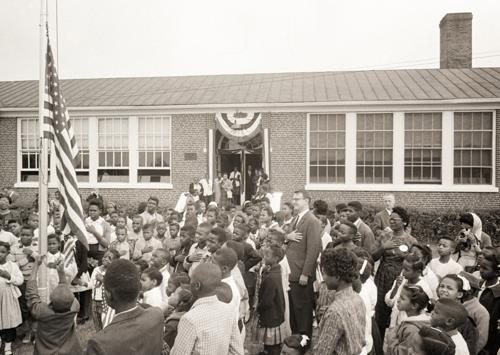
Gregory Coffin and Neil Sullivan discuss civil rights and school integration; part 2
1967 Interviewing school superintendents Gregory Coffin (Evanston) and Neil Sullivan (Berkeley) who discuss school integration and civil rights.
-
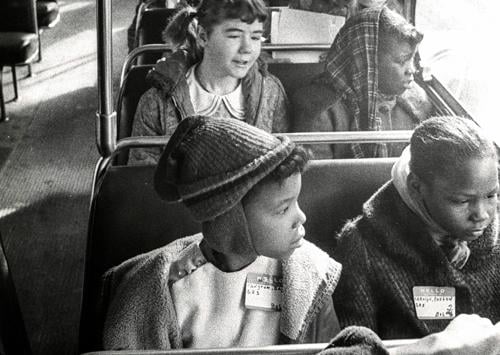
Studs Terkel discusses busing for school integration with psychologist Thomas J. Cottle
Oct. 11, 1976 Studs Terkel discusses the transportation of students for school integration with psychologist Thomas J. Cottle. The main topic of conversation is Cottle's book, "Busing" (1976, Boston, MA, Beacon Press). Terkel and Cottle discuss busing in several cities, focusing on Boston, MA, where Cottle did his research and writing. They each read passages from the book, and discuss the relationship between busing and racism in America.
-

Roger Buffalohead Native American educator, scholar and activist talks about Native American history and education
Nov. 15, 1971 Mr Buffalohead a Native American educator, scholar and activist talks to Studs in Minnesota about Native American history and about creating space at universities for Native / Indigenous studies programs. At the end Studs states that there is another 15 minutes of the program, that will be presented at another time.
-
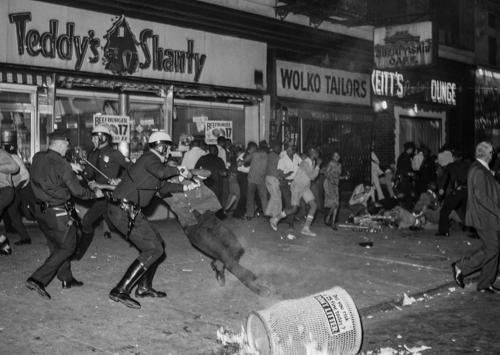
Paul Chevigny discusses his book "Police Power"
According to Paul Chevigny’s book, “Police Power: Police Abuses in New York," disobeying the police is what precipitated violence. Chevigny explained some of the police felt if they had to deal with the undesirables, whether they were criminals or not, anything goes on the street to get these guys and anything goes in court to make a conviction stick.
-
Judy Hough, Lily (Rose Rigsby) Lowell and Jimmy White talk with Studs Terkel Part 1
1968 Discussion of Division Street: America
-

Dr. C. L. R. James discusses his book "Black Jacobins"
1970 Trinidadian historian Dr. C.L.R. James discusses his book "The Black Jacobins: Toussaint L'Ouverture and the San Domingo Revolution." The book was originally published in 1938. At the end of the interview, the song "Voodoo American: Bya Bulako" by Michel LaRue is played (00:46:26-00:51:
-
Henry Louis Gates, Jr. discusses race and the magazine "Critical Inquiry"
Jan. 24, 1986 As the guest editor of “Critical Inquiry,” Henry Louis Gates, Jr. covered the importance of Black writers and their contributions. Because there is no color blindness is the western world, explained Gates, pointing out that one is a Black writer or a Black doctor is important to society. Gates also covers the issue of race not being solely about Black and white people but rather it has to do with multi-ethnic and multi-cultural people.
-
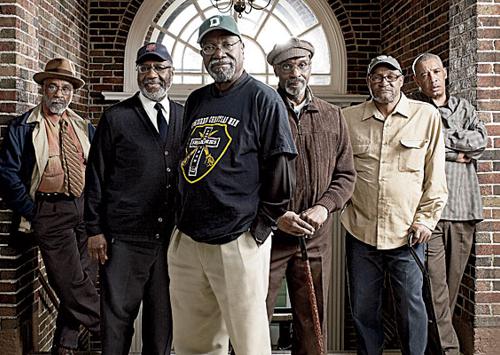
Studs Terkel discusses gang life with Allan Evans and Henry Jordan
1969 Studs Terkel discusses gang life with Allan Evans and Henry Jordan, members of the Vice Lords, an urban street gang based in Chicago. Evans and Jordan were both born and grew up in Chicago.
-
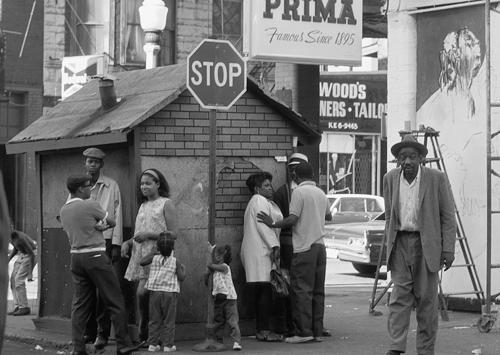
Jan Hestor, Curtiss Brooks and Dr. Philip Hauser discuss racial discrimination in Chicago ; part 5
1965 The discussion of discrimination in metropolitan Chicago continues with Jan Hestor, Curtiss Brooks and Dr. Philip Hauser talking about bigotry, prejudices, open occupancy and education. Included in this part of the interview is an excerpt of 17 year-old Jimmy talking about how his grandmother would rather work than be on welfare.
-