Listen to New Voices on Studs Terkel our partnership with 826CHI-here! Read the Story


Showing 51 - 60 of 87 results
-

-
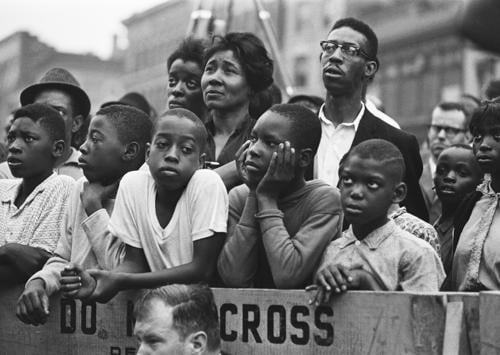
Studs Terkel interviews Professor Charles V. Hamilton on his book written with Stokely Carmichael entitled "Black Power: Politics of Liberation in America" ; part 1
Nov. 21, 1967 Using the backdrop of James Baldwin's "Nobody Knows My Name" and Baldwin's feelings that Blacks were ashamed of where they came from, Terkel interviews Professor and Chairman of the Political Science Department of Roosevelt University on his book coauthored with Stokely Carmichael entitled" Black Power: Politics of Liberation in America". Hamilton states that Blacks were taught to hate themselves and leave school believing that. Institutional racism and the deliberate oppression it creates, holds blacks back. Blacks are left out of crucial decision making processes that concern them.
-
James McPherson discusses his book "Battle Cry of Freedom: The Civil War Era" ; part 1
Jun. 6, 1989 Historian James McPherson discusses the his book, "Battle Cry of Freedom: The Civil War Era." McPerson explores the American Civil War and talks about some Civil War music. He also discusses the reasoning behind the Civil War and some of the key figures during that time and how many songs came to be written about the battles and leaders.
-
James McPherson discusses his book "Battle Cry of Freedom: The Civil War Era" ; part 2
Jun. 6, 1989 Historian James McPherson discusses the his book, "Battle Cry of Freedom: The Civil War Era." McPerson explores the American Civil War and introduces some Civil War music. He talks about black soldiers, photography, and reconstruction. Content Warning: This conversation has the presence of outdated, biased, offensive language. Rather than remove this content, we present it in the context of twentieth-century social history to acknowledge and learn from its impact and to inspire awareness and discussion.
-
Jonathan Spence discusses his book "God's Chinese Son: The Taiping Heavenly Kingdom of Hong Xiuquan"
Feb. 1, 1996 Jonathan Spence, author and Yale University history professor, talks about his book "God's Chinese Son: The Taiping Heavenly Kingdom of Hong Xiuquan." He discusses Hong Xiuquan who believed himself to be the son of God. Spence begins his interview explores how Christianity came to China and how Hong came into contact with its teachings. He explains Hong's belief that the Qing dynasty was an enemy government that needed to be overthrown which led to the Taiping Rebellion.
-
Theodore Marmor discusses his book "The politics of Medicare"
Nov. 5, 1974 Discussing the book, "The Politics of Medicare," and interviewing the author Theodore Marmor. Associate professor of Center of Health Administration studies at University of Chicago. Mr Marmor has been part of policy planning with the department of welfare, for medicare. He talks about National Healthcare or at the least affordable healthcare for all. He speaks of Medicare not covering all expenses specifically prescription drugs.
-
Ernest Morgan discusses the Arthur Morgan School in Burnesville, NC with Studs Terkel
Aug. 9, 1965 Interview with Ernest Morgan about the Arthur Morgan School in Burnesville, NC that was founded by family. They discuss the teaching and learning ideology for the students (aged 12-16) who attend the school. Ernest describes the curriculum that includes outdoor learning in Black Mountain where the school is located. Includes a piece from an interview with Alexander Sutherland Neill about student and school adjustment. Ernest Morgan quotes Martin Luther King on maladjustment.
-
Herbert Kohl discusses Myles Horton and the book "The Long Haul: An Autobiography"
Apr. 5, 1990 Progressive educator Herbert Kohl discusses educator and founder of the Highlander Folk School Myles Horton and the book about him, "The Long Haul: An Autobiography." The book was written by Herbert Kohl and his wife, Judith Kohl.
-
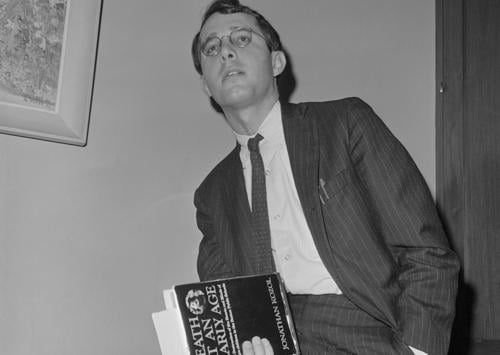
Jonathan Kozol discusses his book "Children of the Revolution: A Yankee Teacher in the Cuban Schools"
Nov. 10, 1978 Studs has a spirited discussion with Jonathan Kozol who shares his adventures and learnings in Cuba that formed the basis of his book "Children of the Revolution: A Yankee Teacher in the Cuban Schools." Kozol explains the ambitious Cuban Literacy Campaign begun in the 1960s that aimed to educate the entire population, tells of children teaching adults in remote villages by lantern light, and the unity and national pride that resulted. He and Studs explore the idea of generative words in literacy education and contemplate Kozol's hope to adapt a similar approach to American education.
-