Listen to New Voices on Studs Terkel our partnership with 826CHI-here! Read the Story


Showing 181 - 190 of 200 results
-

Abraham Rattner discusses his upbringing and his work
1970 American artist Abraham Rattner talks about his early influences, his inspiration, and what his work means to him.*Please note: some sections have been edited out from the original recording due to copyright considerations
-
Robert Twombly discusses the biography “Louis Sullivan: His Life and Work”
Mar. 24, 1986 Architectural historian Robert Twombly discusses the biography “Louis Sullivan: His Life and Work.” Referred to by Studs as the architect that most symbolizes Chicago architecture, Louis Sullivan, this program outlines Sullivan’s life as a prominent architect who was one of the first to incorporate nature, or "the organic", into architecture, and who ended his life in poverty. This program includes a clip from 1956 of Frank Lloyd Wright speaking to his contemporaries, indignant, asking what took them so long to recognize Louis Sullivan and his genius in the architectural field?
-
Anna Ticho discusses her artistic process and exhibition of prints and drawings at the Art Institute of Chicago
1964 Israeli woman artist Anna Ticho discusses her artistic process and how the landscape of Jerusalem inspires her work, much of it on display at the Art Institute of Chicago. Studs plays "Sadot Shebe'emek (Fields fo the Valley)" - Netania Davrath & Robert DeCormier and His Orchestra.*Please note: some sections have been edited out from the original recording due to copyright considerations
-
John Vinci, David Van Zanten, and Wim de Wit discuss the Chicago Historical Society’s exhibition “Louis Sullivan: The Function of Ornament”
Aug. 27, 1986 Architect John Vinci, art and architectural historian David Van Zanten, and curator Wim de Wit discuss Louis Sullivan and the Chicago Historical Society’s exhibition “Louis Sullivan: The Function of Ornament.” The group discusses Sullivan’s use of ornament to add an organic element to his architecture; as well as some of Sullivan’s most prominent work, including the Chicago Stock Exchange Building, the Auditorium Building, and the Sullivan Center. This program includes a clip from 1956 of Frank Lloyd Wright discussing Sullivan and his impact on architectural design.
-
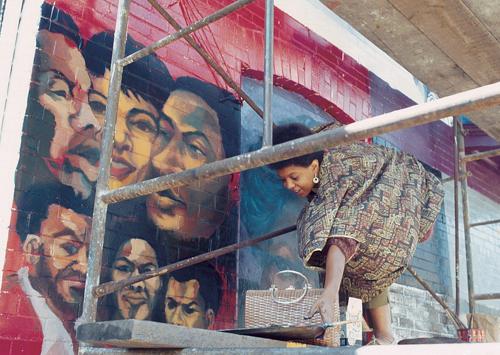
Ray Patlan and Mark Rogovin discuss mural art
Apr. 14, 1975 Ray Patlan and Mark Rogovin discuss mural art and the community engagement surrounding this artform. This program includes an audio clip of passers by commenting on the 1967 unveiling of Pablo Picasso’s Chicago sculpture and what they think it represents and the conversations it is meant to evoke. Studs reads Pete Seeger's introduction from Mark Rogovin, Marie Burton, and Holly Highfill’s book “Mural manual: How to paint murals for the classroom, community center, and street corner.”
-
London taxi driver discusses changes in London and speaks about present-day youth culture ; part 1
1968 During a visit to London, Studs interviews a 73 year old cab driver in London, who has 50 years on the job. They discuss traffic jams, the elderly and the young, poverty, welfare, and society. Studs also interviews a number of people attending the Tate Gallery's Lichtenstein Exhibition.
-
-
-
-
Robert Del Tredici discusses his book "At Work in the Fields of the Bomb"
Jun. 6, 1988 Robert del Tredici photographer, artist, and author discusses the history of nuclear weapon production plants around the United States and the effects of nuclear radiation.