Listen to New Voices on Studs Terkel our partnership with 826CHI-here! Read the Story


Showing 81 - 90 of 129 results
-

Tribute to journalist Curtis MacDougall (part 1 of 2) and reading the Nelson Algren story "The Stickman's Laughter" from his novel "Chicago, City on the Make" (part 2 of 2)
Apr. 23, 1984 Tribute to Curtis MacDougall and reading 'The Stickman's Laughter'
-
Doug Marlette discusses "There's No Business Like Soul Business"
May. 15, 1987 Reverend Will B. Dunn and Mother Teresa are among the many subjects of Doug Marlette's book, "There's No Business Like Soul Business." Marlette explained his cartoons are either political or they deal with the religious right and race relations. The majority of the interview consists of Marlette and Studs Terkel reading lines from the cartoons in the book.
-
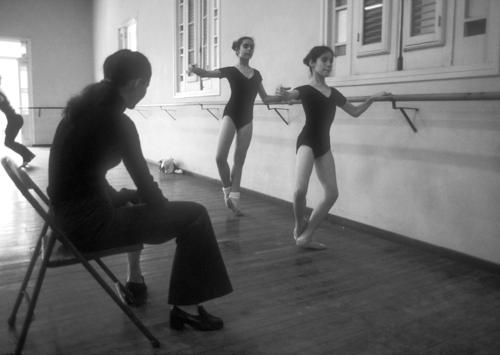
Linda Winer discusses Cuban dance, culture, and politics
Dec. 13, 1974 Art critic Linda Winer discusses her Chicago Tribune series on Cuba social culture and political conditions, especially in regards to dance companies. Studs plays a live version of "Guantanamera" - Pete Seeger (1963), "Canto Para Elegua" - Grupo Folklorico de Cuba, and “Canto a Wamba” - El Conjunto Experimental Santero.
-
Discussing past and present trends in American writing and interviewing distinguished American literary critic Malcolm Cowley
Mar. 7, 1974 Discussing past and present trends in American writing and interviewing distinguished American literary critic Malcolm Cowley.
-
-
Roger Detmer and Virgil Thomson discuss the influence of technology onto music
1965 While their works and forte is classical music, Roger Detmer and Virgil Thomson talk about tape and electronic music. Detmer points out that in some eastern European countries, tape is considered pasee, and yet it's used often to recreate a sound to be used with their orchestras. Both men talk about electronic music and how it's sometimes used to make hand-made music sound artificial.
-
Jens Kruuse discusses his Danish background; part 2
1968 According to Jens Kruuse, being born in the same home town as Hans Christian Andersen is Kruuse’s claim to fame. A well-known literary critic, Kruuse says that people don’t realize he’s an excellent bridge player who enters tournaments. Kruuse explains that Denmark has the biggest coastline in all of Europe and that the people there live a truthful, simple but good life. The interview ends abruptly.
-
-
Interview with Friedrich Luft
1968 Interviewing Friedrich Luft while Studs was in Germany.
-
Studs Terkel interviews Friedrich Luft in the home of Dr Erich Heller of Northwestern University
1968 Friedrich Luft, Chief Drama Critic for Die Welt discusses German theater and Bertolt Brecht as well as new playwrights such as Peter Weiss. Unlike American theaters, Germany has over 200 theaters that are subsidized and each town of 50,000 has a theater. Just like the days of The People's Stage (which still exists) the grocer and cobbler of Germany enjoy the theater. They are as devoted to the theater as going to a museum or church. They are treated to 12 to 16 new or old plays from Sophocles to Sartre or Pinter.