

-

Milton Mayer reads and discusses his article, "Ill Met by Moonlight"
Dec. 31, 1968 Million Mayer, journalist, reads his article, "Ill Met by Moonlight" and discusses his thoughts on technology and automation replacing jobs and human interactions.he also talks about youth, non-violence protesting for change, and education.
-
Milton Mayer discusses the educational philosophy of Robert Hutchins
May. 27, 1977 Milton Mayer discusses the state of U.S. education and the educational ideas of Robert Hutchins.
-
Milton Mayer discusses Quakerism and the impact they have had on society
Dec. 27, 1974 Milton Mayer, journalist and educator, talks with Studs about Quakerism. They talk about how religion relates to society in the times of change. Mr Mayer describes an exchange with a gentleman who asked what is a Quaker. The man had been an SS officer who told Mr Mayer his story. The man had been touched by the anonymous generosity of the Quakers many years before. Mr Mayer speaks of A. J. Musty, clergyman and political activist as his mentor and friend, and the things he learned from him.
-
-
Millard and Ramona Lampell discuss their book "O, Appalachia"
Oct. 23, 1989 According to Ramona Lampell, Appalachia is often associated with hillbilles and poor people. The Lampells wanted to change that stereotype with their book, "O, Appalachia: Artists of the Southern Mountains". By showing off the work of 20 artists', the Lampells hope the people of Appalachia feel good about themselves and where they come from.
-
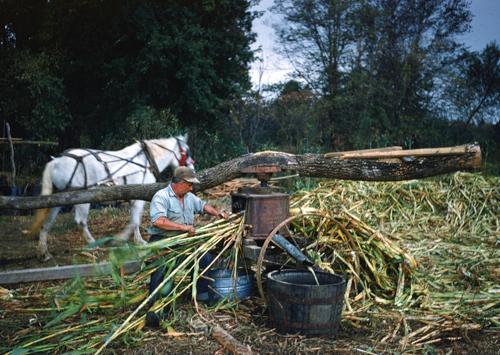
Miles Horton and Elliot Wigginton discuss the Foxfire Project
Jun. 1, 1977 Discussing the Foxfire books and interviewing Miles Horton and Elliot Wigginton. Wigginton is one of the editors/compilers of several of the books in the series about traditional handicrafts and practical methods used in rural life.
-
Mildred Loomis discusses the green revolution and the back to the land movement ; part 2
Mar. 6, 1968 Discussing the green revolution and the "modern homestead" and interviewing Mildred Loomis. Mildred Loomis discusses the back to the land movement.
-
Mildred Loomis discusses the green revolution and the back to the land movement ; part 1
Mar. 6, 1968 Discussing the green revolution and the "modern homestead" and interviewing Mildred Loomis. Mildred Loomis discusses the back to the land movement.
-
-
-
-
-
-
-