

-

Dr. Charles Clements talks with Studs Terkel
Apr. 13, 1984 Discussing observations and experiences as a medical practioner in Vietnam and then Central America, principally, El Salvador with Charlie Clements M.D.
-
Dr. Charles Clements discusses his book "Witness to War"
Apr. 29, 1985 After having flown 50 missions in Vietnam, Charles Clements went to medical school and became a physician and a human rights activist. Dr. Clements talks about his observations in the poorest sections of Nicaragua. Because medicine for the poor people was considered contraband, Clements had to resort to putting rusty nails into a cup of water and having his patients drink the water for iron supplements. Clements reminds the audience if we don't know our history, we are bound to repeat it.
-
Dr. Carlo Levi discusses Italian literature; Julio & Phillipo sing nursery rhymes, Maria Caniglia discusses opera; part 2
1962 Dr. Carlo Levi talks about the differences in Italian and American literature in the first part. In the second part, children Julio and Phillipo sing Italian nursery rhymes. In the last part, Maria Caniglia and husband Pino Donati discuss opera; part 2.
-
Dr. Carlo Levi discusses his exile and humanity in southern Italy after WW2; part 1
1962 Dr. Carlo Levi talks about his book "Christ Stopped at Eboli", the human condition, and compassion for those suffering during and after World War 2.
-
Dr. C. L. R. James discusses his book "Black Jacobins"
1970 Trinidadian historian Dr. C.L.R. James discusses his book "The Black Jacobins: Toussaint L'Ouverture and the San Domingo Revolution." The book was originally published in 1938. At the end of the interview, the song "Voodoo American: Bya Bulako" by Michel LaRue is played (00:46:26-00:51:
-

Dr. Bertram Carnow, and Joan and Bob Ericksen discuss health hazards in work environments
Jun. 5, 1974 Discussing health hazards in work environments and environmental pollution. Interviewing Dr. Bertram Carnow and Bob and Joan Ericksen.
-

Dr. Bertram Carnow discusses the environment and pollution
Aug. 24, 1973 Interviewing Dr. Bertram Carnow about environmental health, air pollution, and occupational diseases.
-
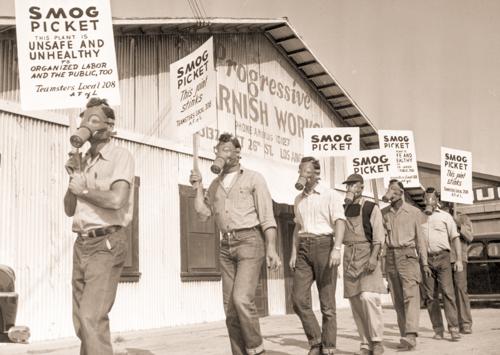
Dr. Bertram Carnow and Bob and Joan Ericksen discuss occupational illnesses and pollution
Nov. 21, 1974 Both Bob and Joan Ericksen ask why is a school being built not only by two highways but right next door to a paint factory. They contend that the paint fumes can't be good for anyone to breath. Instead of asking their patients where they work, Dr. Carnow believes more doctors need to ask, "What do you do?", to determine if they're working with any hazardous materials that may harm their health.
-

Dr. Benjamin Spock and Dr. Michael B. Rothenberg discuss the 40th anniversary of the book “Baby and Child Care”
Mar. 11, 1985 Dr. Benjamin Spock and Dr. Michael B. Rothenberg discuss the 40th anniversary edition of the book “Baby and Child Care.” The two discuss the changes they've made to the book, criticism they’ve faced since releasing the book, and how they’ve rethought gender roles in childcare. Studs plays “Hush Little Baby” - The Weavers (1955).
-
Dr. Beatrice Tucker, Sheri Daniels, and Barbara Brasa discuss issues of training and legality in the midwifery profession
Mar. 15, 1978 CONTENT WARNING: This conversation has the presence of outdated, biased, offensive language. Rather than remove this content, we present it in the context of twentieth-century social history to acknowledge and learn from its impact and to inspire awareness and discussion.
-
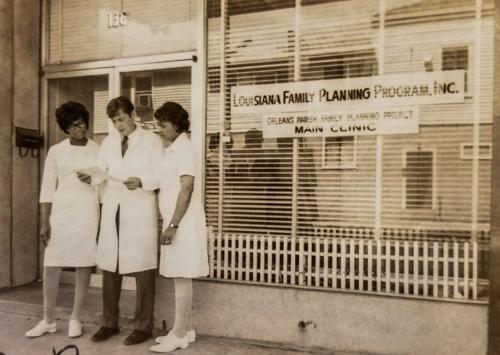
Dr. Aviva Weissman discusses Planned Parenthood and the use of contraception
Mar. 24, 1966 Dr. Aviva Weissman discusses the emergence of family planning services in England and the importance of women having access to contraception and other services. Weissman discusses her experience with families who have benefitted from the services of Planned Parenthood.
-
-
Dr. Alan Solem and Dr. John Engel discuss their upcoming research trip to Australia
Jun. 9, 1976 Dr. Alan Solem, a malacologist, and Dr. John Engle, a bryologist, from the Field Museum discuss a research trip they plan to take to Australia. The two doctors also discuss climate and ecology in the Americas and in Australia. Dr. Solem will be researching land snails and Dr. Engel moss and liverworts.
-
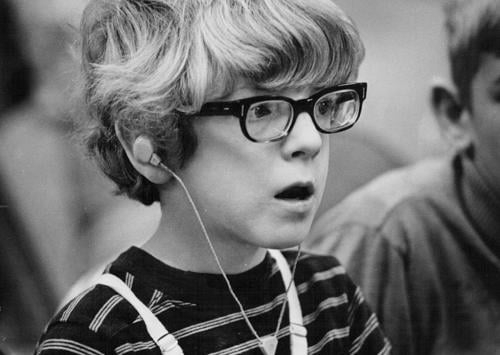
Dr Eugene Mindel discusses the book "They Grow in Silence: The Deaf Child and His Family"
1970 Dr. Eugene Mindel, child psychologist and author, discusses his book, "They Grow in Silence: The Deaf Child and His Family,". Dr. Mindel and Studs talk about deaf children and how they learn to communicate without the ability to hear or speak. Studs reads an excerpt from the book about a deaf person feeling locked into themselves. Studs and Dr. Mindel talk about the the book "In this sign" by Joanne Greenberg a novel that portrays the isolation and loneliness of the deaf couple and the struggle of their hearing daughter.
-
Douglas W. Druick discusses the book "Odilon Redon: Prince of Dreams, 1840-1916"
Aug. 30, 1994 Douglas W. Druick, scholar and curator of the Art Institute of Chicago, discusses his book "Odilon Redon: Prince of Dreams, 1840-1916." The interview explores Redon's life and art work, including his techniques he developed because of the time period he lived in.