

-

-
E. Y. (Yip) Harburg discuss his book "At This Point in Rhyme"
Feb. 18, 1977 E.Y. (Yip) Harburg and Studs Terkel read from the book "At This Point in Rhyme". E.Y. Harburg also discusses his thoughts on humanity, how to properly write a song, and the importance of light verse and humor as a basis for everything he creates. Excerpts of "Somewhere Over the Rainbow" by Judy Garland, "Brother, Can You Spare a Dime" by the Weavers, and a Broadway recording of "How Are Things in Glocca Morra" are played in the original airing but have been removed from this version for copyright reasons.
-
E. L. Doctorow discusses storytelling and reads from his book "Lives of the Poets"
Dec. 19, 1984 E. L. Doctorow’s way of writing has turned to storytelling in his book, “Lives of the Poets: A Novella and Six Stories”. To get the reader interested, it is as though the storyteller has placed a sort of spell on his audience, explained Doctorow. As the author and storyteller, Doctorow’s said his job was to make uneventful events seem more interesting than they actually are.
-
E. L. Doctorow discusses his career and his book, Ragtime
Dec. 20, 1976 The novelist, best known for his works of historical fiction, expresses hope that his book about New York City in the early 20th Century will find its way into the hands of people who don’t normally pick up novels.*Please note: some sections have been edited out from the original recording due to copyright considerations
-
E. J. (Eric J.) Hobsbawm discusses his book "Captain Swing"
May. 16, 1973 Discussing the book "Captain Swing" with the author E. J. (Eric J.) Hobsbawm.
-
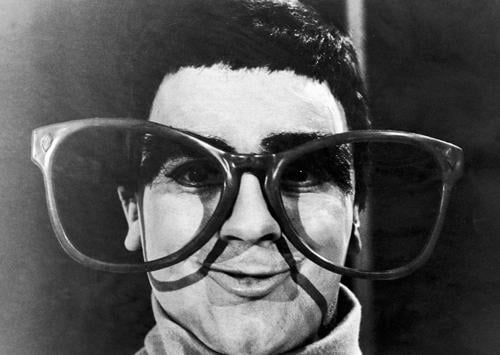
Dudley Moore discusses his background and influences
Jan. 6, 1963 When he was a child, Dudley Moore first wanted to study the violin. He's grateful to his mother for insisting that he first study the piano. Moore said his influences include Bach and Garner. Unlike other musicians, Moore's main focus has always been on the beat, both the cultivation and the presence of the beat of a song and of music.
-
Drs. Quentin Young, Ron Shansky and Mike Gray talks with Studs Terkel
Dec. 3, 1975 Interviewing Dr. Quentin Young and others about Cook County Hospital and public health services in Chicago and throughout the country.
-
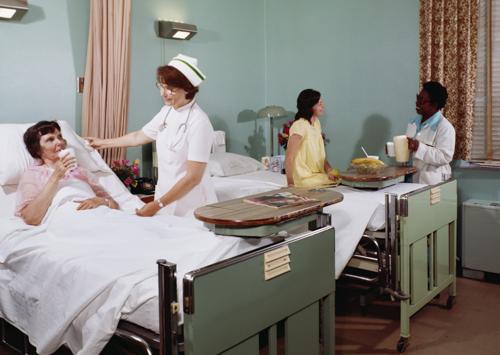
Drs. Quentin Young, Lambert King and Robert Maslansky discuss public hospitals in the United States
Apr. 26, 1976 Drs. Quentin Young, Lambert King and Robert Maslansky discuss public hospitals in the United States. Young is the chairman of the Department of Medicine at Cook County Hospital, King is the medical director of Cermak Memorial Hospital, and Maslansky is the director of medical education at Cook County Memorial Hospital.
-
Drs Marvin Schwarz, Hy Hirschfeld, and Ed Diener discuss the Elan School in Maine
Aug. 11, 1975 Dr. Marvin Schwarz, Dr. Hy Hirschfeld, and Ed Diener discuss the Elan School for troubled adolescents in Poland, Maine. The Elan School is a therapeutic boarding school for adolescents.
-
-
Dr. William Beecher, Dorothy Buell, Tom Dustin and Thelma McVey discuss the Indiana Dunes National Lakeshore
Oct. 5, 1965 Dr. William Beecher, Chi Academy of Sciences, Dorothy Buell, member of Dunes council, Tom Dustin, head of Indiana Issac Walton League, and Thelma McVey, head of the Sierra Club Midwestern, discuss why the Indiana Dunes National Lakeshore must be saved, and the measures they are taking to do so.
-
Dr. Willard Gaylin discusses his book "Rediscovering Love"
Oct. 10, 1986 Thinking a person is special and trusting that person and committing yourself to that person are two steps for real love, as covered in Dr. Willard Gaylin's book, "Rediscovering Love". One can not go through life in an armored car but rather Gaylin talks about taking risks. One of Gaylin's last points, if you find yourself in a loveless life, to compensate, give love away.
-
Dr. Willard Gaylin discusses his book "In the service of their country"
1970 Dr. Willard Gayelin talks about and reads from his book "In the Service of Their Country." He talks about the imprisonment of conscientious objectors who did not want to participate in the war.
-
Dr. Willard Gaylen discusses his book "Feelings" and how humanity and feelings are connected
Feb. 23, 1979 Dr. Williard Gaylen, a physician and professor of psychiatry at Columbia, discusses how feelings define humanity. He explains that there are no "bad" or "good" feelings, because even anxiety and guilt are strictly human emotions. Dr. Gaylen also talks about how envy is the only useless feeling. Two recordings of people talking about pride and guilt are also played.
-