

-

Ellen Goodman and Betty Friedan discuss the women's movement and feminism
Oct. 15, 1981 Discussing the women's movement, feminism, and the books, "At Large," with its author, journalist Ellen Goodman, and "The Second Stage" with its author, feminist Betty Friedan.
-
Ellen Chesler discusses her book "Woman of Valor: Margaret Sanger and the Birth Control Movement in America"
Jul. 8, 1992 Ellen Chesler discusses and reads from her book "Woman of Valor: Margaret Sanger and the Birth Control Movement in America." Throughout her interview, Chesler discusses additional prominent women in this movement such as Emma Goldman, Jane Addams, and Ethel Byrne. Studs plays "The Women's Marseillaise" - Mascottes Ladies Band (1908-1911) and "Bread and Roses" - Judy Collins (1976).
-
Ellen Afterman, Clinton Sanders, and Spellman Young discuss the drug epidemic
1980 Ellen Afterman and Clinton Sanders (authors of "Drugs and Your Life") and Spellman Young discuss drug use through the lenses of race, sex, and socioeconomic status.
-
Ellen Afterman, Clinton Sanders and Spellman Young discuss the exclusionary power of language
1970 Ellen Afterman, Clinton Sanders and Spellman Young discuss the exclusionary power of language; i.e. white, middle-class language as the standard by which people are intellectually and socially judged, and how groups are using language to define identity.
-
Ella Jenkins discusses her music and her influences
Dec. 7, 1963 Using a Trobriand drum and harmonica, Ella Jenkins plays examples of call and response music with Studs. A few of her popular songs play between their discussion. Ella explains how her music came to be from the Chicago neighborhood streets with influences from her Uncle and other blues and folk musicians. Songs played include "Tahboo," "Miss Mary Mack," "You'll Sing a Song and I'll Sing a Song," "Come Dance By the Ocean," and "Dulce." Songs have been removed due to copyright restrictions.
-
Ella Jenkins discusses call and response music
Jul. 17, 1993 Using past recordings, Ella discusses how she works with children to help them find their rhythms using call and response music and percussion. She explains the West African and Latin music influences within her own music. Music played includes Jenkins' own music such as "Miss Mary Mack," "Tahboo," and "Where Has My Little Dog Gone?" She also plays song written by Carl Orff and performed by the Chorus of the Children's Opera Group, such s "Pat-a-Cake," and "Name-Calling." Untitled West African music is also played. Music has been removed due to copyright restrictions.
-
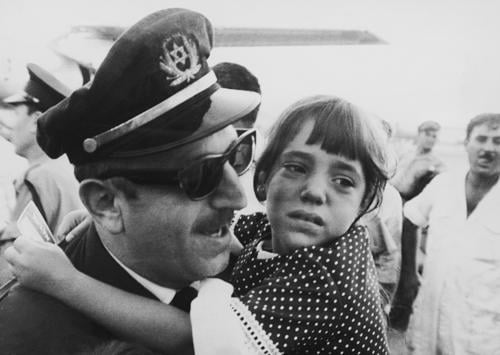
Elizabeth Rich discusses her book "Flying Scared: WhyWe Are Being Skyjacked and How to Put a Stop to It"
1970 After writing the book “Flying High” about her experiences as an airline stewardess, Elizabeth Rich moved on to research the trend of skyjacking in her second book “Flying Scared: Why We Are Being Skyjacked and How to Put a Stop to It.” Rich is one of the first people to conduct a study on these crimes, and criticizes both the US government and Federal Aviation Administration for essentially ignoring repeated skyjacking.
-
Elizabeth Janeway discusses her book "Man's World, Woman's Place"
1970 Elizabeth Janeway discusses her book "Man's World, Woman's Place" and the gender role women are taught since birth; reads passage from book; includes interview at 16:01 with a woman speaking against the Women's Movement during an outdoor protest.
-
Elizabeth Janeway discusses her book "Between Myth and Morning"
Nov. 12, 1974 Elizabeth Janeway discusses the women’s movement and her book, “Between Myth and Morning: Women Awakening.” Topics include dominance and equality, women’s history, the power balance between men and women, and relationships and autonomy. Includes a recorded reading of William Butler Yeat’s Crazy Jane poem, “The Solid Man and the Cockscomb” and an excerpt from a previously recorded interview with Maggie Kuhn, founder of the Gray Panthers.
-
Elizabeth Garry discusses her show, "Victoria"
Nov. 12, 1979 Elizabeth Garry, talks about her one woman show "Victoria." The show tells the story of Victoria C. Woodhull the first women to run for President in 1872. Garry discusses Woodhull's life including her supposed clairvoyant talents, suffragist works, and her work as a broker and publisher. Woodhull's arrest for obscene literature with her newspaper, "Woodhull & Claflin's Weekly," is also discusses and Garry performs the part of her show that describes that event. Garry also breifly explains her research and writing process for the show.
-
Elizabeth Drew discussing her book, "Washington Journal: The Events of 1973-1974"
Oct. 3, 1975 Elizabeth Drew discussing her book, "Washington Journal: The Events of 1973-1974," about the uncertain times during the Watergate scandal. She describes the Saturday Night Massacre and the military alert that were attempts to cover-up Watergate, along with how people working inside the White House felt during these events.
-
Elizabeth Drew discusses her book, "Senator," about U.S. Senator John C. Culver
Jun. 1, 1979 Elizabeth Drew discusses her book, "Senator," about U.S. Senator John C. Culver from Iowa. She explains how she followed Culver for ten days to learn what the day to day business is like for senators. Drew tells about some of the bills and amendments Culver worked on and how much time is spent working on them.
-
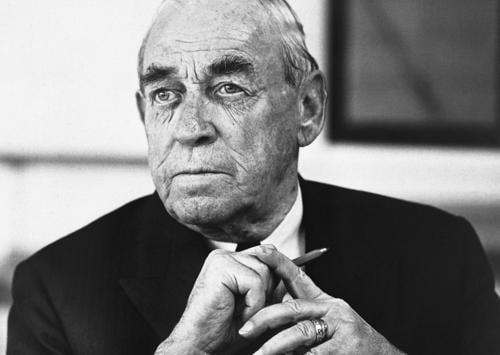
Elissa Aalto and Paul Dukas reflect on architect Alvar Aalto's life
Jun. 17, 1982 Elissa Aalto, architect and widow of Finnish architect Alvar Aalto (first 47 minutes) and architect Paul Dukas (final 6 minutes) discuss architect Alvar Aalto. Aalto believed that architecture could provide society harmony through nature. He was often compared to Frank Lloyd Wright. He was bound with a passion to help mankind.
-
Elisabeth Schwarzkopf discusses her roles and interpretation ; part 2
Apr. 11, 1962 According to Elisabeth Schwarzkopf, at a young age, she first started to play the piano and viola before she studied singing. Madame Schwarzkopf explained the importance of being able to play different roles. With regards to luck, Schwarzkopf says it happens only once, when one finds the right teacher. All the rest, explains Schwarzkopf is hard work.
-
Elisabeth Schwarzkopf discusses her roles and interpretation ; part 1
Apr. 11, 1962 Studs Terkel talks with Elisabeth about her career in opera. She discusses her thoughts of her overall career.