Listen to New Voices on Studs Terkel our partnership with 826CHI-here! Read the Story


Showing 106 - 120 of 5186 results
-

Victor S. Navasky in conversation with Studs Terkel
May. 17, 1996 Discussing the book "Report From Iron Mountain: On the Possibility and Desirability of Peace" (published by The Free Press) with the author of the book's introduction, editor of "The Nation," Victor Navasky.
-
Victor S. Navasky discusses his book "Kennedy Justice"
Dec. 10, 1971 Discussing the book "Kennedy Justice" and interviewing the author Victor S. Navasky.*Please note: some sections have been edited out from the original recording due to copyright considerations
-
-
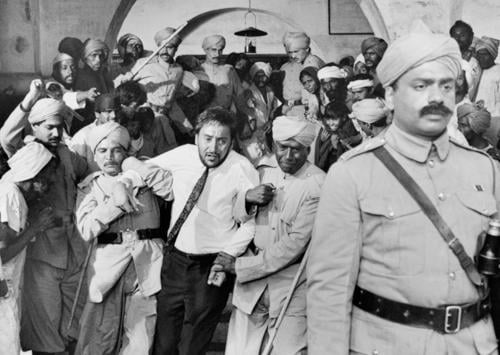
Victor Banerjee discusses the film "Passage to India"
Apr. 23, 1985 In addition to talking about the film "Passage to India," Victor Banerjee, also talks about Gandhi and India's class system. Included in this interview are excerpts of Satyajit Ray and Shanta Gandi.
-
Vic Greco and Fred Willard discuss their original comedy skits
Oct. 4, 1962 While performing some of their original material, comedians Vic Greco and Fred Willard talk about how they come up with their ideas for their shows. Always the entertainers, and while talking over one another, Greco and Willard explain that most of what they do on stage is improvisation.
-
Vic Banks discusses his latest book "The Pantanal: Brazil's Forgotten Wilderness"
Feb. 19, 1992 Author Vic Banks discusses his travels as a travel photographer and his recent excursion in the UNESCO World Heritage site the Pantanal which is the world’s largest wetland. Banks, highlights troubles facing the wetland including poaching, land development encroachment and mining.
-
Vasilios Gaitanos in conversation with Studs Terkel
Feb. 4, 1991 Interviewing Greek singer Vasilios Gaitanos.
-
Valentin Pluchek and Stanislaw Pchenikov discuss Russian theater, specifically Moscow ; part 1
Jan. 19, 1962 Studs Terkel interviews Valentin Pluchek and Stanislaw Pchenikov on Russia theater, focusing mainly on the city of Moscow.
-
V. (Vladimir) Leechkis in conversation with Studs Terkel
Jan. 19, 1995 Interviewing Russian pianist and DePaul University Professor Vladimir Leechkis.
-
V. (Vladimir) Leechkis in conversation with Studs Terkel
Mar. 13, 1995 Interviewing Russian pianist and DePaul University Professor Vladimir Leechkis.
-
Ute Lemper in conversation with Studs Terkel
Mar. 12, 1997 Terkel comments and presents a musical performance by Ute Lemper
-
Ute Lemper in conversation with Studs Terkel
Nov. 1, 1994 Interviewing German actress and cabaret singer Ute Lemper. Program includes excerpts of a November 9, 1963 interview with Lotte Lenya, and a November 30, 1960 interview with Marlene Dietrich.
-
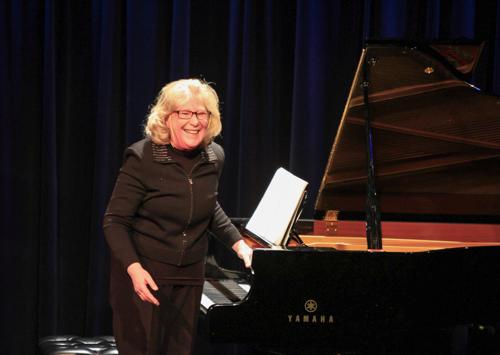
Ursula Oppens discusses her career and contemporary piano music
Jan. 9, 1994 Ursula Oppens and Studs discuss contemporary avant-garde piano. Oppens performs pieces from contemporary composers.
-

Ursula Bender leads a tour to the Berlin Wall
1986 Content Warning: This conversation has the presence of outdated, biased, offensive language. Rather than remove this content, we present it in the context of twentieth-century social history to acknowledge and learn from its impact and to inspire awareness and discussion. While heading to the Berlin Wall, Ursula Bender points out different landmarks. In addition, once at the Berlin Wall, she reads and translates some of the graffiti left on the wall. Parts of the interview are in German as Bender talks to some German people.
-
Ursula Bender leads a tour to the Berlin Wall
1980 Content Warning: This conversation has the presence of outdated, biased, offensive language. Rather than remove this content, we present it in the context of twentieth-century social history to acknowledge and learn from its impact and to inspire awareness and discussion. While heading to the Berlin Wall, Ursula Bender points out different landmarks. In addition, once at the Berlin Wall, she reads and translates some of the graffiti left on the wall. Parts of the interview are in German as Bender talks to some people.