

-

Dr. Samuel Epstein discusses his book, "Hazardous Waste in America"
Mar. 14, 1983 Dr. Samuel Epstein, author and Director of Occupational and Environmental Medicine, at the University of Illinois Medical School, talks about his book, "Hazardous Waste in America." Dr. Epstein explains the four types of hazardous waste, (nuclear, petroleum, mining, and fossil fuels) and describes how they can better be disposed of including burning, recycling/renewing, and interim storage. He also describes a case study of Hoffman-Taff in Verona, Missouri.
-
Dr. Paul R. Ehrlich discusses his book "The Population Bomb"
1969 At the conclusion of this interview, Dr. Paul Ehrlich predicts that 5 to 6,000 people will have died of starvation. "The Population Bomb," covers why women should stop having children and why the government should pass out $500 every year to women who don't have kids.*Please note: some sections have been edited out from the original recording due to copyright considerations
-
Dr. Leo Seren discusses atomic fission and nuclear experiments
Feb. 21, 1978 Nuclear physicist, Dr. Leo Seren, discusses atomic fission and nuclear experiments.
-
Dr. Kosta Tsipis discusses the dangers of nuclear war
Mar. 9, 1982 Discussing the dangers of nuclear war and its effect on people with nuclear physicist and co-director of the program of Science and Technology at MIT, Dr. Kosta Tsipis.*Please note: some sections have been edited out from the original recording due to copyright considerations
-
-
Dr. Helen Caldicott discusses the ill-effects of a nuclear bomb going off
Apr. 7, 1981 The world spends 600 billon dollars on the arms race, which is rather puzzling to Dr. Helen Caldicott when 2/3 of the world's children are starving. Caldicott explained if a bomb went off in Chicago, there'd be a crater a half a mile wide and 300 feet deep. In addition, 90% of the people will be dead, some from being vaporized.
-
Dr. George Wald discusses the have and the have nots of society
Oct. 12, 1974 Interviewing Dr. George Wald, Professor of Biology at Harvard University, who often spoke on the social aspects of science, human ecology, and the environment.
-

Dr. Bertram Carnow, and Joan and Bob Ericksen discuss health hazards in work environments
Jun. 5, 1974 Discussing health hazards in work environments and environmental pollution. Interviewing Dr. Bertram Carnow and Bob and Joan Ericksen.
-

Dr. Bertram Carnow discusses the environment and pollution
Aug. 24, 1973 Interviewing Dr. Bertram Carnow about environmental health, air pollution, and occupational diseases.
-
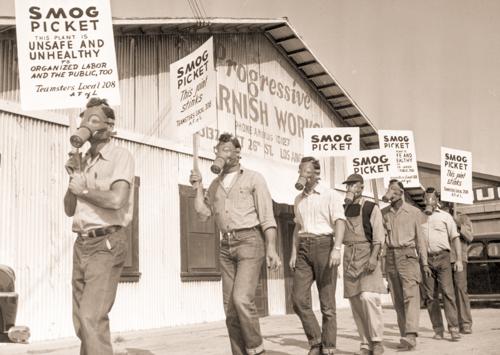
Dr. Bertram Carnow and Bob and Joan Ericksen discuss occupational illnesses and pollution
Nov. 21, 1974 Both Bob and Joan Ericksen ask why is a school being built not only by two highways but right next door to a paint factory. They contend that the paint fumes can't be good for anyone to breath. Instead of asking their patients where they work, Dr. Carnow believes more doctors need to ask, "What do you do?", to determine if they're working with any hazardous materials that may harm their health.
-
Dr. Alan Solem and Dr. John Engel discuss their upcoming research trip to Australia
Jun. 9, 1976 Dr. Alan Solem, a malacologist, and Dr. John Engle, a bryologist, from the Field Museum discuss a research trip they plan to take to Australia. The two doctors also discuss climate and ecology in the Americas and in Australia. Dr. Solem will be researching land snails and Dr. Engel moss and liverworts.
-
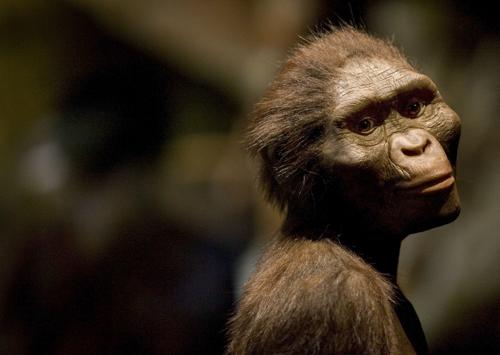
Donald Johanson discusses his book "Lucy: The Beginnings of Humankind"
Mar. 16, 1981 Studs talks with Donald Johanson about his book "Lucy: The Beginnings of Humankind," in which the famed paleoanthropologist describes his discovery of the female hominin fossil in Ethiopia. The conversation includes talk of Charles Darwin, Eugène Dubois' Java Man discovery, what makes a hominid, holes in the fossil record, fossil dating, his disagreements with Louis and Richard Leakey, site discovery, and his belief that the Hadar Formation in the Afar Triangle of Ethiopia holds the keys to the evolutionary puzzle. Includes snippets of the Beatles' "Lucy in the Sky with Diamonds."
-
Doan Hong Hai and Don Luce discuss Vietnam
Mar. 31, 1972 Anti-war activist Don Luce and Doan Hong Hai, a visiting student from a village near Saigon, talk about the bombing and defoliation of Vietnam.*Please note: some sections have been edited out from the original recording due to copyright considerations
-
Discussing the opposition to nuclear power and the Clamshell Alliance with Sam Lovejoy
Dec. 5, 1977 Sam Lovejoy discusses the opposition to nuclear power, the Clamshell Alliance, politics, environmental concerns, and anti-nuclear sentiments and movements.
-