

-

Dr. Herbert S. Terrace discusses his work in the field of primate cognition
Feb. 1980 Columbia University professor of psychology, Dr. Herbert Terrace, talks with Studs regarding his 1979 book "Nim: A Chimpanzee Who Learned Sign Language," animal cognition and the evolution of language.
-
Dr. Helen Caldicott discusses the ill-effects of a nuclear bomb going off
Apr. 7, 1981 The world spends 600 billon dollars on the arms race, which is rather puzzling to Dr. Helen Caldicott when 2/3 of the world's children are starving. Caldicott explained if a bomb went off in Chicago, there'd be a crater a half a mile wide and 300 feet deep. In addition, 90% of the people will be dead, some from being vaporized.
-
Dr. George Crile, Jr. discusses his book "Surgery"
Oct. 27, 1978 With regards to surgeries, patients must ask questions. In his book, "Surgery: Your Choices, Your Alternatives," Dr. George Crile Jr. warns of undergoing a surgery if it's truly not warranted. Crile's most important piece of advice to patients is to always remember that with any surgery, death is a real possibility, should there be a complication.*Please note: some sections have been edited out from the original recording due to copyright considerations
-
-
Dr. Erich Fromm discusses humanistic philosophy during the Cold War
1963 Dr. Erich Fromm explains how he believes the Cold War was a moment of change for humanity where it would either bring about a "renaissance of humanism or immense bloodshed and barbarism for decades to come." Using his study into humanism, Dr. Fromm warns about how the love of death can overtake the love of life as nationalism and group narcissism takes hold in different countries. He goes on to explain that humanity has to decide that they have a right to demand independence and freedom.
-
Dr. David Stark Murray discusses national healthcare
Sep. 14, 1971 Dr. David Stark Murray discusses national healthcare. Murray discusses how, by prioritizing the business aspect of the medical industry in the United States, this often leads to problems in quality of care. He uses the example of blood donations, volunteer-based versus receiving money for this action, to illustrate this point.*Please note: some sections have been edited out from the original recording due to copyright considerations
-
Dr. Christopher Riche Evans discusses dreams, the human brain, and computers
1966 Psychologist and computer scientist Dr. Christopher Riche Evans discusses dreams, the human brain, and computers. [Last minute and a half is a different interview. No mention of the subject.]
-
Dr. Christine K. Cassel discusses gerontology
Apr. 23, 1987 The chair of General Internal Medicine at the University of Chicago, Dr. Christine K. Cassel, discusses gerontology and the problems the field currently faces, such as patient access to, and knowledge of, healthcare. Dr. Cassel is a strong advocate for giving agency back to the patient, primarily by allowing the patient to become knowledgeable of their own health in order to promote successful aging and self-sufficiency when confronted with health concerns. Studs plays “Hello In There” - John Prine (1971).
-
Dr. Charles Clements talks with Studs Terkel
Apr. 13, 1984 Discussing observations and experiences as a medical practioner in Vietnam and then Central America, principally, El Salvador with Charlie Clements M.D.
-
Dr. Charles Clements discusses his book "Witness to War"
Apr. 29, 1985 After having flown 50 missions in Vietnam, Charles Clements went to medical school and became a physician and a human rights activist. Dr. Clements talks about his observations in the poorest sections of Nicaragua. Because medicine for the poor people was considered contraband, Clements had to resort to putting rusty nails into a cup of water and having his patients drink the water for iron supplements. Clements reminds the audience if we don't know our history, we are bound to repeat it.
-

Dr. Bertram Carnow, and Joan and Bob Ericksen discuss health hazards in work environments
Jun. 5, 1974 Discussing health hazards in work environments and environmental pollution. Interviewing Dr. Bertram Carnow and Bob and Joan Ericksen.
-

Dr. Bertram Carnow discusses the environment and pollution
Aug. 24, 1973 Interviewing Dr. Bertram Carnow about environmental health, air pollution, and occupational diseases.
-
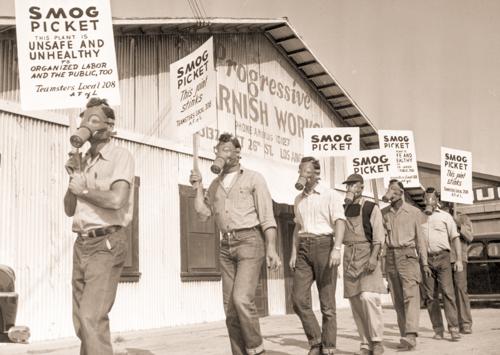
Dr. Bertram Carnow and Bob and Joan Ericksen discuss occupational illnesses and pollution
Nov. 21, 1974 Both Bob and Joan Ericksen ask why is a school being built not only by two highways but right next door to a paint factory. They contend that the paint fumes can't be good for anyone to breath. Instead of asking their patients where they work, Dr. Carnow believes more doctors need to ask, "What do you do?", to determine if they're working with any hazardous materials that may harm their health.
-
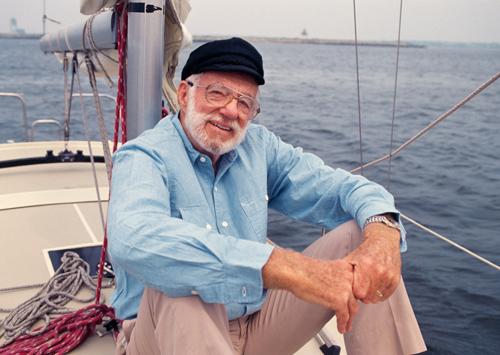
Dr. Benjamin Spock and Dr. Michael B. Rothenberg discuss the 40th anniversary of the book “Baby and Child Care”
Mar. 11, 1985 Dr. Benjamin Spock and Dr. Michael B. Rothenberg discuss the 40th anniversary edition of the book “Baby and Child Care.” The two discuss the changes they've made to the book, criticism they’ve faced since releasing the book, and how they’ve rethought gender roles in childcare. Studs plays “Hush Little Baby” - The Weavers (1955).
-
Dr. Beatrice Tucker, Sheri Daniels, and Barbara Brasa discuss issues of training and legality in the midwifery profession
Mar. 15, 1978 CONTENT WARNING: This conversation has the presence of outdated, biased, offensive language. Rather than remove this content, we present it in the context of twentieth-century social history to acknowledge and learn from its impact and to inspire awareness and discussion.