Listen to New Voices on Studs Terkel our partnership with 826CHI-here! Read the Story


Showing 106 - 120 of 365 results
-
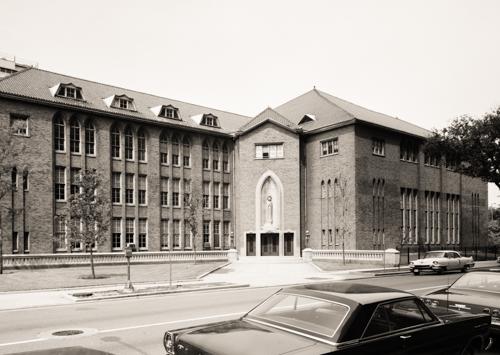
King Solomon discusses his life and Barry Byrne discusses Frank Lloyd Wright
1968 Both interviews incomplete. King Solomon as Kid Pharaoh, hot dog shop owner in Chicago, and former prize fighter. Mr. Solomon talks about his business and how he has earned his place. He talks about being a gambler, and speaks of being "rough" and receiving his money in an unorthodox manner, "protection" so to speak. The Interview ends abruptly at 13:42. At 13:43 interview begins with Barry Byrne architect and student of the "Prairie Style" talks about his education with Frank Lloyd Wright. He speaks fondly of "father"(Frank Lloyd Wright) and his time studying under him.
-

Kermit Eby discusses his book "Protests of an ex-organization man."
Nov. 21, 1961 *Please note: some sections have been edited out from the original recording due to copyright considerations
-
Juliet Mitchell discusses women, family, and oppression
Apr. 25, 1971 An interview with teacher and lecturer, Juliet Mitchell, who is a Marxist. She shares her support for the women's movement and talks about issues that affect women especially gender inequality. Juliet also refers to some comparisons between British and American women's movement.
-
Julia Koscis discusses her family's daily work and life ; part 2
Julia Koscis discusses living as a single parent family in 1940's Chicago. She discusses her three sons and their working and daily life. She also discussed meeting her second husband.
-
-
Joseph Collins discusses his books "Now We Can Speak" and "What Difference Could a Revolution Make?"
Feb. 8, 1983 Discussing the books "Now We Can Speak: A Journey Through the New Nicaragua" and "What Difference Could a Revolution Make?: Food and Farming in the New Nicaragua" with the author Joseph Collins.
-
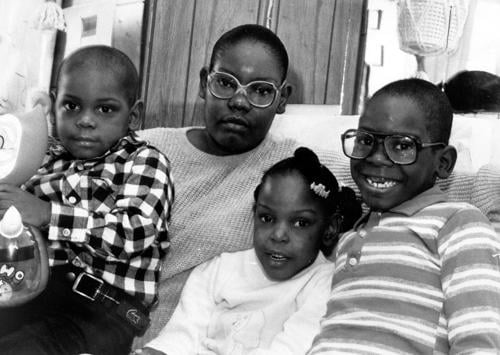
Jonathan Kozol reads from and discusses his book "Rachel and Her Children: Homeless Families in America"
Jan. 16, 1989 The people living at the Martinique feel as though they are a toxic waste substance being compressed in the density living quarters, explains Jonathan Kozol. Rachel of Kozol's book, "Rachel and Her Children: Homeless Families in America" said people don't want to see them. Refering to the song, "We are the World, " Rachel also asks how come people care so much for people they can't see? "We are the world, " says Rachel. "We live here, too".
-
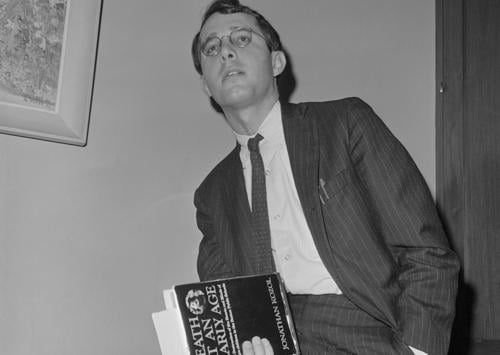
Jonathan Kozol discusses his book "Children of the Revolution: A Yankee Teacher in the Cuban Schools"
Nov. 10, 1978 Studs has a spirited discussion with Jonathan Kozol who shares his adventures and learnings in Cuba that formed the basis of his book "Children of the Revolution: A Yankee Teacher in the Cuban Schools." Kozol explains the ambitious Cuban Literacy Campaign begun in the 1960s that aimed to educate the entire population, tells of children teaching adults in remote villages by lantern light, and the unity and national pride that resulted. He and Studs explore the idea of generative words in literacy education and contemplate Kozol's hope to adapt a similar approach to American education.
-
John Steinway discusses the family business of making pianos
Nov. 4, 1965 As a result of making cabinets, the family business of making pianos started in 1853. John Steinway is a 4th generation piano-maker. Steinway talks about his own apprenticeship and first learning about wood. He feels the pianos are made better today because long ago, only two men made a piano versus a six or eight man crew to perfect the craftmanship today.*Please note: some sections have been edited out from the original recording due to copyright considerations
-
John Ray, Jimmy Ray and Henry discuss life in Chicago; part 2
1968 Jimmy Ray, John Ray, and Henry discuss their personal feelings on a variety of topics including religion, every day life, and what an ideal world looks like.
-
John Kenneth Galbraith in conversation with Studs Terkel
1980 Interviewing author and economist John Kenneth Galbraith.
-
John Kenneth Galbraith in conversation with Studs Terkel
Oct. 17, 1983 Discussing the book "The Anatomy of Power" (published by Houghton Mifflin) with the author, economist John Kenneth Galbraith.
-
John Kenneth Galbraith in conversation with Studs Terkel
Dec. 28, 1987 Focus of the interview is Galbraith's book Economics in Perspective: A Critical History.
-
John Kenneth Galbraith in conversation with Studs Terkel
Apr. 1, 1992 Discussing the book "The Culture of Contentment" (published by Houghton Mifflin) with the author, economist John Kenneth Galbraith. This program is a dub from a master cassette.
-
John Kenneth Galbraith discusses his book, "The Age of Uncertainty"
Apr. 8, 1977 John Kenneth Galbraith, economist and diplomat, discusses his book, "The Age of Uncertainty," which was being made into a PBS documentary. Galbraith talks about some of the most well-known economists and explains their writings. He explains how many of their ideas have long lasting effects on capitalism the US has today.