Listen to New Voices on Studs Terkel our partnership with 826CHI-here! Read the Story


Showing 76 - 90 of 120 results
-

Dr. Oliver Sacks discusses his book "The Island of the Colorblind"
Jan. 16, 1997 His book, "The Island of the Colorblind," was the result of Dr. Oliver Sacks' travels to Micronesia. Sacks was puzzled by how people that were color blind could tell if a banana was ripe. A man told him that one must rely on the smell of the banana and its texture. The second part of the book is devoted to Sacks' travels to Guam.*Please note: some sections have been edited out from the original recording due to copyright considerations
-
Dr. Leo Seren discusses atomic fission and nuclear experiments
Feb. 21, 1978 Nuclear physicist, Dr. Leo Seren, discusses atomic fission and nuclear experiments.
-
Dr. Joseph Burkhalter and Dr. Charles Price talk with Studs about Pharmaceutical Chemistry ; part 2
1964 Studs has a conversation with Dr. Charles Price, American Chemical Society president and chairman of chemistry department at University of Pennsylvania and Dr. Joseph Burkhalter, Professor of pharmaceutical chemistry at University of Michigan, and chairman of American Chemical Society's division of medicinal chemistry. Dr. Price And Dr. Burkhardter discuss the drug industry and working with the government to develop pharmaceutical medicines. Both doctors voice the debate about creation of nuclear technology and how that impacted science in general.
-
Dr. Joseph Burkhalter and Dr. Charles Price talk with Studs about Pharmaceutical Chemistry ; part 1
1964 Studs has a conversation with Dr. Charles Price, American Chemical Society president and chairman of chemistry department at University of Pennsylvania and Dr. Joseph Burkhalter, Professor of pharmaceutical chemistry at University of Michigan, and chairman of American Chemical Society's division of medicinal chemistry. Dr. Price And Dr. Burkhardter discuss the drug industry and working with the government to develop pharmaceutical medicines. Both doctors voice the debate about creation of nuclear technology and how that impacted science in general. (part 1)
-
Dr. John C. Lilly discusses his book "Center of the Cyclone"
Feb. 22, 1972 Discussing the book "Center of the Cyclone: An Autobiography of Inner Space" with the author Dr. John C. Lilly.*Please note: some sections have been edited out from the original recording due to copyright considerations
-
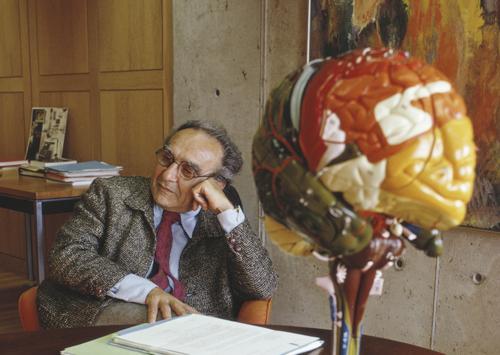
Dr. Jacob Bronowski discusses the philosophy of science in the post World War II world
Jan. 1, 1971 Dr. Jacob Bronowski, a mathematician and philosopher, discusses how the study of science has changed since the onset of government regulation or the military industrial complex. He also talks about humanity and explains how humans are the best species and therefore should come together to continue progress instead of killing each other. Content Warning: This conversation has the presence of outdated, biased, offensive language.
-
Dr. Herbert S. Terrace discusses his work in the field of primate cognition
Feb. 1980 Columbia University professor of psychology, Dr. Herbert Terrace, talks with Studs regarding his 1979 book "Nim: A Chimpanzee Who Learned Sign Language," animal cognition and the evolution of language.
-
Dr. Helen Caldicott discusses the ill-effects of a nuclear bomb going off
Apr. 7, 1981 The world spends 600 billon dollars on the arms race, which is rather puzzling to Dr. Helen Caldicott when 2/3 of the world's children are starving. Caldicott explained if a bomb went off in Chicago, there'd be a crater a half a mile wide and 300 feet deep. In addition, 90% of the people will be dead, some from being vaporized.
-
Dr. Christopher Riche Evans discusses dreams, the human brain, and computers
1966 Psychologist and computer scientist Dr. Christopher Riche Evans discusses dreams, the human brain, and computers. [Last minute and a half is a different interview. No mention of the subject.]
-
Dr. Charles Clements discusses his book "Witness to War"
Apr. 29, 1985 After having flown 50 missions in Vietnam, Charles Clements went to medical school and became a physician and a human rights activist. Dr. Clements talks about his observations in the poorest sections of Nicaragua. Because medicine for the poor people was considered contraband, Clements had to resort to putting rusty nails into a cup of water and having his patients drink the water for iron supplements. Clements reminds the audience if we don't know our history, we are bound to repeat it.
-

Dr. Bertram Carnow discusses the environment and pollution
Aug. 24, 1973 Interviewing Dr. Bertram Carnow about environmental health, air pollution, and occupational diseases.
-
Dr. Alan Solem and Dr. John Engel discuss their upcoming research trip to Australia
Jun. 9, 1976 Dr. Alan Solem, a malacologist, and Dr. John Engle, a bryologist, from the Field Museum discuss a research trip they plan to take to Australia. The two doctors also discuss climate and ecology in the Americas and in Australia. Dr. Solem will be researching land snails and Dr. Engel moss and liverworts.
-

Dr Eugene Mindel discusses the book "They Grow in Silence: The Deaf Child and His Family"
1970 Dr. Eugene Mindel, child psychologist and author, discusses his book, "They Grow in Silence: The Deaf Child and His Family,". Dr. Mindel and Studs talk about deaf children and how they learn to communicate without the ability to hear or speak. Studs reads an excerpt from the book about a deaf person feeling locked into themselves. Studs and Dr. Mindel talk about the the book "In this sign" by Joanne Greenberg a novel that portrays the isolation and loneliness of the deaf couple and the struggle of their hearing daughter.
-
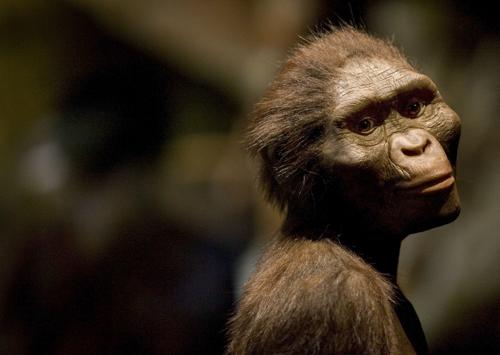
Donald Johanson discusses his book "Lucy: The Beginnings of Humankind"
Mar. 16, 1981 Studs talks with Donald Johanson about his book "Lucy: The Beginnings of Humankind," in which the famed paleoanthropologist describes his discovery of the female hominin fossil in Ethiopia. The conversation includes talk of Charles Darwin, Eugène Dubois' Java Man discovery, what makes a hominid, holes in the fossil record, fossil dating, his disagreements with Louis and Richard Leakey, site discovery, and his belief that the Hadar Formation in the Afar Triangle of Ethiopia holds the keys to the evolutionary puzzle. Includes snippets of the Beatles' "Lucy in the Sky with Diamonds."
-