Listen to New Voices on Studs Terkel our partnership with 826CHI-here! Read the Story


Showing 106 - 120 of 222 results
-
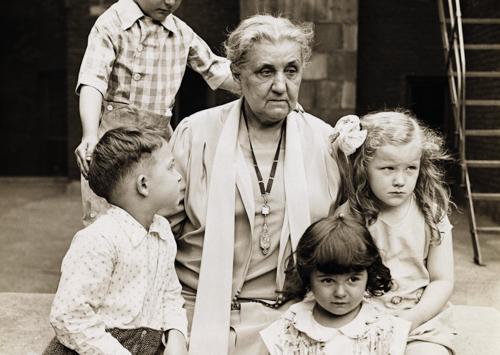
Jessie Binford discusses Hull House and Chicago ; part 2
1968 Jessie Binford discusses Chicago and Hull House
-
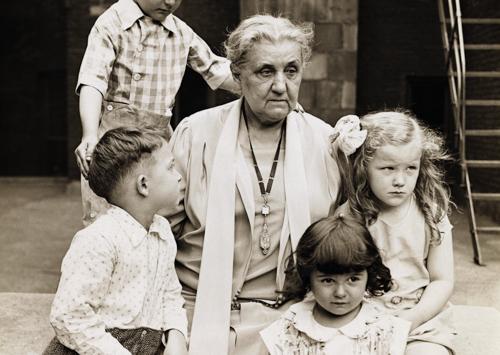
Jessie Binford discusses Hull House and Chicago ; part 1
1968 Jessie Binford discusses Chicago and Hull House
-
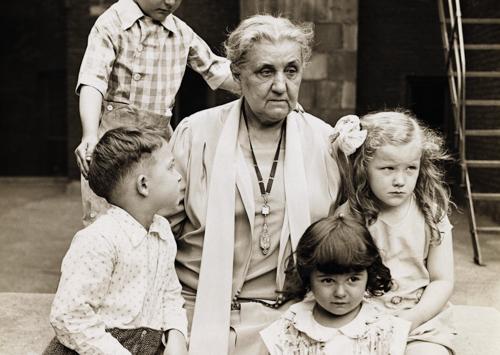
Jessie Binford discusses her life, Jane Addams, and the work they did together
Aug. 1965 Studs interviews Jessie Binford at her home at the Tall Corn Hotel in Marshalltown, Iowa. Ms. Binford reflects on growing up in Marshalltown and going to Hull House Chicago where she met Jane Addams. Ms. Binford talks to Studs about politics and the changes in technology. Includes an excerpt of a previous interview with Florence Scala.(1915178-3-1) Also, excerpts from 1963 interview with Ms. Binford(1851518-3-1, 3-2)
-
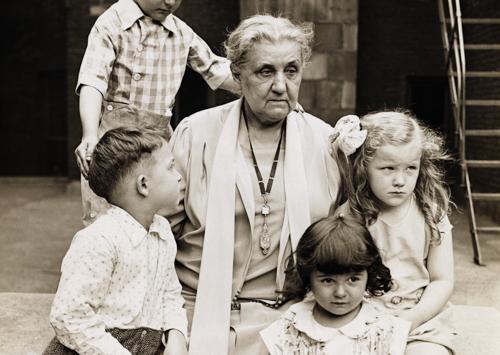
Jessie Binford discusses Chicago and Hull House
1968 Jessie Binford discusses Hull House and Chicago.
-
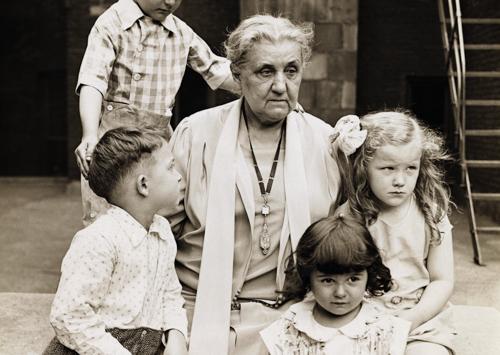
Jessie Binford discusses Chicago and Hull House
1968 Jessie Binford discusses Hull House and Chicago.
-

Jessica Mitford discusses her book "Kind and Usual Punishment: The Prison Business"
Sep. 14, 1973 Jessica Mitford an English born author, investigative journalist, and civil rights activist discusses her book "Kind and Usual Punishment: The Prison Business,". Ms Mitford and Studs discuss her finding that prisoners were used as test subjects for drug trials and other medical research, and slave labor. Ms Mitford's book makes the argument that prisons are a governments means to making money from the prisoners they have punished. They speak about reform needed in the laws and decriminalization of many things and the abolishing of prison altogether. Ms.
-
Jerry Dincin and Michael Sternberg discuss Thresholds, a social service organization
May. 14, 1975 Discussing the work of Thresholds, a Chicago social service organization, and interviewing Jerry Dincin and Michael Sternberg. They discuss what Thresholds provides and how it helps people with their confidence and mental health. Includes a song called "Young Paul".
-

Jeannine Honicker discusses the health impacts of radiation and nuclear power plants
Mar. 26, 1980 Jeannine Honicker discusses the health risks associated with radiation and nuclear power plants, details of whose lawsuit was published as, "Shutdown: Nuclear Power on Trial." Topics of discussion include how her perspective on nuclear power and radiation changed after her daughter was diagnosed with leukemia and activism related to protesting nuclear power in the United States.
-
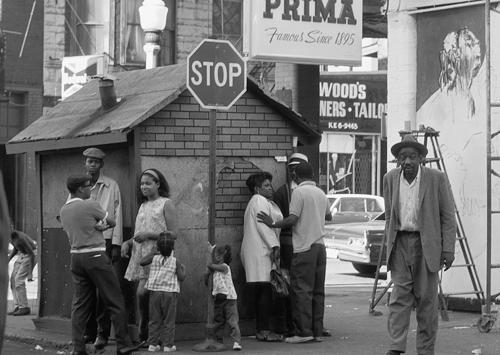
Jan Hestor, Curtiss Brooks and Dr. Philip Hauser discuss racial discrimination in Chicago ; part 5
1965 The discussion of discrimination in metropolitan Chicago continues with Jan Hestor, Curtiss Brooks and Dr. Philip Hauser talking about bigotry, prejudices, open occupancy and education. Included in this part of the interview is an excerpt of 17 year-old Jimmy talking about how his grandmother would rather work than be on welfare.
-
James Cameron and Studs Terkel discuss their experience in Lincoln Park and how the peaceful demonstration changed to violence with the use of police tear gas ; part 1
Aug. 28, 1968 Studs Terkel and James Cameron talk about their witness of the peaceful demonstration at Lincoln Park the night before. They discuss the kind and caring interaction between older adults and the young. Both reflect on how the event changed from peaceful to somewhat violent when police gathered and used tear gas on the crowd.
-
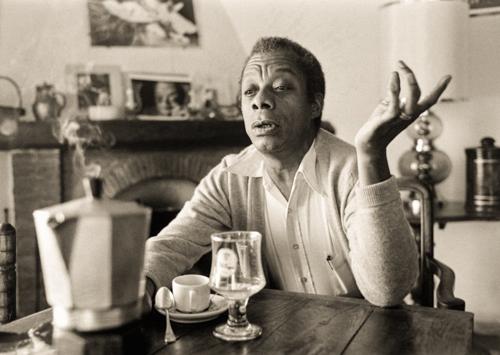
James Baldwin discusses his book," Nobody knows my name: more notes of a native son"
Jul. 15, 1961 Interviewing novelist and fighter for civil rights for all, James Baldwin and discussion on the book "Nobody Knows My Name more notes of a native son". They discuss the book and Mr. Baldwin's political beliefs and his work towards change in the civil rights movement.
-
James and Ann Harper discuss their social center, "Save the Alcoholic"
Jun. 25, 1980 James and Ann Harper join Studs Terkel to discuss their personal stories and the work of their social center called Save the Alcoholic, located in the Uptown neighborhood of Chicago. James discusses his struggle with alcoholism and how his experiences influence the mission of Save the Alcoholic. Ann says its often hard to work with “Skid row alcoholics,” but ultimately, they both believe it’s important to help those who are alienated by society, despite their frustrations.
-
Jaime Escalante discusses his career as a mathematics teacher
Aug. 5, 1988 Studs interviews educator Jaime Escalante about his successful work as a mathematics teacher at Garfield High School in East Los Angeles, which is represented in the film “Stand and Deliver.” Includes an interview with Edward James Olmos.
-
Irwin St. John Tucker and Carolyn Ashbaugh discuss labor history and Lucy Parsons
Apr. 4, 1977 Friar Tuck, as he was also known, was very active in socialist causes in Chicago. In the sweatshops, working fourteen or fifteen hours was the norm. Carolyn Ashbaugh's book "Lucy Parsons" goes over Parsons' movement for the 8-hour work day.
-
Interviewing St. Clair Drake, author of "Black Metropolis: A Study of Negro Life in a Northern City."
May. 10, 1976 A discussion with sociologist and anthropologist St. Clair Drake at the time of his receiving an honorary award from Roosevelt University on the themes of his convocation address. A fascinating deep-dive into race relations from the Revolution to the Bicentennial, touching on the contradictions, crises, and struggles that led to Black institutions and liberation. Studs plays several excerpts from previous programs with St.