Listen to New Voices on Studs Terkel our partnership with 826CHI-here! Read the Story


Showing 91 - 105 of 212 results
-

Laurie Abraham reads from and discusses her book "Mama Might Be Better Off Dead"
Oct. 1, 1993 What started out as a 5-piece article on health care became Laurie Abraham's book, "Mama Might Be Better Off Dead: The Failure of Health Care in Urban America". Through her stories, Abraham points out the many hardships and catch-22 scenarios of some poor families. One woman, after caring for her mother all day, Julie, wanted to work part time in the evenings. However, she soon learned that she'd be making too much money and she'd no longer be eligible for Medicaid for herself and her children.
-

Lani Guinier discusses her book "Tyranny of the Majority"
Apr. 7, 1994 *Please note: some sections have been edited out from the original recording due to copyright considerations
-
Julia Koscis discusses her family's daily work and life ; part 4
Julia Koscis discusses being an immigrant, racism and daily life. She talks with Studs about her fears of African Americans upon arriving at Ellis Island, New York from Hungary, and living closely with them before moving on to Dayton, Ohio. She discusses some of her life before moving to Chicago from Dayton, Ohio.
-
Judy Hough, Lily (Rose Rigsby) Lowell and Jimmy White talk with Studs Terkel Part 2
1968 Discussion of Division Street: America
-
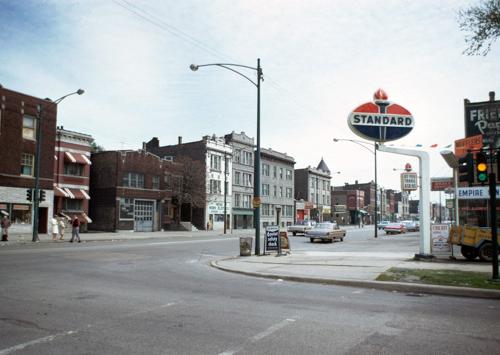
Judy Hough, Lily (Rose Rigsby) Lowell and Jimmy White talk with Studs Terkel Part 1
1968 Discussion of Division Street: America
-
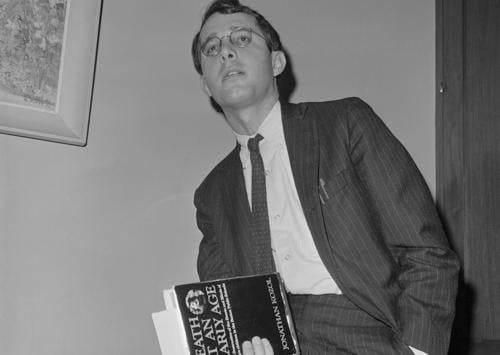
Jonathon Kozol discusses his book "Free schools" and education
Apr. 11, 1972 Discussing the book, "Free schools," and interviewing the author Jonathan Kozol. Jonathon Kozol also discusses education. Includes interview clip of Kermit Eby.
-
John Hope Franklin discusses racial inequality in America
Mar. 15, 1979 John Hope Franklin, historian, discusses his life and the racial inequality he witnessed. He also talks about John Hope and W. E. B. Du Bois. Dr. Franklin also talks about his Jefferson Lectures, Thomas Jefferson, and slavery.
-
John D. Weaver discusses his book "The Brownsville Raid"
Apr. 6, 1971 Events not recorded in history books is what prompted John D. Weaver to write "The Brownsville Raid: The Story of America's Black Dreyfus Affair". Weaver had heard the story of Black Army soldiers causing a raucous, when they were actually set up. Without even being granted a trial, President Theodore Roosevelt, dismissed those soldiers from the United States Army, Weaver explained.
-
Jennifer Davis, Bill Sutherland and Zola Zembe discuss South Africa and apartheid
Feb. 27, 1979 Jennifer Davis, Bill Sutherland, and Zola Zembe discuss the South Africa and their experiences with apartheid. Jennifer Davis grew up in the white middle class society of Johannesburg, whereas Zola Zembe, a native black man who lives in Capetown. They, along with Bill Sutherland, an American who works as a Representative for the American Friends Service Committee, talk about the changes that need to made and how American people and companies can help. An earlier interview of Carl Douglas Fuchs is also played.
-
Janis Ian discusses her career
1970 Janis Ian discusses her career, life, and her songs. The songs she talks about are "Society's Child", "Janey's Blues", "Honey D'Ya Think", "There Are Times", "Shady Acres", and "Lonely One". Janis Ian also discusses society, race relations, and responsibility. Includes Studs Terkel reading Janis Ian's poem "Poem One". Includes Janis Ian reading her poem.
-
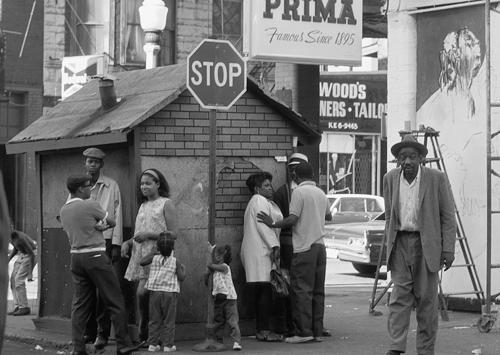
Jan Hestor, Curtiss Brooks and Dr. Philip Hauser discuss racial discrimination in Chicago ; part 5
1965 The discussion of discrimination in metropolitan Chicago continues with Jan Hestor, Curtiss Brooks and Dr. Philip Hauser talking about bigotry, prejudices, open occupancy and education. Included in this part of the interview is an excerpt of 17 year-old Jimmy talking about how his grandmother would rather work than be on welfare.
-
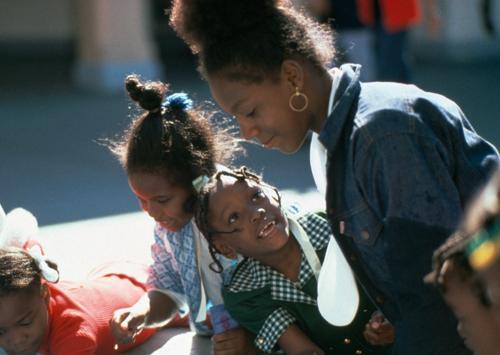
James Comer and Alvin Poissaint talk with Studs Terkel
Aug. 5, 1975 James Comer and Alvin Poissaint discuss their book " Black Child Care: How to Bring Up A Healthy Black Child In American - A Guide to Emotional and Psychological Development". They discuss raising a Black child in America in the 1970's, amid racism. Clip played of Odetta "All the Pretty Little Horses"(Studs Terkel Archive WAV ID 1853133-3-1)
-
James Clement, Mrs. Barry Norton, and Pearl Shaw discuss Chicago schools ; part 1
1965 Discussing the "Chicago Schools Challenge " and interviewing James Clement, Mrs. Barry Norton, and Pearl Shaw.
-
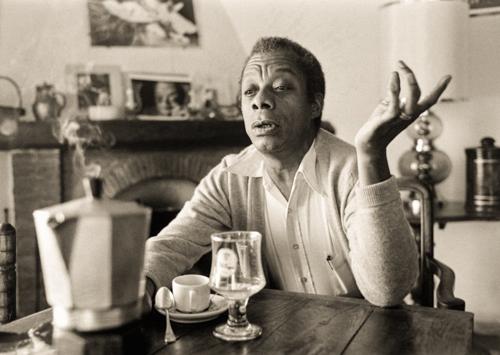
James Baldwin discusses his book," Nobody knows my name: more notes of a native son"
Jul. 15, 1961 Interviewing novelist and fighter for civil rights for all, James Baldwin and discussion on the book "Nobody Knows My Name more notes of a native son". They discuss the book and Mr. Baldwin's political beliefs and his work towards change in the civil rights movement.
-
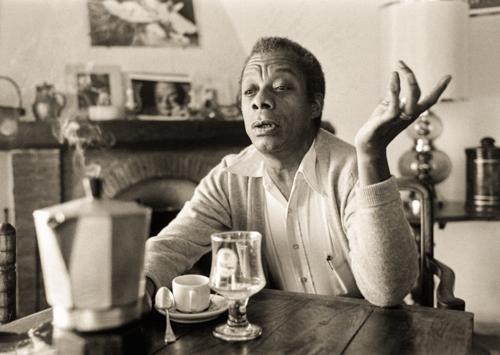
James Baldwin discusses his book "The Evidence of Things Not Seen"
Nov. 22, 1985 John Baldwin talks about his book "The Evidence of Things Not Seen" in which discusses the Wayne Williams Atlanta child murders of 1979-1981. This record is part of the Studs Terkel Almanac.