Listen to New Voices on Studs Terkel our partnership with 826CHI-here! Read the Story


Showing 46 - 60 of 91 results
-
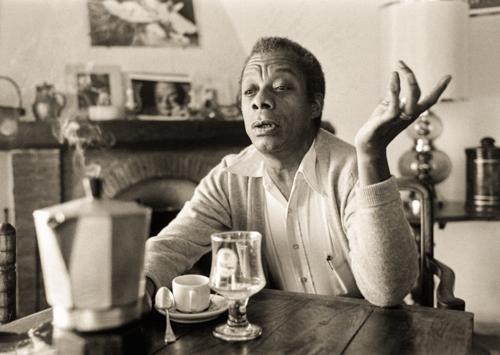
James Baldwin discusses his book "The Evidence of Things Not Seen"
Nov. 22, 1985 John Baldwin talks about his book "The Evidence of Things Not Seen" in which discusses the Wayne Williams Atlanta child murders of 1979-1981. This record is part of the Studs Terkel Almanac.
-
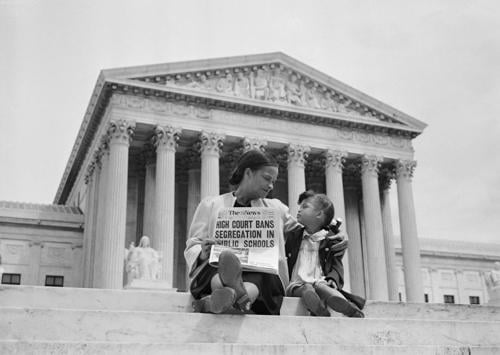
Ira B. Harkey discusses the south, civil rights, race relations, racism, his newspaper, and his career ; part 1
1966 Ira B. Harkey discusses the south, civil rights, race relations, racism, his newspaper, and his career. Includes Ira Harkey reading his writing from his newspaper the Mississippi "Chronicle-Star."
-

-
Interviewing St. Clair Drake, author of "Black Metropolis: A Study of Negro Life in a Northern City."
May. 10, 1976 A discussion with sociologist and anthropologist St. Clair Drake at the time of his receiving an honorary award from Roosevelt University on the themes of his convocation address. A fascinating deep-dive into race relations from the Revolution to the Bicentennial, touching on the contradictions, crises, and struggles that led to Black institutions and liberation. Studs plays several excerpts from previous programs with St.
-
-
-
Interviewing ex-convict turned probation officer, writer and lecturer Albert Race Sample
Dec. 4, 1984 Discussing the book "Race Hoss: Big Emma's Boy" with the author Albert Race Sample. Includes Sample reading a section of the book.Content Warning: This conversation has the presence of outdated, biased, or offensive language. Rather than remove this content, we present it in the context of twentieth-century social history to acknowledge and learn from its impact and to inspire awareness and discussion.*Please note: some sections have been edited out from the original recording due to copyright considerations
-
Interviewing ex-convict turned probation officer, writer and lecturer Albert Race Sample
Dec. 4, 1984 Discussing the book "Race hoss: big Emma's boy" with the author Albert Race Sample. Includes Sample reading a section of the book.
-
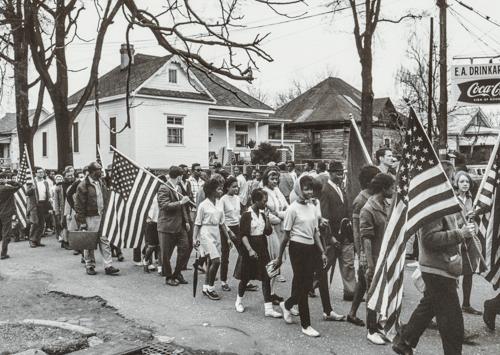
Interview with Rev. Paschal Carlton Part 1
1967 Residents of Selma, Alabama discuss Selma to Montgomery March (part 1 of 2). Includes interviews of elderly African Americans and of Rev. Paschal Carlton.
-
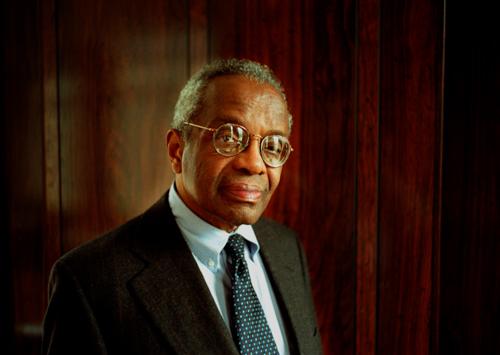
Interview with Derrick Bell
Oct. 25, 1967 Interviewing lawyer, activist and author Derrick Bell.
-
Horace Cayton discusses his book "Long Old Road" ; part 2
Sep. 7, 1966 Content Warning: This conversation has the presence of outdated, biased, offensive language. Rather than remove this content, we present it in the context of twentieth-century social history to acknowledge and learn from its impact and to inspire awareness and discussion. Loneliness and hardships of both fitting in and finding a job are covered in the continuation of Horace Cayton's, "Long Old Road: An Autobiography." By living in a middle class home in Seattle with a full time Japanese servant, Cayton was seen as better off than most people.
-
Henry Louis Gates, Jr. discusses race and the magazine "Critical Inquiry"
Jan. 24, 1986 As the guest editor of “Critical Inquiry,” Henry Louis Gates, Jr. covered the importance of Black writers and their contributions. Because there is no color blindness is the western world, explained Gates, pointing out that one is a Black writer or a Black doctor is important to society. Gates also covers the issue of race not being solely about Black and white people but rather it has to do with multi-ethnic and multi-cultural people.
-
Gilbert Moses discusses The Free Southern Theater and his play "Blues for Mister Charlie" with Studs Terkel ; part 2
Aug. 10, 1966 Studs interviews Gilbert Moses about his play, "Blues for Mister Charlie" and The Free Southern Theater. They discuss a variety of plays that include, "White America," "Roots," and "Blues of Mister Charlie."
-
Gilbert Moses discusses "Waiting for Godot" and the Free Southern Theatre with Studs Terkel ; part 1
Aug. 10, 1966 Studs interviews Gilbert Moses about the Free Southern Theatre that performed throughout Mississippi depicting the lives of Southern blacks. Moses describes the audiences and their reactions to the plays and their own participation in acting out their lives.
-
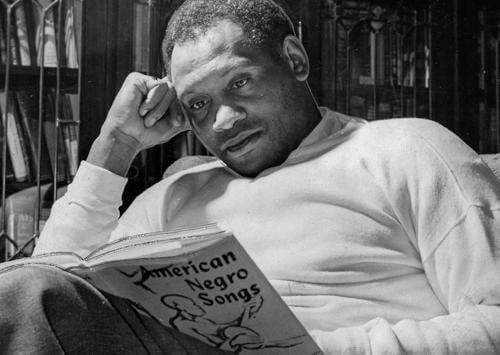
Gathering of friends discussing Paul Robeson
May. 8, 1970 Recorded live on Chicago's South Side. Robeson is ill at the time of recording. Speakers: Earl Dickerson, Etta Moten Barnett, Judge Sidney Jones, J. Mayo "Ink" Williams, Joan Brown (possibly Abena Joan Brown), Charles Hamilton, Margaret Burroughs, [John Gray's sister], [Stevens?]