

-

Interview with Al Booth
Dec. 6, 1990 Interviewing Al Booth, founder and president of the International Music Foundation, about the "Do-It-Yourself-Messiah" which he first organized in Chicago in 1975. In the "Do-It-Yourself-Messiah," a production of George Frideric Handel's "Messiah" is stag
-
-

Indian musicians, vocalists, and University of Chicago students discuss Indian art and culture
May. 3, 1961 Discussing Indian poetry, music, and drama with Indian musicians, vocalists, and University of Chicago students.
-
-
IBEW members discuss unions
Aug. 26, 1993 Jim Jennings, Jake Dowling and Jim Hastings, members of The International Brotherhood of Electrical Workers (IBEW) talk about unions. Union folk songs by Pete Seeger and Joe Glazer are played periodically.
-
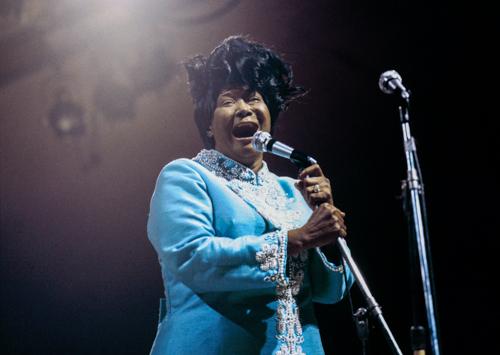
Hugh Wiley Hitchcock and Stanley Sadie discussing the book "The New Grove Dictionary of American Music"
Nov. 4, 1986 Discussing the book "The New Grove Dictionary of American Music". They talk about American music and musicians of all kinds and from different periods. Includes Charles Ive's song "At the River" sung by Cleo Laine in the middle of the program.
-
Hugh Tracey discusses world music and dance
Nov. 16, 1960 *Please note: some sections have been edited out from the original recording due to copyright considerations
-
Holly Near discusses her book "Fire in the Rain--Singer in the Storm: An Autobiography"
Aug. 20, 1990 Singer-songwriter and activist Holly Near discusses her work for fighting for social justice through outlets such as her music. Near a prominent proponent for the LGBTQ community has streamlined her work using folk and protest-inspired songs. Near has been awarded multiple honors from organizations such as the ACLU and the National Organization for Women for her work for social change.
-
Hoagy B. Carmichael discusses his father’s life as a jazz musical
May. 20, 1993 Hoagy B. Carmichael discusses his father and legendary jazz musician, Hoagy Carmichael. He also explores his work as a music producer, author, bamboo fly rod builder, and manager of his father’s music. Includes a test tone that lasts 25 seconds. music.
-
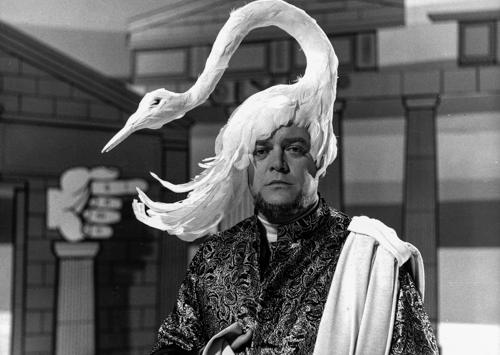
Hermann Prey discusses his career
Dec. 9, 1971 This is an interview with Herman Prey about his music career and the history of the opera music. This record contains music fragments from Papageno's lyrics of The Magic Flute.
-
Henry Threadgill, Fred Hopkins, and Steve McCall discuss their trio jazz group, Air
Sep. 4, 1981 Studs interview of Air jazz trio with Henry Threadgill - reeds, Fred Hopkins - bass, and Steve McCall - percussion. They discuss their individual careers and the people who have influenced them. Studs quoted Nelson Algren. Studs explores the evolution of their music and how the three came together. They discuss various pieces of their music and the instruments they use. Pauses were taken for musical numbers but none were played on this recording.
-
Helen Humes discusses her career
Jun. 29, 1977 Helen Humes discusses her career and touring with Count Basie and his orchestra. John McDonough is present for the interview and contributes. Songs sung by Helen are played throughout the interview: "He May Be Your Man", "Song of the Wanderer", "If I Could Be with You for One Hour Tonight" (2 recordings- one from 1940 and one from 1977), "Unlucky Woman", "They Can't Take That Away From Me", "Today I Sing the Blues", and "They Raided the Joint". Music has been removed for copyright reasons.
-
Harvey Phillips and Dr. Frederick Fennell discuss their holiday ensemble the TubaSantas
Dec. 13, 1994 Presenting music by the TubaSantas with Harvey Phillips and Dr. Frederick Fennell. Program may include a live performance. "Generic Version"-Re-edited on 12/6/1995
-
Harry Chapin discusses his career as a writer and singer and reflects on the stories behind his music
Mar. 31, 1975 Studs interviews Harry Chapin about his music and career. They discuss Chapin’s style of writing songs. Chapin describes some of his songs such as “Cats In the Cradle,” “Sniper,” “WOLD,” and “Mr. Tanner.” He stresses that his songs tell stories and often are influenced by real-life events. For example, “30,000 Bananas Pounds of Bananas” came from a trip he took on a Greyhound bus through Pennsylvania where there was a truck accident.
-
Harry Belafonte discusses jazz and folk music ; part 2
Jan. 6, 1955 The conversation continues with Belafonte talking about his album, "Belafonte Sings of the Caribbean". The songs, explained Belafonte, were both reflections of his childhood and things he was exposed to as an adult. Belafonte believed both Louis Armstrong and Jack Teagarden played important roles in jazz music.