

-

Licia Albanese discusses her opera performances
Feb. 27, 1960 Licia Albanese discusses her performance preparations, advice to young new opera singers, the conductor techniques from Fausto Cleva, and the late Arturo Toscanini.
-
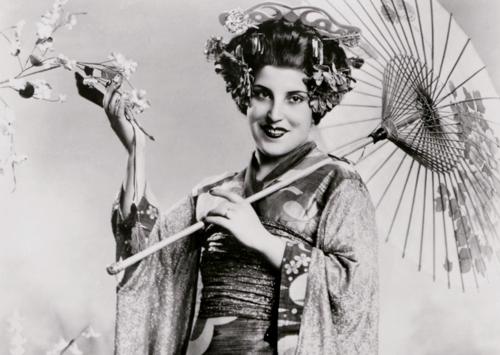
Licia Albanese discusses her opera performances
Feb. 27, 1960 Licia Albanese discusses her performance preparations, advice to young new opera singers, the conductor techniques from Fausto Cleva, and the late Arturo Toscanini.
-
Leonard Sorkin discusses his career as a violinist with the Chicago Symphony Orchestra, the Fine Arts Quartet and as Director of Chamber Music Studies at the University of Wisconsin
Apr. 9, 1982 Studs interviews Leonard Sorkin about his career as a violinist. They discuss his training, which began in early childhood and who he studied under. Sorkin plays a few short tunes to demonstrate his art, and one was his childhood favorite of "Allegro" by Joseph Fiocco. Sorkin names Jascha Heifetz as one who he admired all his life and shares the sounds and names of others who have influenced him. He explains to Studs how the Fine Arts Quartet members change to adapt to new players but the quartet sound remains the same.
-
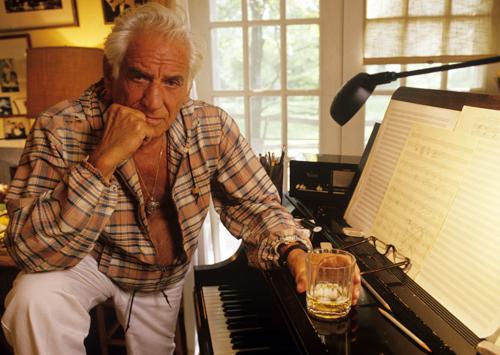
Leonard Bernstein discusses his career, music, and education
Feb. 1, 1985 Leonard Bernstein discusses his career as a composer along with his thoughts on American culture, musical theater, Black music, classical music, and education; music is played throughout the program including songs from Marc Blitzstein's play "The Cradle Will Rock."
-
Lena Horne talks about her influences and her career
1984 Lena Horne talks about her memories of Paul Robeson and Billie Holiday, how her skin color affected her career, and her relationship with her audience.
-
Lawrence Cohn discusses his book Nothing But the Blues: The Music and Musicians
Dec. 20, 1993 The originator of the Roots ‘N’ Blues series and Grammy winner and nominee Lawrence Cohn discusses his latest work which focuses on the life and times of blues and the musicians that helped the genre become what it is today.
-
Lawrence (Bud) Freeman discusses jazz with Studs Terkel
May. 11, 1971 Studs Terkel interviews Lawrence "Bud" Freeman about his career in jazz.
-
Lawrence (Bud) Freeman discusses his career as a tenor sax jazz musician
Dec. 1, 1980 Studs interviews Bud Freeman about his career in Jazz and his book, "Working" as well as his album, "Complete Bud Freeman." Freeman shares stories about his dad and brother during his childhood. He discusses various songs from his album and shares stories about his interactions with other jazz musicians. Studs reads a few passages from Freeman's book. They discuss how Freeman's creative practices and how his music has changed over the years. Musical pieces are removed from this edited version of the original recording.
-
Lawrence (Bud) Freeman discusses his career as a jazz tenor sax player and his album "Complete Bud Freeman"
Apr. 15, 1982 Studs interviews Lawrence Freeman about his career in jazz. Studs notes that he first interviewed Freeman in 1939 as his first guest on his radio program with WGES. Freeman shares the names and events of influences in his life. He describes his interactions with other jazz musicians throughout his career and shares some stories about his brother, father, and childhood. Studs quotes Mark Miller of the Toronto Globe, music critic, for what he notes about Freeman.
-
Laurie Anderson discusses her album "Big Science"
Laurie Anderson discusses her album "Big Science" and talks about he creative process. Talks briefly about her transition from plastic arts to performance artist and her perspective of the world after World War II and her collection of short stories and songs called "United States"
-
Lakshmi Shankar discusses her career and music
Apr. 30, 1979 Indian singer and Hindustani classical vocalist Lakshmi Shankar discusses different styles of Hindustani classical music and music theory.
-
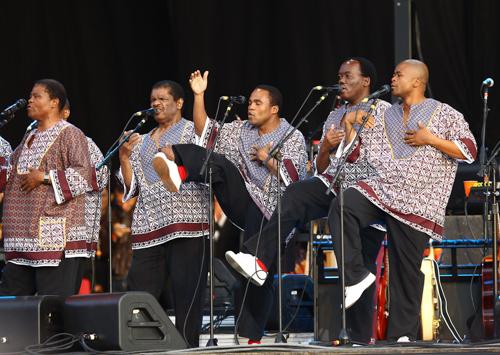
Ladysmith Black Mambazo discusses South African music and South Africa
May. 12, 1992 Ladysmith Black Mambazo discuss South African music and South Africa. Songs that have been removed include those from the play "The Son of Jacob Zulu." that was playing at Steppenwolf Theater. Includes a clip of an interview with the Chief of Durban.
-
Kurt Elling discusses his jazz music and background
Aug. 11, 1997 Jazz singer Kurt Elling discusses his musical influences, new and past music, and the path of his career.
-

King's Singers in conversation with Studs Terkel
May. 22, 1992 Interviewing the British vocal ensemble King's Singers.
-
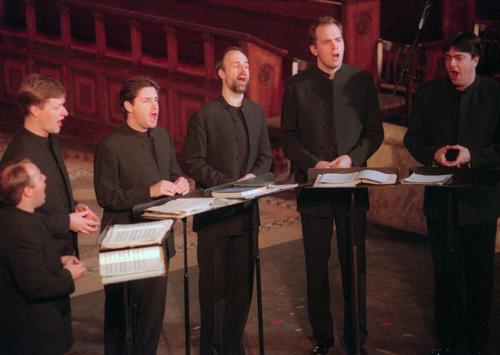
King's Singers
Jul. 20, 1995 Terkel comments and presents a musical performance by the King's Singers