Listen to New Voices on Studs Terkel our partnership with 826CHI-here! Read the Story


Showing 46 - 60 of 262 results
-

Micheál Mac Liammóir discusses his show "The Importance of Being Oscar"; part 2
Nov. 17, 1961 Micheál Mac Liammóir, actor and playwright, discusses his upcoming performance based on the writings of Irish playwright and poet Oscar Wilde.
-
Michael Anania, Ralph Mills, and Lisel Mueller discuss the art of poetry
Jul. 12, 1981 Three distinguished Chicago poets — Michael Anania, Ralph Mills, and Lisel Mueller — read selections of their work and discuss the art and rhythm of poetry, influences and inspiration, and the power of memory. Includes a recording of Gwendolyn Brooks reading her poem, "The Rites for Cousin Vit."
-
Michael Anania discusses his poetry collection, "The Color of Dust"
1970 Poet and editor Michael Anania discusses his poetry collection, “The Color of Dust” and reads selected works from the collection. Anania discusses Midwest history and geography and his own Nebraska roots as influences on the work and its themes of love, war, and social issues. Episode includes relevant music and theatrical recordings, including “Immortality” read by William Jennings Bryan, “Rake and Rambling Boy,” Jefferson Airplane’s “Somebody to Love,” “Dust Bowl Refugee” by Woody Guthrie, and “The Battle Hymn of the Republic.”
-
Michael Anania discusses his poetry collection, "Riversongs"
Mar. 2, 1979 Poet and editor Michael Anania discusses his poetry collection, “Riversongs” and reads selected works from the collection. Anania discusses the themes of place, transience, and permanence in the Midwest. Episode includes relevant music recordings, including a number of unidentified instrumental recordings and songs by Woody Guthrie, Los Jaivas, and Joni Mitchell.
-
Michael Anania discusses and reads his books of poetry "The Red Menace" and "The Sky At Ashland"
Nov. 24, 1986 Michael Anania discusses and reads his from his books of poetry called "The Red Menace" and "The Sky At Ashland". Anania also discusses his life and inspirations. Includes a clip of children speaking about the world and war. Includes a clip of a jazz song called "Lester Leap In" by Count Basie at the end of the program.
-
Maya Angelou discusses her book “Gather Together in My Name”
May. 13, 1974 Writer and poet Maya Angelou talks about her life, Creole influences, and her book “Gather Together in My Name” with Studs Terkel. Angelou reads an excerpt from the book and the recording opens with Angelou reading one of her poems.
-
Maya Angelou discusses her book "I Know Why the Caged Bird Sings"
Mar. 13, 1970 Angelou discusses her book "I Know Why the Caged Bird Sings" and recites "When I Think About Myself." She talks about growing up in Stamps, Arkansas, and her family. Copyrighted material has been removed.
-
Maya Angelou and Tom Wicker discuss life and culture in the U.S. South
Jul. 1, 1979 Poet Maya Angelou and journalist Tom Wicker discuss life in the U.S. South and how the region’s history has shaped its culture. Topics of discussion include social dynamics and race in the South, the concept of “home” and what it means to return to one’s roots, and religion in the South. Angelou reads excerpts of her poetry, including “Still I Rise” and “Phenomenal Woman,” and shares spiritual songs from her childhood.
-
-
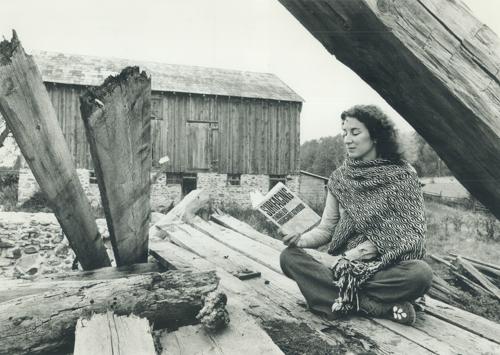
Margaret Atwood discusses her poetry and her novel, "Surfacing"
Jan. 28, 1976 Canadian poet and novelist Margaret Atwood discusses her poetry and her first novel, “Surfacing,” focusing on the novel’s symbolism and the themes of nature, religion and memory. She compares life, attitudes, and politics in Canada with those of the United States.
-
Lukas Foss discusses his career as a composer of classical music and conductor of the Milwaukee Symphony Orchestra
Mar. 14, 1983 Studs interviews Lukas Foss about his career as a classical composer and conductor. Foss talks about his work with the Milwaukee Symphony Orchestra. He reflects on how teachers influenced his career and how he learns from each orchestra that he works with. He shares his love for poetry and explains how he makes music from poems and uses "Thirteen Ways of Looking at a Blackbird," a poem by Wallace Stevens, to illustrate. They discuss how Foss composes and how it is very similar to the way Jazz is composed with improvisation.
-
Luis Francia discusses his book "Brown River, White Ocean"
Mar. 1, 1994 Discussing the book "Brown River, White Ocean: An Anthology of Twentieth-Century Philippine Literature in English" (published by University of Rutgers Press) with editor and poet Luis Francia.
-
Lucien Stryk discusses Zen poetry and Zen philosophy
Jan. 1, 1966 Poet Lucien Stryk discusses Zen poetry and Zen philosophy. Styrk focuses this conversation on “Satori," a Buddhist term for “the awakening”, and its influence on Zen philosophy. Styrk also discusses and reads from a book edited by him and Takashi Ikemoto entitled "Zen: Poems, Prayers, Sermons, Anecdotes, Interviews." Stryk reads a poem from “Triumph of the Sparrow” by Shinkichi Takahashi. Studs plays "His Eye is on the Sparrow" - Mahalia Jackson (1958).
-
Louis Untermeyer reads from and discusses "The Library of Great American Writing" ; part 3
1960 Lastly, with his book, "The Library of Great American Writing," Louis Untermeyer talks about Mark Twain, Emily Dickinson and personal friends of his, Robert Frost and Carl Sandburg. Twain, said Untermeyer, started out as a humorist but then became more pessimistic with "The Adventures of Huckleberry Finn". Emily Dickenson wrote in secret and she only gave permission for six of her poems to be published.
-
Louis Untermeyer reads from and discusses "The Library of Great American Writing" ; part 2
1960 Interviewing Louis Untermeyer [1 of 3 parts].