Listen to New Voices on Studs Terkel our partnership with 826CHI-here! Read the Story


Showing 76 - 90 of 272 results
-

Julia Koscis discusses her family's daily work and life ; part 2
Julia Koscis discusses living as a single parent family in 1940's Chicago. She discusses her three sons and their working and daily life. She also discussed meeting her second husband.
-
Judy Nichol and seniors Jim and Kurt discuss drugs in high school
May. 8, 1973 As part of an on-going series, Chicago Sun Times reporter, Judy Nichol and her colleagues went to various high schools in Chicago and the suburbs to talk to students about drugs in the high schools. Lane Tech seniors Jim and Kurt said the reason they got into doing drugs was because of their peers and because they wanted to be a part of the crowd.
-
Judy Hough, Lily (Rose Rigsby) Lowell and Jimmy White talk with Studs Terkel Part 2
1968 Discussion of Division Street: America
-
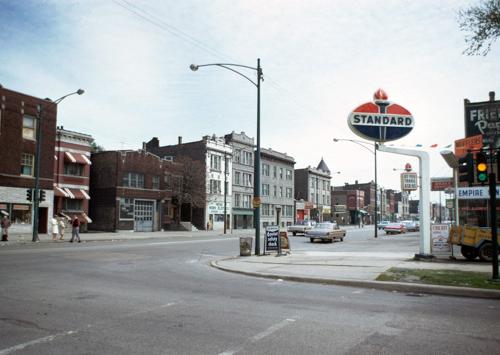
Judy Hough, Lily (Rose Rigsby) Lowell and Jimmy White talk with Studs Terkel Part 1
1968 Discussion of Division Street: America
-
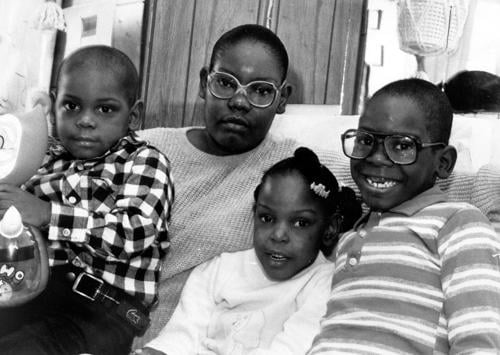
Jonathan Kozol reads from and discusses his book "Rachel and Her Children: Homeless Families in America"
Jan. 16, 1989 The people living at the Martinique feel as though they are a toxic waste substance being compressed in the density living quarters, explains Jonathan Kozol. Rachel of Kozol's book, "Rachel and Her Children: Homeless Families in America" said people don't want to see them. Refering to the song, "We are the World, " Rachel also asks how come people care so much for people they can't see? "We are the world, " says Rachel. "We live here, too".
-
John Vinci, David Van Zanten, and Wim de Wit discuss the Chicago Historical Society’s exhibition “Louis Sullivan: The Function of Ornament”
Aug. 27, 1986 Architect John Vinci, art and architectural historian David Van Zanten, and curator Wim de Wit discuss Louis Sullivan and the Chicago Historical Society’s exhibition “Louis Sullivan: The Function of Ornament.” The group discusses Sullivan’s use of ornament to add an organic element to his architecture; as well as some of Sullivan’s most prominent work, including the Chicago Stock Exchange Building, the Auditorium Building, and the Sullivan Center. This program includes a clip from 1956 of Frank Lloyd Wright discussing Sullivan and his impact on architectural design.
-
John Ray, Jimmy Ray and Henry discuss life in Chicago; part 2
1968 Jimmy Ray, John Ray, and Henry discuss their personal feelings on a variety of topics including religion, every day life, and what an ideal world looks like.
-
John Donahue, Calvin Hill in conversation with Studs Terkel
May. 17, 1995 Interviewing members of the Chicago Coalition for the Homeless, John Donahue and Calvin Hill.
-
John Bailey, Robert Tucker, and Dick W. Simpson discuss housing and transportation ; part 4
Oct. 9, 1974 Dick Simpson's book, "Chicago's Future: An Agenda for Change," is discussed with the author, John Bailey and Robert Tucker, all employees of Chicago universities. The group discusses housing and transportation issues that many working class citizens face. The group discusses possible ways to fix the issues including government help and re-zoning.
-
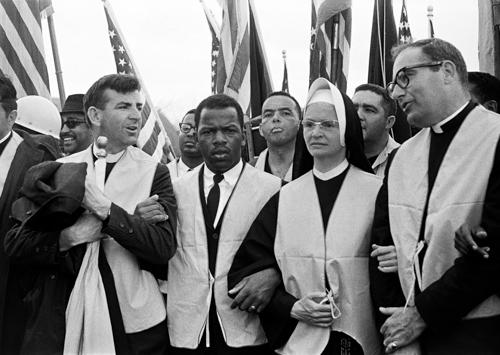
John A. McDermott and Sister Mary Peter discuss Catholic Church's Participation in Civil Rights Movement
Sep. 15, 1965 John A. McDermott and Sister Mary Peters discuss Catholic Church's Participation in Civil Rights Movement. Includes interview with unknown Catholic man opposed to nuns' and priests' involvement. Includes song "It Isn't Nice" by Judy Collins.
-
Joel Hall, Lynn Colburn, Larry Schoeneman discuss the Chicago Metropolitan Dance Festival
Jun. 10, 1980 Studs Terkel disccuses the Chicago Dance Festival with Joel Hall, Lynn Colburn, and Larry Schoeneman.
-
Jimmy Ray discusses his ideal future, music, and concerns with the country; part 1
1968 Jimmy Ray talks about what he would like a future marriage to look like, music he likes and why, and things he worries about in the country; part 1.
-
Jimmy discusses work ethic and dreams; Carolyn and May Rose discuss daily life, and worries; part 2
1968 Jimmy discusses work ethic and pride. High school students Carolyn and May Rose describe a typical day, future plans and worries. All talk about what the world would look like if they were God. Part 2
-
Jimmy discusses his daily life, his dreams, and worries; part 1
1968 Jimmy talks about how he spends his day, fantasies and daydreams, worries about the future, and family life; part 1.
-
Jim Lasko, Blair Thomas and Clare Dolan discuss the Redmoon Theater of Chicago
Jan. 25, 1995 Discussing the Redmoon Theater of Chicago with co-founders Bill Lasko, Blair Thomas and Clare Dolan. Mr. Thomas and Ms. Dolan were also puppeteers in the theater. The actors talk about making the puppets their own characters and making them larger than life. Audiences are captivated by the puppets, who offer a sense of wonder, magic and fantasy.