

-

Stuart Dybek reads from and discusses his book "The Coast of Chicago"
May. 7, 1990 Hearing Chopin being played through the pipes of another apartment and a tale about a young girl who died and whose father froze her body in an ice house are among the stories in Stuart Dybek's book, "The Coast of Chicago." Dybek explained that although his stories may seem dream-like, he tries to come up up with stories from some place of reality.
-
Stuart Brent discusses the demise of the independent bookseller
Mar. 31, 1980 Stuart Brent believes people are totally indifferent to reading. He has come to the realization that, for some, material rewards are more important than cultural activities and as a result, culture is dying. But he is puzzled as to why readers would want to shop at big conglomerate stores like Kroch's and Brentano's when his store offers a personal, caring nature to its customers. This recording includes two excerpts from interviews with British booksellers Una Dillon and Handasyde Buchanan.
-
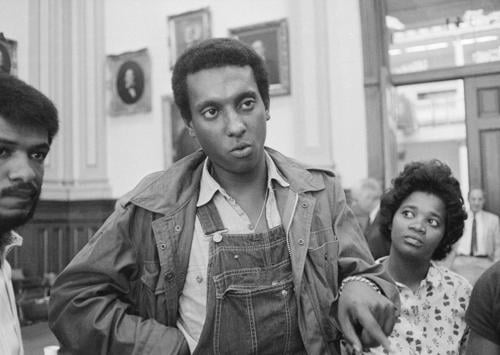
Stokely Carmichael, Charlie Cobb, and Courtland Cox discuss the philosophy of the SNCC ; part 2
1968 Stokely Carmichael, Charlie Cobb, and Courtland Cox discuss civil rights and African Americans in politics. Discussing the philosophy of SNCC. Includes Charlie Cobb reading his poem. Duplicate of 1916310-3-2.
-
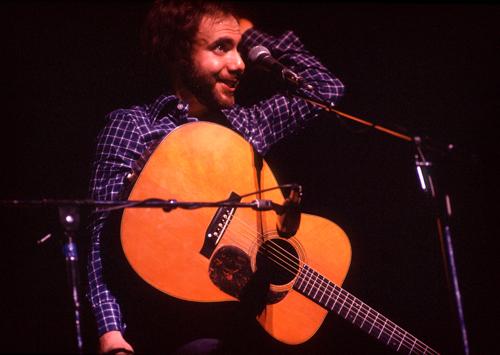
Steve Goodman discusses his album "Words We Can Dance To"
Apr. 30, 1976 Studs Terkel presents a “musical portrait” of Steve Goodman with the musician joining him in the studio to discuss, listen to, and play songs from his album “Words We Can Dance To.” Goodman begins by performing the blues song “Glory of Love,” and Terkel plays a clip from Big Bill Broonzy’s rendition of the song; Goodman cites Big Bill as one of his many influences. Goodman also plays an old jazz song called “When the Red, Red Robin,” with Terkel connecting that song to his first memories of jazz.
-
Stephen Deutch in conversation with Studs Terkel
Nov. 13, 1989 Discussing the book "Stephen Deutch, Photographer: From Paris to Chicago, 1932-1989" (published by the Tri-Quarterly) with photographer Stephen Deutch.
-
St. Clair Drake and Paul Mundy discuss prejudice ; part 4
1965 Discussing prejudice in communities with Dr. St. Clair Drake and Dr. Paul Mundy. They discuss discrimination, racism, integration, and other similiar topics.
-
St. Clair Drake and Paul Mundy discuss prejudice ; part 3
1965 Discussing prejudice in communities with Dr. St. Clair Drake and Dr. Paul Mundy. They discuss stereotypes, racism, and race relations.
-
St. Clair Drake and Paul Mundy discuss prejudice ; part 1
1965 Discussing the community and prejudice with Dr. St. Clair Drake and Dr. Paul Mundy. Includes an interview with a boy named Tony discussing relations with African American people.Content Warning: This conversation includes racially and/or culturally derogatory language and/or negative depictions of Black and Indigenous people of color, women, and LGBTQI+ individuals. Rather than remove this content, we present it in the context of twentieth-century social history to acknowledge and learn from its impact and to inspire awareness and discussion.
-
-
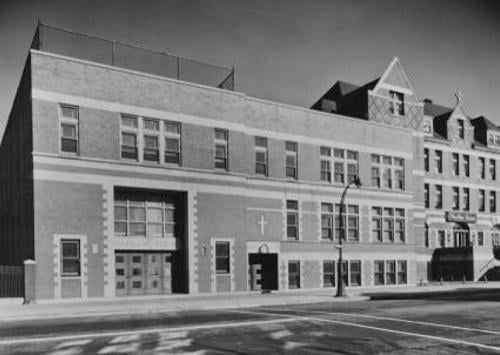
Sister Mary William discusses the importance of Marillac House
Apr. 10, 1968 Content Warning: This conversation includes racially and/or culturally derogatory language and/or negative depictions of Black and Indigenous people of color, women, and LGBTQI+ individuals. Rather than remove this content, we present it in the context of twentieth-century social history to acknowledge and learn from its impact and to inspire awareness and discussion. When she was a teenager, Sister Mary William told her parents that she wanted to become a nun. Sister Mary wanted to become a nun so that she could love and help many people.
-
Sir Georg Solti talks with Studs Terkel
Feb. 1, 1995 Studs engages the former Chicago Symphony Orchestra conductor, Sir Georg Solti, in a wide-ranging conversation about his life and career. From his early studies in Budapest with Béla Bartók, his string of good-luck opportunities before, during, and after World War II, meeting Toscanini in Lucerne, and starting on top conducting in Frankfurt, London, and finally Chicago. He discusses his many German and European musical influences and contemporaries, and stresses the importance of education, arts funding, and hard work.
-
Sergeant Garland Davis discusses his profession ; part 2
Even though his life was threatened, when a young man told him his goal in life was to see Davis dead, Sergeant Garland Davis, continues to work in the youth crime division, in the hopes by be-friending the young people, they will do something positive with their lives. Davis also adds that the parents of these young people, along with the communities in which they live, play parts in the youths' behavior.
-
Sergeant Garland Davis discusses his profession ; part 1
An officer with the Chicago department, Sergeant Garland Davis, talks about his presence in the community, in hoping that some of the young people he works with see him as a friend and not solely as a cop. Davis also talks about the priority being helping the youth before their lives take a wrong turn into a life of crime.
-
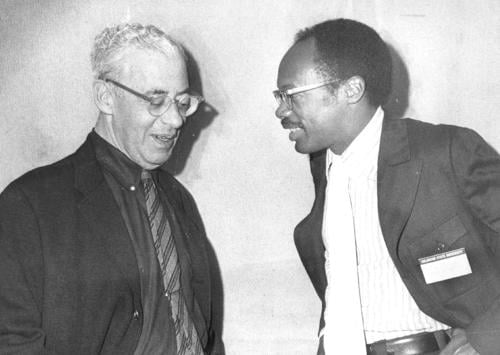
Saul Alinsky, American community organizer, political activist, and writer discusses his book "Rules for Radicals" with Studs Terkel
1971 Community organizer and social activist, Saul Alinsky speaks about his newest book, "Rules for Radicals," and reminisces about his work in the Back of the Yards neighborhood, his advocacy for African-American labor rights, and his connection with the Mexican-American civil rights movement in California. Although Studs' introduction states that this is a rebroadcast of a 1962 interview, that is incorrect. The interview was recorded in 1971.
-

Sandra Cisneros discusses her new book "My Wicked Wicked Ways"
Dec. 21, 1992 Sandra Cisneros sits down with Studs Terkel and provides behind the scenes commentary on poems from her new book "My Wicked Wicked Ways." She provides an enlightening history to them. "Curtains," "Velorio," "Arturo Burro," "I Told Susan Reyna," "Traficante," "In a redneck bar down the street," The Poet Reflects on Her Solitary Fate," "His Story," "Letter to Ilona from the South of France," "New Year's Eve" have been removed due to copyright restrictions.