

-

Gale Cincotta discusses community organizing
Jul. 6, 1982 The song "America the Beautiful" always reminded Gale Cincotta about how great it was to live in America, the land with great schools and great jobs. It wasn't until Cincotta became a community organizer that she realized all schools and all jobs are not great for everyone. Cincotta's hope was to give people the power to make their lives better, not solely by pointing out problems but by doing something about them.*Please note: some sections have been edited out from the original recording due to copyright considerations
-
Gage Park residents discuss race relations and racial integration at Gage Park High School ; part 2
Aug. 4, 1970 A diverse panel of Gage Park residents discuss racial integration at Gage Park High School, neighborhood change, and race relations in general.
-
Gage Park residents discuss race relations and racial integration at Gage Park High School ; part 1
Aug. 4, 1970 A diverse panel of Gage Park residents discuss racial integration at Gage Park High School, neighborhood change, and race relations in general.
-
Fred Christy and Frank Carney discuss life in Chicago ; part 1
1968 Fred Christy and Frank Carney discuss life, family, youth, and demographics in Chicago. Includes Studs Terkel interviewing a group of teenagers who call themselves the D.J.'s. about their life and ambitions.
-
Frank Carney, Susie Gelaga, Linda Gelaga, Molly Gelaga and Fred Christy discuss the youth of Chicago ; part 2
1968 Interviewing Frank Carney, Susie Gelaga, Linda (daughter-in-law), Molly (daughter), and Fred Christy. They discuss the youth in Chicago, their own life experiences, and wants.
-
Frank Carney, Susie Gelaga, Linda Gelaga, Molly Gelaga and Fred Christy discuss the youth in Chicago ; part 1
1968 Interviewing Frank Carney, Susie Gelaga, Linda (daughter-in-law), Molly (daughter), and Fred Christy. They discuss the youth of Chicago and their own life experiences.
-
Former halfway house residents discuss halfway houses
Oct. 16, 1973 Discussion about halfway houses with a panel of former halfway house residents.
-
-
-
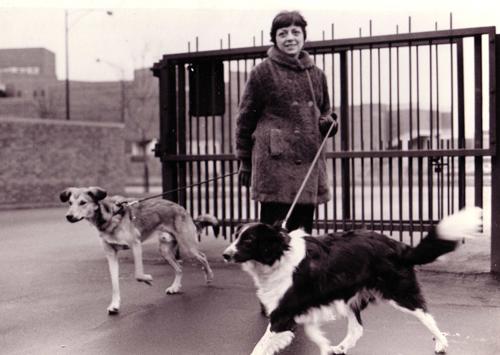
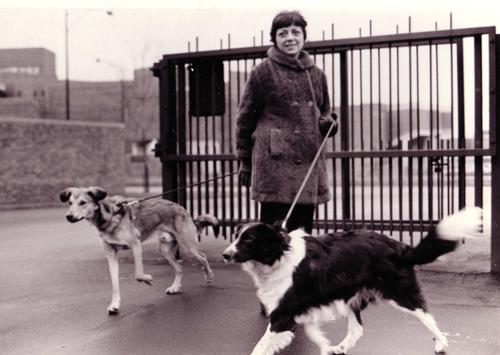
Florence Scala and Studs Terkel on the site of Hull House as it is dismantled ; part 2
Jul. 9, 1963 The tour continues on Maxell and Halsted Streets. Anita is sad to be leaving a place where she was born & raised. Mrs. Belmont said the mayor promised housing but they're currently living in a hotel. A 17-year resident of Hull House, Mrs. Morales says there will never be another place like it. The general feeling from everyone was that of sadness in having to leave their homes and businesses.
-
Florence Scala and Studs Terkel on the site of Hull House as it is dismantled ; part 1
Jul. 9, 1963 Florence Scala gives Studs Terkel a guided tour of the area around Hull House. Terkel talks to people in the neighborhood. Mr. Briata spoke of how he would go to Hull House once a week to take a bath. Mrs. Picardi liked the area because it had good schools for her kids. Together they visit Scala's favorite butcher, who will have to relocate his business after 40 years.
-
Fleming Brown plays the banjo and discusses his career with Studs Terkel
Jan. 12, 1982 Fleming Brown, banjo player, discusses the influences Uncle Dave Macon, Pete Seeger, The Almanac Singers, and his teacher, Doc Hopkins had on him. He and Terkel also discuss the influence of WLS's Barn Dance radio show in Chicago and the Grand Ole Opry's WSM had on folk music. Fleming plays "Uncle Buddy" by Arthur Smith, to open and close the show. He also discusses the themes of Appalachian music such as lost love, mystery and murder, and plays examples for the audience.
-
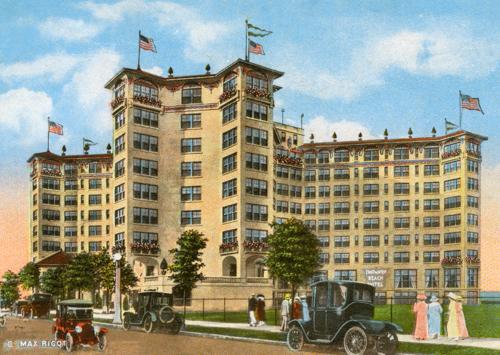
Emlyn Williams talks with Studs Terkel
Nov. 10, 1957 Terkel interviews Welsh actor/writer/dramatist Emlyn Williams.
-
Elma Stuckey reads from and discusses her poetry
Mar. 10, 1961 Stuckey talks about her childhood in Memphis, writing "in the dialect", and reads "Rigamarole", "Daylight Savings Time", "Defense", "Old Man" and "Old King Cotton".
-
Elma Stuckey reads from and discusses her poetry
Mar. 10, 1961 Stuckey talks about her childhood in Memphis, writing "in the dialect", and reads "Rigamarole", "Daylight Savings Time", "Defense", "Old Man" and "Old King Cotton."*Please note: some sections have been edited out from the original recording due to copyright considerations