Listen to New Voices on Studs Terkel our partnership with 826CHI-here! Read the Story


Showing 106 - 120 of 393 results
-

Mike Royko discusses his newspaper column
Jun. 17, 1966 Chicago humorist and newspaper columnist for the Chicago Daily News, the Chicago Sun-Times, and the Chicago Tribune, Mike Royko, goes over his past writings. Reflections include Royko's daily column, which covered race relations, politics, the Chicago Cubs, and life in Chicago. Together, Lois Baum and Studs Terkel read one of Royko's articles aloud.
-
Mike Royko discusses his book "I May Be Wrong, but I Doubt It"
1970 Author-journalist Mike Royko's book, "I May Be Wrong, but I Doubt It" includes 65-70 of Royko's past articles. Royko talks about how his columns come to life. Never having been one to sit in an office, he talks about going out into the world to get the story and to report the facts. Royko includes a funny tale about the word, "clout," in his book.*Please note: some sections have been edited out from the original recording due to copyright considerations
-
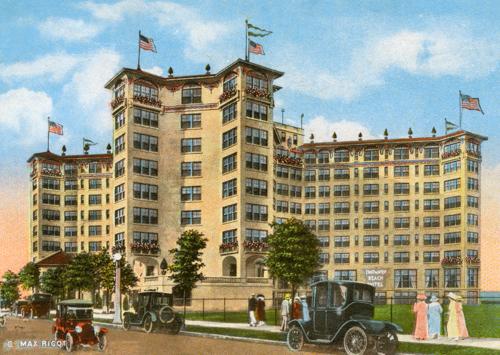
Mike Royko and Herman Kogan interview Studs Terkel
Jan. 16, 1967 In a rare turn of events, Mike Royko and Herman Kogan interview Studs Terkel about his book, "Division Street: America." Kogan is in awe of how Studs was able to get people to talk to him and give in-depth interviews. When asked by Royko, "What would you do if you were God?", Studs answered that he'd let man be man.
-
-
Metro High School students talk with Studs Terkel
Apr. 7, 1975 Interviewing Shelby Taylor, Paul Goren, Jean Tucker, Paul McCree from Metro High School in Chicago, Ill.
-
Mel Lambert and five Puerto Rican boys discuss the Jobs Project and life in Chicago ; part 1
1968 Studs interview with Mel Lambert and five Puerto Rican boys (Harry, Carlos, Vic, Jose, and Hector) about their life in Puerto Rico and Chicago. They discuss learning English and other subjects in the jobs project. The five boys talk about gang involvement and interactions with other race and ethnic groups. They also discuss their goals, economic opportunity in Chicago, and their difficult experiences of learning English and getting an education.
-
Mel Lambert and five Puerto Rican boys discuss life in Chicago and the Latin King gang ; part 2
1968 Studs interview with five Puerto Rican boys: Hector, Jose, Victor, Harry and Carlos. Two other young men enter the conversation at the end: Raphael and Benjamin. Each boy describes a memory and some express a desire to return to Puerto Rico, while others wish to stay in America. The boys describe some about gang life with the Latin Kings and the violent relationship between gangs in Chicago. Studs suggests a peace conference with all gang leaders, and the boys describe their opinion of the outcome of such a meeting.
-
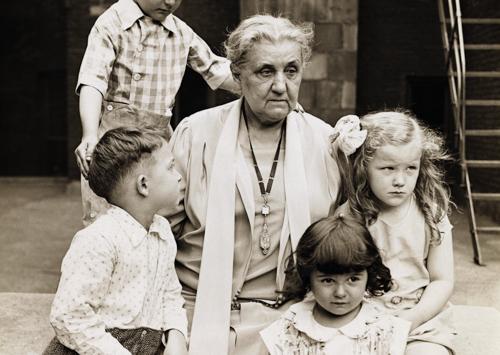
Mary Lynn McCree Bryan talks about her book "Eighty Years at Hull House"
Jan. 13, 1970 Discussing the book, "Eighty Years at Hull House," and interviewing the co-author, Mary Lynn McCree Bryan. Mary Lynn McCree Bryan discusses the Hull House and its founders in Chicago, Illinois. Includes two clips of Florence Scala speaking: one about nature and about a tree that was taken down at Hull House and one about Jane Addams. Includes a clip of Jessie Binford discussing Jane Addams.
-
Maria Cerda and Dick Simpson discuss Chicago: An Agenda for Change, with a focus on education ; part 3
Oct. 8, 1974 Chicago: An Agenda for Change. Part 3 of 5. Maria Cerda is a former Chicago Board of Education member.
-
Lucien Stryk discusses Zen poetry and Zen philosophy
Jan. 1, 1966 Poet Lucien Stryk discusses Zen poetry and Zen philosophy. Styrk focuses this conversation on “Satori," a Buddhist term for “the awakening”, and its influence on Zen philosophy. Styrk also discusses and reads from a book edited by him and Takashi Ikemoto entitled "Zen: Poems, Prayers, Sermons, Anecdotes, Interviews." Stryk reads a poem from “Triumph of the Sparrow” by Shinkichi Takahashi. Studs plays "His Eye is on the Sparrow" - Mahalia Jackson (1958).
-
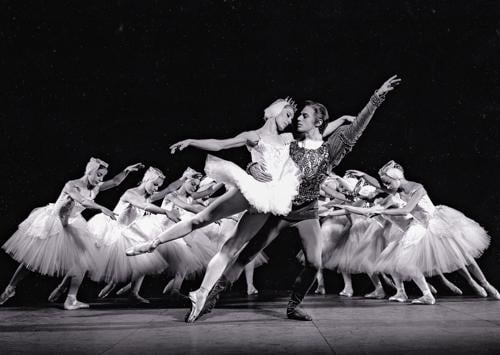
Lucia Chase discusses the American Ballet Theater's Swan Lake at the Civic Opera House
Feb. 15, 1967 Lucia Chase discusses the rehearsal and performance of Swan Lake of the American Ballet Theater at the Civic Opera House. Includes Peter Ilich Tschaikovsky music from Swan Lake.
-
Lou Conte, Shirley Mordine, and Nana Solbrig discuss dance in Chicago
Jun. 4, 1979 Studs Terkel interviews Chicago choreographers Lou Conte, Shirley Mordine, and Nana Solbrig.
-
Lois Wille discusses the many problems at Crane High School
Dec. 14, 1965 Lois Wille caused an uproar with the story she wrote for the Chicago Daily News, "Inside a Slum High School." According to Wille's investigation, a lack of money, over crowding of students, lights that don't work in the school and no books were among some of the problems that Wille found at Crane High School. Students also had a pessimistic view, explained Wille, as she found students didn't believe the teachers and counselors cared what theyd do after they got out of high school but they just wanted them to get out and leave Crane.
-
-
Lily (Rose Rigsby) Lowell and two men from St. Timothy's talk with Studs Terkel
1966 Discussion of Division Street: America [Continuation of interview at the end of 1925659-3-1]